New Patient Special · Your first visit, only $249 (valued at $580).

Book Now
mag glass icon

Saliva: A Dentist’s Perspective

Saliva! A Multi-faceted Liquid If Ever There Was One …

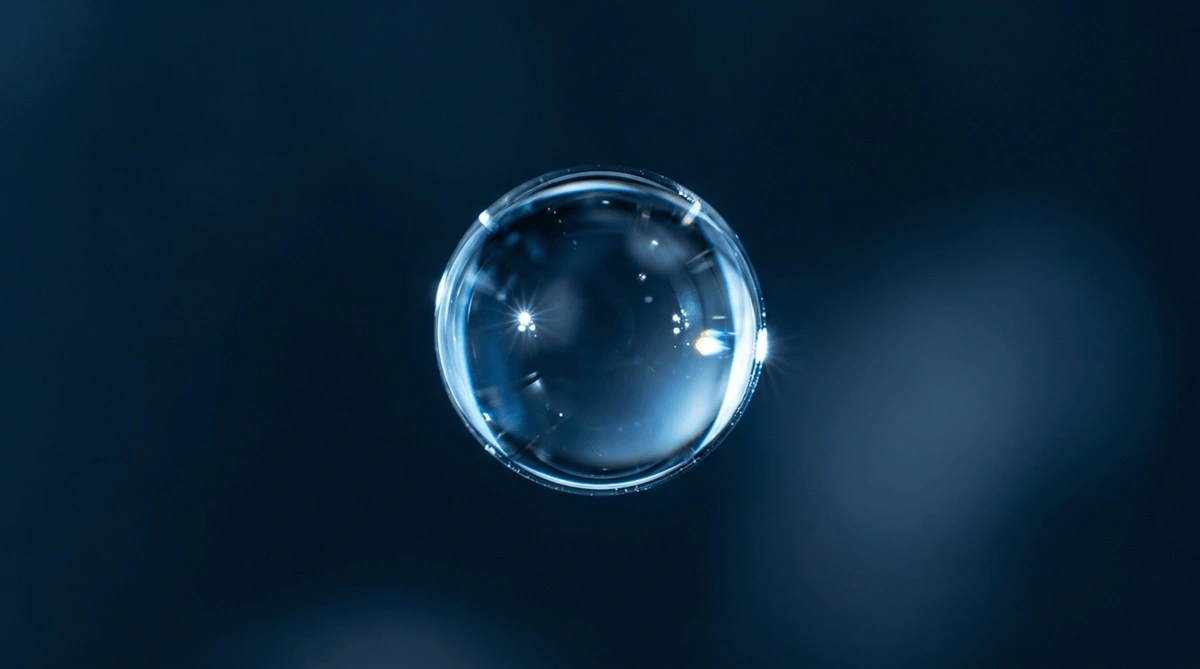
Saliva. Dribble. Spit. Sputum. Spittle. Drool; and by any other slobbery noun you can summons conjures an element of ick that can be barely sidestepped. Why? Because extracellular mouth fluid is gross. Only slightly less so if it’s our own somewhere on our person. With the exception of xerostomia sufferers, we all have it.

Only kissing makes it okay. Unless it’s one planted without invitation by someone who’s clearly asking for a punch in the throat. Whether that would produce more or less spittle is debatable; what it’s sure to end, is another unwanted kiss. A better punch, requiring no physical contact would be spitting in their face – one of the most disgusting and insulting actions that can be taken. Even if it misses, it’s so offensive it’s an offence. In stark opposition to a lick on the thumb to wipe a smudge from a loved one. The ‘it’ in spit is for loving and fighting in equal measure.

Said to be the defender of the mouth and mirror to the body, interest in what saliva holds and tells has been around at least since van Leeuwenhoek hawked on a microscope slide, and on September 17, 1683 sent his stomach-churning description of what he saw to London’s Royal Society.

Society members were entranced by this never-before seen world of structure and high organisation on an itsy bitsy, teenie weenie, barf-inducing scale.

Saliva as Evidence: What Forensics Owes to Spit

Forensic tv shows – whether drama or documentary – instil that next to blood, and with its resemblance to plasma, saliva is the most common biological evidence to be found at the scene of a crime. Both encompass the contents of organic or inorganic compounds. Over the decades have been many methods of detection, collection and identification of saliva stains or pools. (Which brings to mind the most repugnant band name ever: Saliva. Don’t look for the stream. Those two words should never be seen or heard together.)

Used to determine sex, blood group, and microbial signatures and biomarkers, spit even spits out whether (and what) a person smokes. So if you can’t contain your slime, don’t do the crime. And keep in mind that over your lifetime, you’ll produce two 9-metre-by-4-metre swimming pools’ worth of the stuff; 1.7 metres deep. Among a list of other conditions it can tell if you have oral cancer, cardiovascular disease, and autoimmune disorders.

It’s weird that Saliva: A Dentist’s Perspective should be an unusual subject on a dentist’s website. We deal with it every day. A multi-faceted liquid if ever there was one, without saliva we dentists wouldn’t just not have spittoons, we wouldn’t even have patients.

Saliva testing also has specific uses in clinical and experimental psychological settings … which again, brings me to the nauseating band name.

It sprang from the belief that parents would find it repulsive, kids colour it cool, and it’s “a good, three-syllable word” according to founding member Jose Sappington. It’s a triad of reasoning worthy of the Grand Final debate of the World Universities Debating Championship, under the topic ‘This House supports the creation of an international court with a mandate to prosecute those responsible for band name crimes’. Spitball a couple of past years for it to have been upheld or opposed by the champion, and in 1996 it’d have been Australian brainiac media personality and comedian Adam Spencer, for Sydney Uni. Or two years earlier, distinct entity Dara Ó Briain; Irish theatre-filling funny man and doyen of the panel show for University College Dublin, had he reached the final.

All interesting information within spitting distance of spit.

If you really want to branch out, look up the vomeronasal organ.

It seems to have the makings of a future human organ reassessment à la the appendix and tonsils. For something so sensory-neuron dense to remain, and yet be vestigial somehow doesn’t wash. It’s a chemical communications system. If we’ve got it we had it. If we had it we used it. If we used it, it worked – civilisation surely attests to that. Is it malfunctioning? Is it an unattributed contributor to the human communication failings we presently observe and experience? Has it left a hole in the human sense of understanding and connection that we now scramble to fill with the artificiality of AI and digital platform dialogue?

It could be an as-yet-to-be studied function of saliva, and the glands from which it fountains forth.

Certainly, King’s College London finds saliva research drool worthy. Specifically, its Mucosal and Salivary Research Division of its Dental Institute that’s been wading through hypotheses and experiments for decades. Most recently, and in collaboration with Voluntary Health Services in India and Australia’s Griffith University, it discovered immune cells significantly different to those found in blood, are in saliva.

More than ten were identified – including inflammation regulators and virus fighters. Part of the polish of spit is to protect and prevent disease via its antimicrobial abilities and tissue repair. It’s predominantly, although not limited to, oral health. Saliva plays a significant part in gut health and ergo, general wellbeing.

Why We Cannot Live Without Saliva

Spit is more complex than you may think.

It’s made of three different types, and is composed of a variety of electrolytes, proteins, immunoglobulins, and the likes of ammonia and urea.

So gross. So necessary.

Try tasting and swallowing food without it. Or speaking. At least if you can’t say it you won’t spray it and we’ve all been the unfortunate recipient of that. Often escaping unscathed, and not always. The ‘flu, glandular fever, cold sores, herpes, hep C and Epstein-Barr are some of the infectious diseases transmitted through contact with saliva.

Even tooth decay.

Its long-term study strives to enhance its functions, and be capable of replacing it if the ability to produce it is lost – as is the case for 22% of the world’s population.

As a non-invasive, easily accessible diagnostic and detection material, the fewer secrets in those secretions and the more stories and scenarios we understand saliva can tell, the better. We’ve been talking about, and around being able ‘to spit’ for literally 15 millennia. It is one of the 23 oldest known terms – which includes mother, fire, I, black, ashes and worm; each found to have a common root word across European and Asian languages.

‘To spit’. Fifteen thousand years of it, spanning time and geography, science and medicine. That’s quite a distance.
DISCLAIMER:
The content has been made available for informational and educational purposes only. Pitt Street Dental Centre does not make any representation or warranties with respect to the accuracy, applicability, fitness, or completeness of the content.

The content is not intended to be a substitute for professional personal diagnosis or treatment. Always seek the advice of your dentist or another qualified health provider with any questions you may have regarding a dental or medical condition. Never disregard professional advice or delay seeking it because of something you have read or seen on the Site.

Sidebar Banners Pitt Street Dental CentrePayment Plans Pitt Street Dental Centre
saliva, the science behind a dentist's perspective on oral health

Saliva! A Multi-faceted Liquid If Ever There Was One …

Saliva. Dribble. Spit. Sputum. Spittle. Drool; and by any other slobbery noun you can summons conjures an element of ick that can be barely sidestepped. Why? Because extracellular mouth fluid is gross. Only slightly less so if it’s our own somewhere on our person. With the exception of xerostomia sufferers, we all have it.

Only kissing makes it okay. Unless it’s one planted without invitation by someone who’s clearly asking for a punch in the throat. Whether that would produce more or less spittle is debatable; what it’s sure to end, is another unwanted kiss. A better punch, requiring no physical contact would be spitting in their face – one of the most disgusting and insulting actions that can be taken. Even if it misses, it’s so offensive it’s an offence. In stark opposition to a lick on the thumb to wipe a smudge from a loved one. The ‘it’ in spit is for loving and fighting in equal measure.

Said to be the defender of the mouth and mirror to the body, interest in what saliva holds and tells has been around at least since van Leeuwenhoek hawked on a microscope slide, and on September 17, 1683 sent his stomach-churning description of what he saw to London’s Royal Society.

Society members were entranced by this never-before seen world of structure and high organisation on an itsy bitsy, teenie weenie, barf-inducing scale.

Saliva as Evidence: What Forensics Owes to Spit

Forensic tv shows – whether drama or documentary – instil that next to blood, and with its resemblance to plasma, saliva is the most common biological evidence to be found at the scene of a crime. Both encompass the contents of organic or inorganic compounds. Over the decades have been many methods of detection, collection and identification of saliva stains or pools. (Which brings to mind the most repugnant band name ever: Saliva. Don’t look for the stream. Those two words should never be seen or heard together.)

Used to determine sex, blood group, and microbial signatures and biomarkers, spit even spits out whether (and what) a person smokes. So if you can’t contain your slime, don’t do the crime. And keep in mind that over your lifetime, you’ll produce two 9-metre-by-4-metre swimming pools’ worth of the stuff; 1.7 metres deep. Among a list of other conditions it can tell if you have oral cancer, cardiovascular disease, and autoimmune disorders.

It’s weird that Saliva: A Dentist’s Perspective should be an unusual subject on a dentist’s website. We deal with it every day. A multi-faceted liquid if ever there was one, without saliva we dentists wouldn’t just not have spittoons, we wouldn’t even have patients.

Saliva testing also has specific uses in clinical and experimental psychological settings … which again, brings me to the nauseating band name.

It sprang from the belief that parents would find it repulsive, kids colour it cool, and it’s “a good, three-syllable word” according to founding member Jose Sappington. It’s a triad of reasoning worthy of the Grand Final debate of the World Universities Debating Championship, under the topic ‘This House supports the creation of an international court with a mandate to prosecute those responsible for band name crimes’. Spitball a couple of past years for it to have been upheld or opposed by the champion, and in 1996 it’d have been Australian brainiac media personality and comedian Adam Spencer, for Sydney Uni. Or two years earlier, distinct entity Dara Ó Briain; Irish theatre-filling funny man and doyen of the panel show for University College Dublin, had he reached the final.

All interesting information within spitting distance of spit.

If you really want to branch out, look up the vomeronasal organ.

It seems to have the makings of a future human organ reassessment à la the appendix and tonsils. For something so sensory-neuron dense to remain, and yet be vestigial somehow doesn’t wash. It’s a chemical communications system. If we’ve got it we had it. If we had it we used it. If we used it, it worked – civilisation surely attests to that. Is it malfunctioning? Is it an unattributed contributor to the human communication failings we presently observe and experience? Has it left a hole in the human sense of understanding and connection that we now scramble to fill with the artificiality of AI and digital platform dialogue?

It could be an as-yet-to-be studied function of saliva, and the glands from which it fountains forth.

Certainly, King’s College London finds saliva research drool worthy. Specifically, its Mucosal and Salivary Research Division of its Dental Institute that’s been wading through hypotheses and experiments for decades. Most recently, and in collaboration with Voluntary Health Services in India and Australia’s Griffith University, it discovered immune cells significantly different to those found in blood, are in saliva.

More than ten were identified – including inflammation regulators and virus fighters. Part of the polish of spit is to protect and prevent disease via its antimicrobial abilities and tissue repair. It’s predominantly, although not limited to, oral health. Saliva plays a significant part in gut health and ergo, general wellbeing.

Why We Cannot Live Without Saliva

Spit is more complex than you may think.

It’s made of three different types, and is composed of a variety of electrolytes, proteins, immunoglobulins, and the likes of ammonia and urea.

So gross. So necessary.

Try tasting and swallowing food without it. Or speaking. At least if you can’t say it you won’t spray it and we’ve all been the unfortunate recipient of that. Often escaping unscathed, and not always. The ‘flu, glandular fever, cold sores, herpes, hep C and Epstein-Barr are some of the infectious diseases transmitted through contact with saliva.

Even tooth decay.

Its long-term study strives to enhance its functions, and be capable of replacing it if the ability to produce it is lost – as is the case for 22% of the world’s population.

As a non-invasive, easily accessible diagnostic and detection material, the fewer secrets in those secretions and the more stories and scenarios we understand saliva can tell, the better. We’ve been talking about, and around being able ‘to spit’ for literally 15 millennia. It is one of the 23 oldest known terms – which includes mother, fire, I, black, ashes and worm; each found to have a common root word across European and Asian languages.

‘To spit’. Fifteen thousand years of it, spanning time and geography, science and medicine. That’s quite a distance.
DISCLAIMER:
The content has been made available for informational and educational purposes only. Pitt Street Dental Centre does not make any representation or warranties with respect to the accuracy, applicability, fitness, or completeness of the content.

The content is not intended to be a substitute for professional personal diagnosis or treatment. Always seek the advice of your dentist or another qualified health provider with any questions you may have regarding a dental or medical condition. Never disregard professional advice or delay seeking it because of something you have read or seen on the Site.

Sidebar Banners Pitt Street Dental CentrePayment Plans Pitt Street Dental Centre
Vallery Allbeury Manager   Pitt Street Dental Centre

Hi, you’re chatting with Pitt Street Dental Centre. If you could please fill out all your details below, we will be in contact with you shortly.

Pitt Street Dental Centre Price ListDOWNLOAD PRICE LIST

Please enter your mobile number and email address so we can send you the price list via SMS and email along with some of our patients’ smile transformations in the next few minutes.

Pitt Street Dental Centre Price ListDOWNLOAD PRICE LIST

Please enter your mobile number and email address so we can send you the price list via SMS and email along with some of our patients’ smile transformations in the next few minutes.

[gravityform id="5" title="false" description="false" ajax="true"]
Vallery Allbeury Manager   Pitt Street Dental Centre

Hi, you’re chatting with Pitt Street Dental Centre. If you could please fill out all your details below, we will be in contact with you shortly.

[gravityform id="2" title="false" description="false" ajax="true"]