Zygomatic and Pterygoid Implants in Sydney CBD
Pterygoid implants are advanced dental implants anchored into the pterygoid plate, a dense bony region behind the upper jaw. They are used to support fixed teeth in the posterior upper jaw without requiring a sinus lift or bone grafting, making them a solution for patients with severe bone loss who have been told they are not candidates for conventional implants.
Here at Pitt Street Dental Centre in Sydney CBD, Dr Michael Cai works with a leading oral and maxillofacial surgeon to place pterygoid implants in a private hospital theatre. This collaborative approach combines Dr Cai’s restorative expertise with a surgeon who specialises in complex jaw anatomy.
Pterygoid implants are often used alongside zygomatic implants for full-arch reconstructions in patients with severe upper jaw bone loss.
Beyond Standard Implants

Beyond Standard Implants
Zygomatic and pterygoid implants are advanced graftless solutions for patients with severe upper-jaw bone loss, failed bone grafts, or who’ve been turned away elsewhere. Dr Michael Cai works with a leading oral and maxillofacial surgeon to deliver these procedures in a private hospital theatre in Sydney.
Why You May Have Been Told No
Not enough bone for standard implants. That's not always the end of the road.
If you’ve worn an upper denture for years, had multiple missing upper teeth for a long time, or experienced a failed bone graft, the bone in your upper jaw may have resorbed to the point where conventional implants are no longer possible. Most dentists will tell you correctly that they can’t place standard implants in that situation.
What they may not have mentioned is zygomatic or pterygoid implants, techniques designed specifically for cases where conventional implants have already been ruled out.
What These Implants Are
Two graftless pathways to fixed teeth for patients with severe bone loss.
Zygomatic implants are anchored in the cheekbone (zygoma), which is naturally dense and rarely resorbs even in patients with severe upper-jaw bone loss. They are used to support a fixed full-arch bridge where conventional implants can’t go. Best for severe upper-jaw bone loss, long-term upper denture wearers, and failed bone grafts.
Pterygoid implants are anchored in the pterygoid plate, a dense bony region behind the upper jaw. They are used to support implants in the posterior upper jaw without a sinus lift. Often used alongside zygomatic implants for complex full-arch reconstructions. Best for posterior upper-jaw bone loss, patients wanting to avoid sinus lifts, and complex full-arch cases.
In many complex cases, zygomatic and pterygoid implants are used together to support a complete fixed arch without any bone grafting. In suitable cases, fixed teeth can be attached on the same day as surgery.
The Specialist Team Approach
The right procedure, done by the right people.
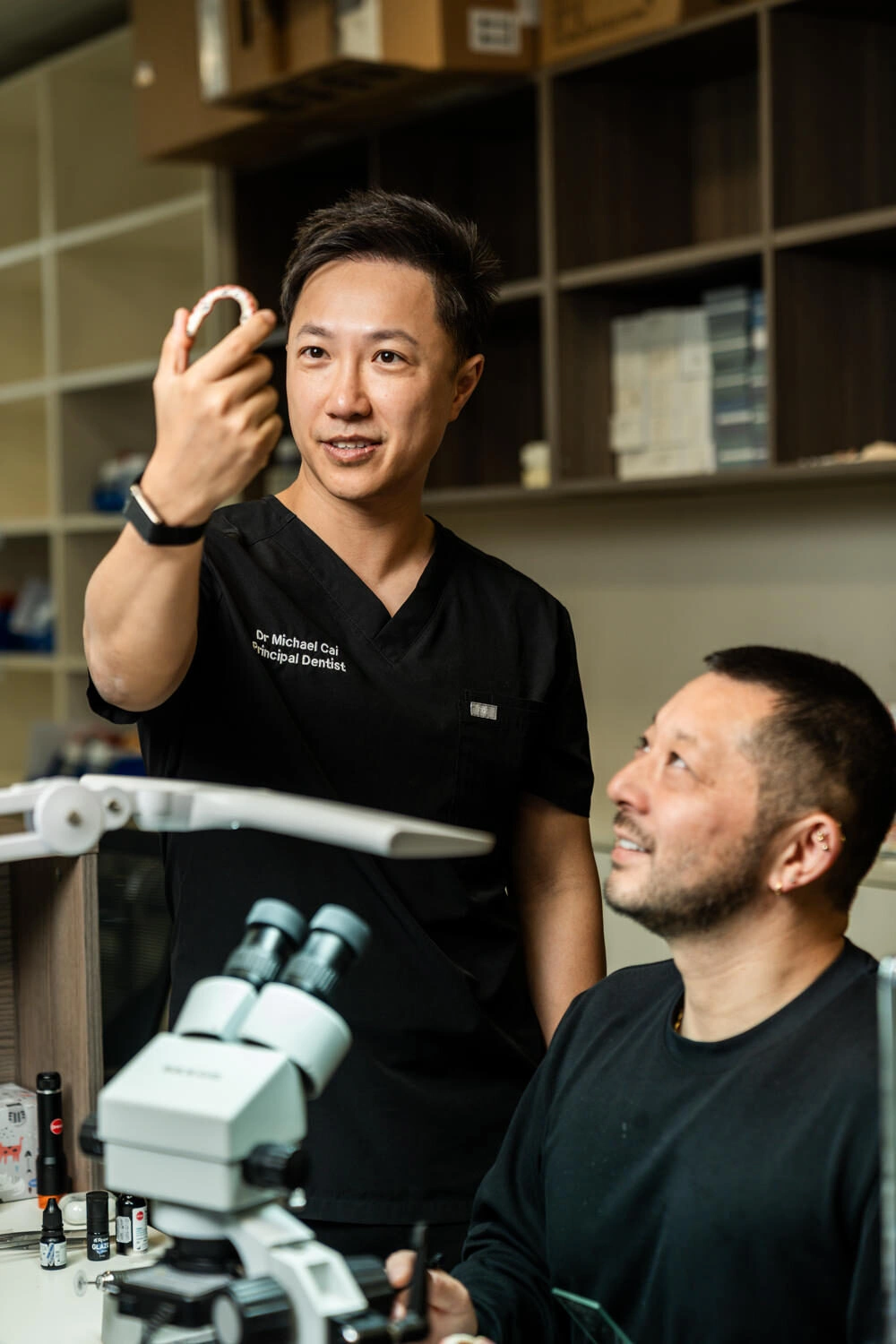
Zygomatic and pterygoid implants require both specialist surgical expertise and experienced prosthetic planning. We work as a coordinated team, with each clinician doing what they do best.
Dr Michael Cai plans the entire case, designs the prosthesis before surgery, fits fixed temporary teeth on surgery day in suitable cases, delivers the final fixed prosthesis, and manages all follow-up and long-term aftercare. 3,000+ implants placed. UCLA-trained. 18+ years.
A leading oral and maxillofacial surgeon performs the surgical placement of the implants, manages the hospital theatre setting, and handles complex anatomy (sinuses, orbital floor, pterygoid plate). AHPRA-registered specialist. The specific surgeon is matched to your case at consultation.
Surgery is performed at Westmead Private Hospital or Strathfield Private Hospital under general anaesthesia administered by a specialist consultant anaesthetist. This is not a chairside procedure. It is a properly resourced, hospital-grade surgical case.
Who This Is For
You may be a candidate if any of the following apply:
These are advanced procedures for patients where conventional implants have already been ruled out. We’ll tell you honestly at consultation whether you’re a candidate and what your case would involve.

What To Expect
The treatment pathway from consultation to long-term aftercare.

Initial consultation
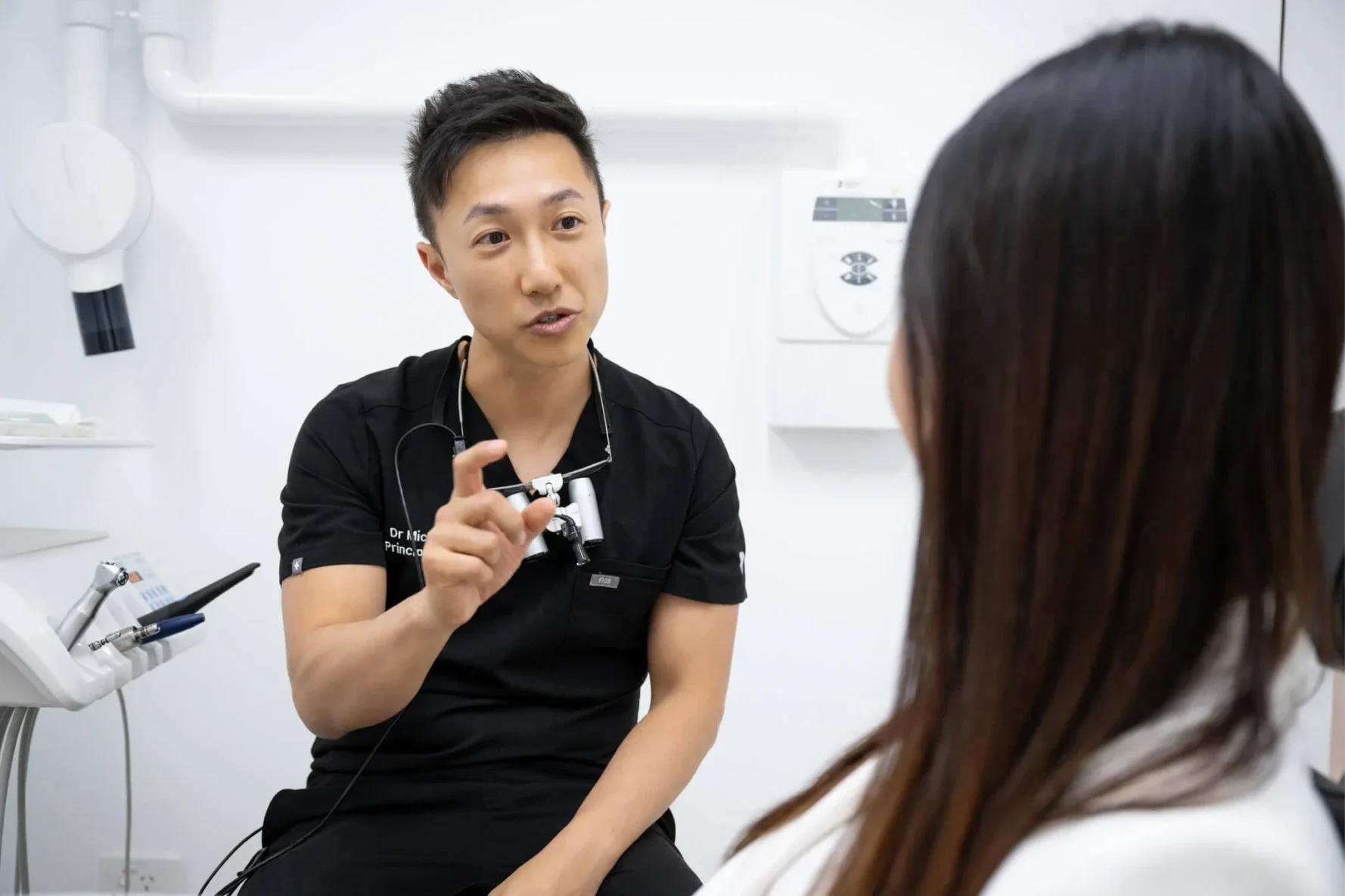
At our Sydney CBD clinic. Dr Cai reviews your history, takes a CBCT scan, and gives you an honest assessment of whether zygomatic or pterygoid implants are appropriate. Bring any existing scans. This consultation is free if you’re seeking a second opinion.

Joint surgical planning
Dr Cai and the maxillofacial surgeon review your case together and develop a surgical plan. You receive a written treatment plan and quote covering every cost (surgeon’s fee, hospital, anaesthetist, and prosthetic work) before any commitment.

Surgery in hospital
At Westmead Private or Strathfield Private Hospital. The maxillofacial surgeon places the implants. Dr Cai attaches a fixed temporary prosthesis on the same day in suitable cases. Typically 3 to 5 hours under general anaesthesia.

Healing and final prosthesis
Implants integrate over approximately 3 to 6 months. Dr Cai fits the final fixed prosthesis at our Sydney CBD clinic.

Long-term aftercare with Dr Cai
All ongoing care (maintenance, hygiene, annual reviews, any adjustments) is managed locally at Pitt Street Dental Centre. The surgical team’s involvement is focused on the operative phase.
Free Second-Opinion Consultation
Bring your existing scans. No charge for the second opinion.
If you’ve already had a CBCT scan elsewhere, bring it. Most clinics will release your scans on request. It’s your clinical data. Dr Cai will review the scans with you, give you an honest second opinion on whether zygomatic or pterygoid implants are feasible for your case and outline what treatment would involve. If we can’t help, we’ll say so, and where appropriate, refer you to someone who can.
No charge. No obligation. No pressure to proceed.
Risks & Recovery
Zygomatic implants have a 25+ year clinical track record and published 10-year survival rates above 95% in appropriately selected cases when placed by experienced surgical teams. As with any surgical procedure, risks exist, including sinus complications, implant failure, and infection.
We perform these procedures in hospital theatre with a specialist maxillofacial surgeon and consultant anaesthetist. Specific risks for your case are discussed in detail at consultation.
Possible risks may include:
- Sinus complications, particularly with implants placed in the upper jaw
- Implant failure if osseointegration does not occur as expected
- Infection at the surgical site, which may require further treatment in some cases
- Numbness or altered sensation in the surrounding area, though this is typically temporary
Recovery considerations:
- Initial healing generally takes one to two weeks
- Osseointegration, where the implant fuses with bone, can take several months
- A soft diet is often recommended during early healing
- Regular reviews and good oral hygiene are important for long-term success
Download Our Price List
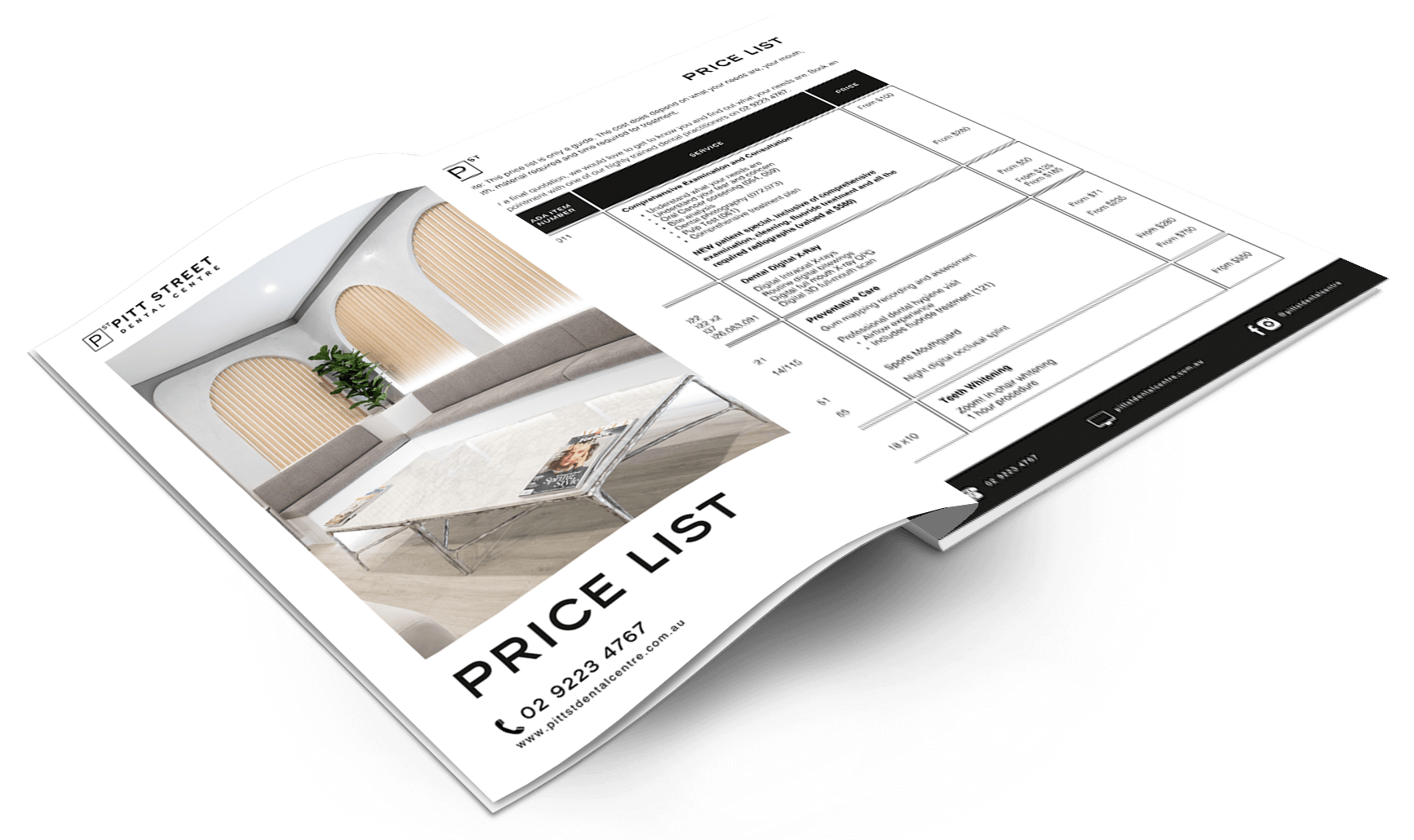
Download Our Price List
We take great pride in providing a tailored treatment experience. Everyone’s dental needs are different, which is why we discuss options that are relevant to your specific situation and goals.
Frequently Asked Questions
Are zygomatic implants safe?
Zygomatic implants have a 25+ year clinical track record and published 10-year survival rates above 95% in appropriately selected cases when placed by experienced surgical teams. As with any surgical procedure, risks exist, including sinus complications, implant failure, and infection. We perform these procedures in hospital theatre with a specialist maxillofacial surgeon and consultant anaesthetist. Specific risks for your case are discussed in detail at consultation.
Why does Dr Cai work with a maxillofacial surgeon rather than placing these himself?
Zygomatic and pterygoid implant placement involves precise surgical work in anatomically complex areas, near the maxillary sinus, orbital floor, and pterygoid venous plexus. This surgical phase is best performed by a specialist oral and maxillofacial surgeon in a hospital theatre. Dr Cai’s expertise is in the case planning and prosthetic restoration, where his 3,000+ implants of experience and UCLA training are most relevant. The team-based model is the gold standard for these procedures and produces better outcomes than any single clinician attempting to do everything alone.
Do I need bone grafting?
No, that’s the fundamental advantage. Zygomatic implants anchor in the cheekbone, bypassing the need for upper-jaw bone grafting entirely. Pterygoid implants anchor in the pterygoid plate, avoiding sinus lifts. No donor site. No graft healing time. In suitable cases, fixed teeth on the same day.
Where is the surgery performed?
Westmead Private Hospital or Strathfield Private Hospital, depending on case logistics and patient preference. Both are fully equipped private hospital theatres in Sydney.
Can I get fixed teeth on the same day?
In suitable cases, yes. The cheekbone and pterygoid plate typically provide excellent primary stability, often allowing Dr Cai to attach a fixed temporary prosthesis on surgery day. Whether this is appropriate for your specific case is assessed during treatment planning.
Who manages my care after surgery?
Dr Cai, at our Sydney CBD clinic. All prosthetic follow-up, maintenance, and long-term aftercare is managed locally by the same clinician. The maxillofacial surgeon’s involvement is focused on the operative phase.
What if you decide I'm not a candidate?
We’ll tell you directly, explain why, and where appropriate refer you to another clinician who may be able to help. We only take cases we’re confident we can deliver well.
After-Care For Your Zygomatic and Pterygoid Implants
Following your zygomatic or pterygoid implant procedure, some discomfort, swelling or tenderness is expected as your body begins to heal. You will receive specific instructions tailored to your situation. The following general guidelines may apply:
Healing times vary between patients. If you have any concerns during your recovery, contact our team for guidance.
Get an honest second opinion
If you’ve been told you can’t have implants, bring your scans and come and see us. Dr Cai will review your case and tell you honestly what’s possible. Free consultation. No obligation.
DISCLAIMER: The material posted is for informational purposes only and is not intended to substitute for professional medical advice, diagnosis or treatment. Results vary with each patient. Any dental procedure carries risks and benefits. If you have any specific questions about any dental and/or medical matter, you should consult your dentist, physician or other professional healthcare providers.
Medically Reviewed by Dr Michael Cai, BDS (Syd), Implant Specialist
Last Reviewed: August 15, 2026
CELEBRATED SMILES
A gallery of memorable moments with beautiful patients who trust us with their smiles.