
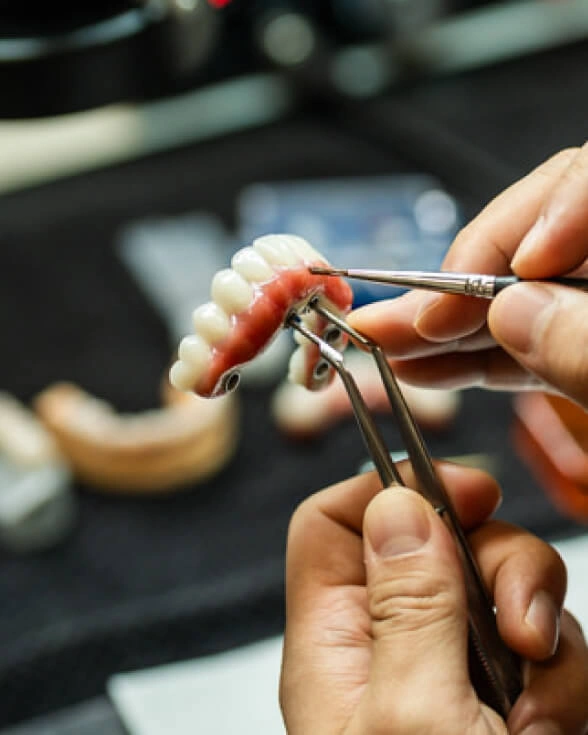
Zirconia implants are metal-free dental implants made from zirconium dioxide, a biocompatible ceramic material used as an alternative to traditional titanium implants. They are a single-piece white implant that integrates with the jawbone without introducing any metal into the body.
Here at Pitt Street Dental Centre in Sydney CBD, we offer zirconia implants for patients who prefer a metal-free approach to tooth replacement. With over 3,000 implants placed personally across 18+ years of focused practice, Dr Cai assesses each patient individually to determine whether a zirconia or titanium implant is the better option for their clinical situation.
The treatment process is similar to titanium implants, with placement and integration typically taking three to six months before the final crown is fitted.
A Metal-Free Alternative to Titanium Implants

You want the tooth replaced. You have done the research. But somewhere in your reading, you came across titanium, metal posts, and surgical screws, and something about that did not sit right with you.
You are not alone. A growing number of our patients specifically ask about metal-free alternatives. Some have sensitivities. Some follow a holistic health philosophy. Others simply prefer the idea of a ceramic material sitting in their jawbone rather than a metal one.
Whatever brought you here, we understand the reasoning, and we have the clinical experience to guide you through it honestly. Here at Pitt Street Dental Centre, we offer zirconia implants as a genuine metal-free alternative, and we will tell you candidly whether they are the right choice for your specific situation.
What Are Zirconia Implants and How Are They Different From Titanium?
Zirconia implants are made from zirconium dioxide, a high-strength ceramic material that has been used in medical prosthetics, including hip replacements, for decades. Unlike titanium implants, which are metal posts placed into the jawbone, zirconia implants are entirely metal-free.
The material is naturally white, which means there is no risk of a grey shadow showing through thin gum tissue, something that can occasionally occur with titanium implants in patients with naturally thin or receding gums. For front-tooth replacements where aesthetics are essential, this can be a meaningful advantage.
Zirconia is also highly biocompatible. Research shows that it attracts less bacterial plaque than titanium, which may contribute to healthier gum tissue around the implant over time.
Most zirconia implants are a one-piece design, meaning the implant and the abutment (the connector between the implant and the crown) are a single unit. This differs from titanium implants, which typically use a two-piece design. Each approach has its clinical advantages, and Dr Cai will explain which is better suited to your case during your consultation.
We use zirconia implants from established manufacturers with documented clinical evidence. As with our titanium Straumann implants, we do not compromise on the quality of the system.

Who Should Consider Zirconia Implants?
If any of these resonate with you, zirconia implants may be worth discussing:
“I want to replace a missing tooth but I prefer not to have metal in my body”
“I follow a holistic or integrative health approach and my practitioner has recommended metal-free dentistry”
“I have thin gums and I am concerned about a dark line showing through from a titanium implant”
“I am replacing a front tooth and aesthetics are my top priority”
“I have a known sensitivity or allergy to metals”
“I have done my research and I want to understand all of my options before making a decision”
Not every case is suited to zirconia. Because most zirconia implants are a one-piece design, they require precise angulation at the time of placement and are less forgiving than two-piece titanium systems in complex cases. Dr Cai will assess your bone, gum tissue, and the position of the missing tooth to give you an honest recommendation.
What Does the Zirconia Implant Process Look Like at Pitt Street Dental Centre?
01
Consultation and Assessment (45 minutes)
Your first appointment begins with a thorough discussion about your goals, health history, and reasons for considering a metal-free option. Dr Cai will take a 3D CBCT scan right here in our Sydney CBD practice, assess your bone density and gum thickness, and determine whether a zirconia implant is the right choice for your case. If titanium would give you a more predictable result, he will explain why.
02
Treatment Planning
Because zirconia implants are typically a one-piece design, precise planning is critical. Dr Cai uses the 3D scan data to plan the exact angle and depth of placement before your surgery date. This precision planning step is essential to achieving the right emergence profile for a natural-looking result.
03
Implant Placement (60 to 90 minutes)
The zirconia implant is placed into the jawbone under local anaesthetic. For patients who prefer additional comfort, we offer happy gas and twilight sedation. The white colour of the implant means there is no metal visible at any stage, even during the healing period.
04
Integration Period (12 to 16 weeks)
Zirconia integrates with bone in a similar way to titanium, though the integration period is sometimes slightly longer. During this time, you go about your normal life. We schedule follow-up appointments to monitor healing and ensure everything is progressing as expected.
05
Final Crown
Once the implant has fully integrated, we design and fit your permanent porcelain crown. The all-white implant beneath means no dark shadows, just a natural-looking result from every angle.
Zirconia Implants vs Titanium Implants: Which Is Right for You?
| Zirconia Implants | Titanium Implants | |
|---|---|---|
| Material | Zirconium dioxide (ceramic) | Medical-grade titanium |
| Metal-free | Yes | No |
| Colour | White (matches bone and gum tissue) | Grey/silver |
| Design | Typically one-piece | Typically two-piece |
| Bacterial plaque | Lower plaque adhesion in studies | Standard |
| Aesthetics with thin gums | Superior (no grey shadow) | Risk of grey show-through |
| Flexibility in placement | Requires precise angulation | More forgiving in complex cases |
| Clinical track record | Established, growing evidence base | 60+ years of clinical data |
| Best for | Metal-free preference, front teeth, thin gums, holistic patients | Complex cases, posterior teeth, most clinical scenarios |
What Are the Risks of Zirconia Implants? What Should I Expect During Recovery?
Zirconia implant placement carries similar risks to titanium implant surgery. Dr Cai’s extensive implant experience and 3D-guided planning help minimise these risks. As always, we believe in being upfront.
Possible risks (uncommon):
- Infection at the implant site, typically manageable with antibiotics
- Implant fracture, which is rare with current-generation zirconia systems but more of a consideration than with titanium due to the ceramic material
- Failure to integrate with the bone, occurring in a small number of cases
- Limited ability to adjust the angle after placement due to the one-piece design
- Sinus complications for upper jaw placements near the sinus cavity
Recovery considerations:
- Recovery is comparable to titanium implant placement
- Most patients take one to two days off work
- Mild swelling and tenderness for three to five days
- Over-the-counter pain relief is usually enough
- Soft diet for the first week
- Integration period is typically 12 to 16 weeks
- Avoid strenuous exercise for 48 to 72 hours after placement
If anything feels unusual after your procedure, call us on +61 2 8000 1832 and we will see you promptly.
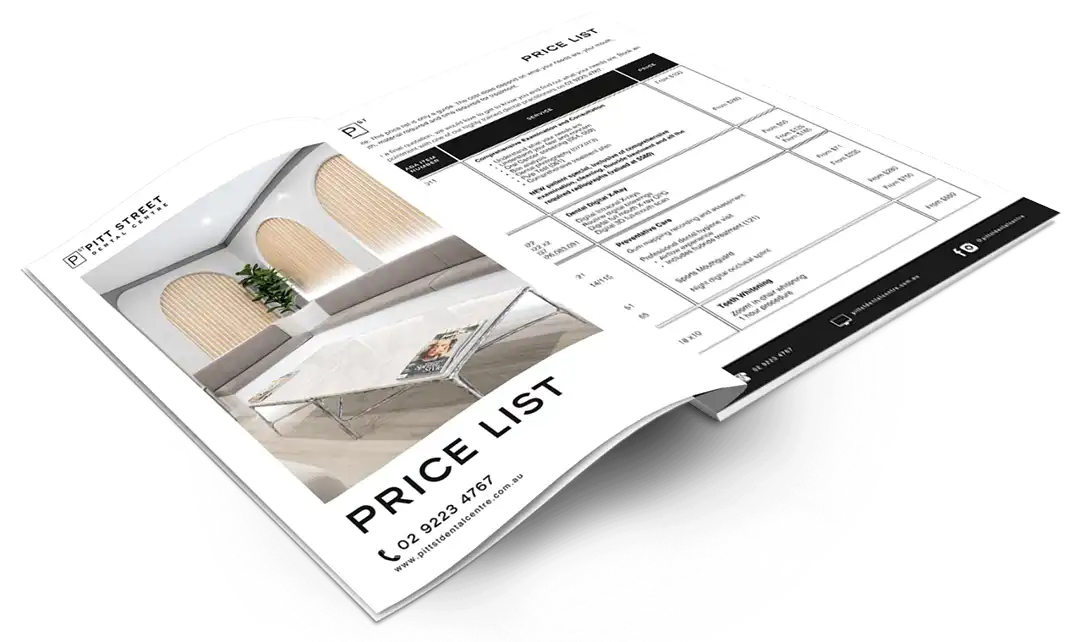
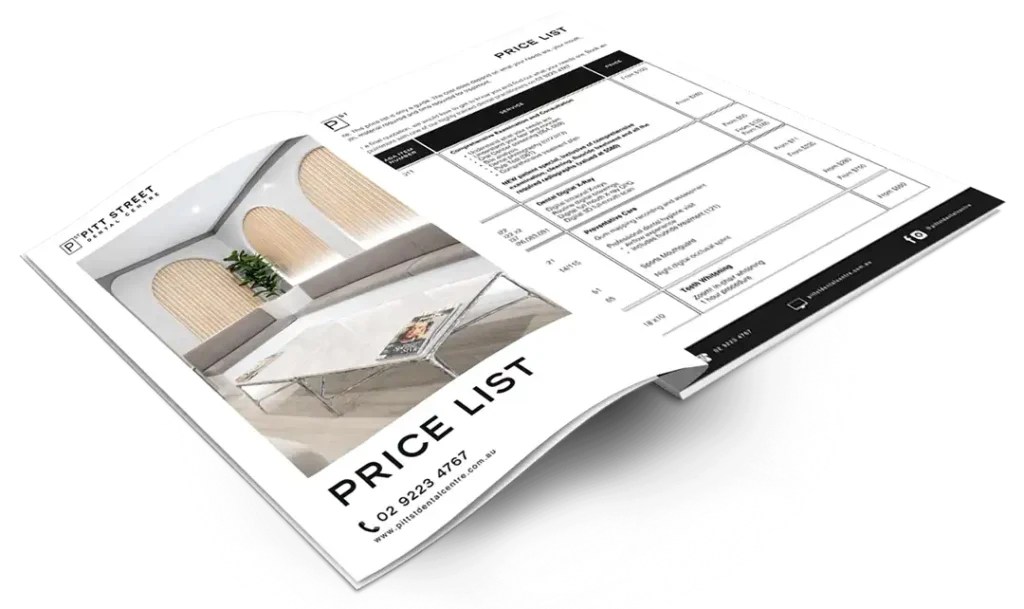
Transparent pricing, no surprises
We publish our full price list so you can compare options at your own pace. Zirconia and titanium implant pricing is included.
Frequently Asked Questions About Zirconia Implants
Are zirconia implants as strong as titanium?
Current-generation zirconia implants have excellent strength and are suitable for most single-tooth replacements. Titanium still has the edge in flexural strength, which is why Dr Cai may recommend titanium for posterior teeth (molars) that bear heavy chewing forces, or for cases where the implant needs to be placed at a non-ideal angle. We will give you an honest comparison during your consultation.
How much do zirconia implants cost in Sydney CBD?
Zirconia implants are typically priced slightly higher than titanium due to the material and manufacturing process. We publish a complete price list that you can download from this page. After your consultation, you will receive a written quote with no hidden costs.
Do zirconia implants work for back teeth?
They can, though titanium is often the preferred option for molars due to the higher chewing forces involved. Dr Cai will assess your bite and the specific tooth position to determine which material is the better choice.
Will my body reject a zirconia implant?
Zirconia is one of the most biocompatible materials available in dentistry. True rejection is extremely rare. The ceramic surface attracts less bacterial plaque than titanium, which may support healthier gum tissue around the implant.
How long do zirconia implants last?
Zirconia implants are designed to be a long-term solution. The clinical data is still maturing compared to titanium (which has 60+ years of evidence), but current research and clinical outcomes are very encouraging. With proper care, regular check-ups, and good oral hygiene, zirconia implants are expected to provide lasting results comparable to titanium.
Payment Plans




Why Choose Pitt Street Dental Centre for Zirconia Implants in Sydney?
An implant dentist with over 3,000 cases
Dr Michael Cai’s extensive experience across both titanium and zirconia implant systems means you receive an honest, clinically grounded recommendation, not a one-size-fits-all approach. He will tell you which system is right for your specific case and why.
We understand the holistic perspective
Many of our zirconia implant patients come to us from integrative health practitioners or with a strong preference for metal-free treatment. We respect that perspective and work within it, while being transparent about the clinical trade-offs so you can make a fully informed decision.
Premium materials, no compromises
We use established zirconia implant systems with documented clinical evidence. Just as we do not stock budget titanium implants, we do not compromise on the quality of our ceramic systems.
An environment designed for your comfort
Our Sydney CBD practice was designed to feel more like a day spa than a dental surgery. Dimmed lighting, aromatherapy, a complimentary beverage menu, Netflix on the ceiling, and noise-cancelling headsets are standard. For patients who are nervous, we offer happy gas and twilight sedation.
Transparent pricing and honest advice
You will receive a written treatment plan with a clear cost breakdown before any work begins. If zirconia is not the best option for your case, we will tell you directly.

Author Attribution:
Medically reviewed by Dr Michael Cai, BDSc (Hons) WA MRACDS (GDP) – July 2026
Medical Disclaimer:
The information on this page is intended for general educational purposes only and should not be considered a substitute for professional dental advice. Treatment outcomes vary between individuals. All surgical procedures carry risks. Please consult Dr Michael Cai or one of our qualified dentists at Pitt Street Dental Centre for personalised advice about your dental health.