Presenting Concerns
The patient presented with the following dental concerns requiring a structured treatment plan.
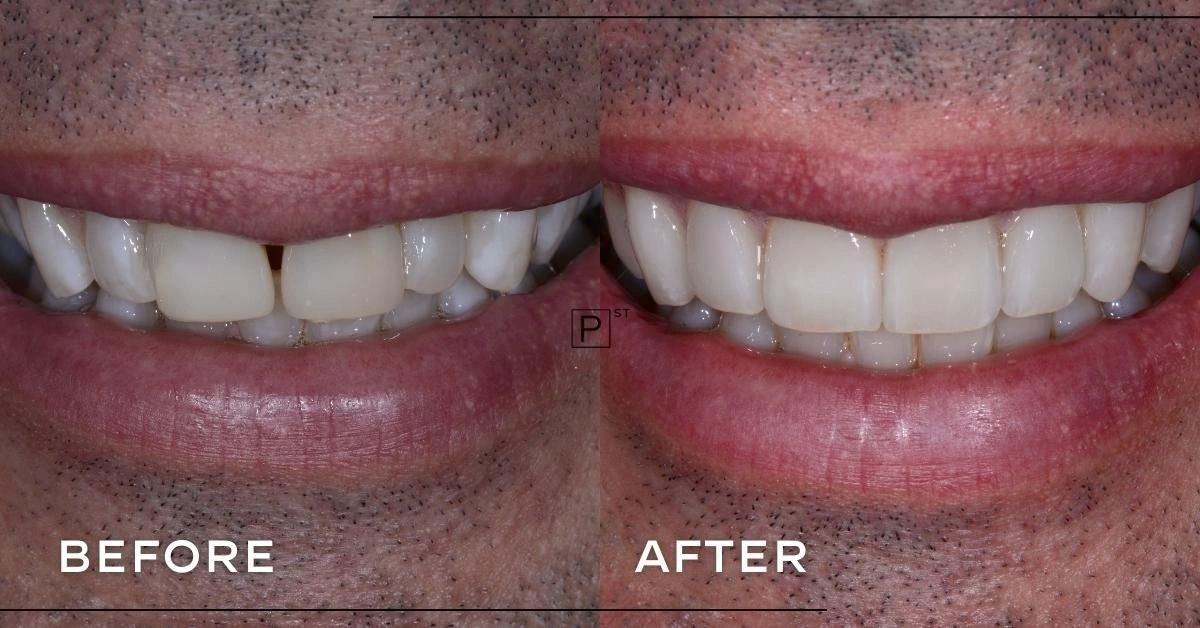
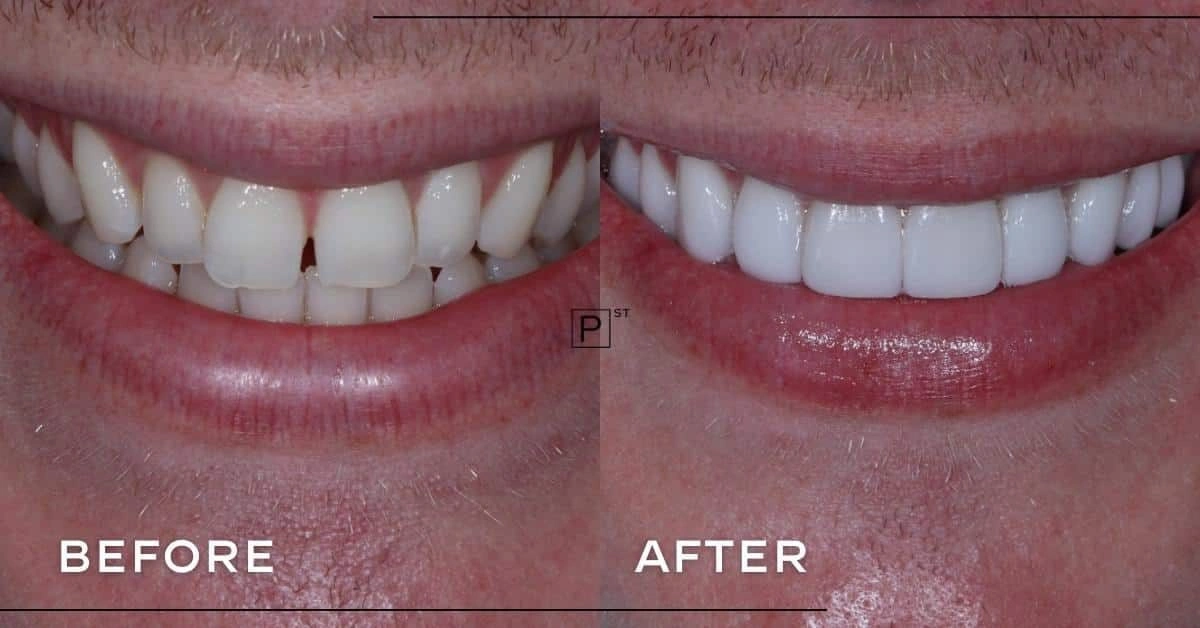
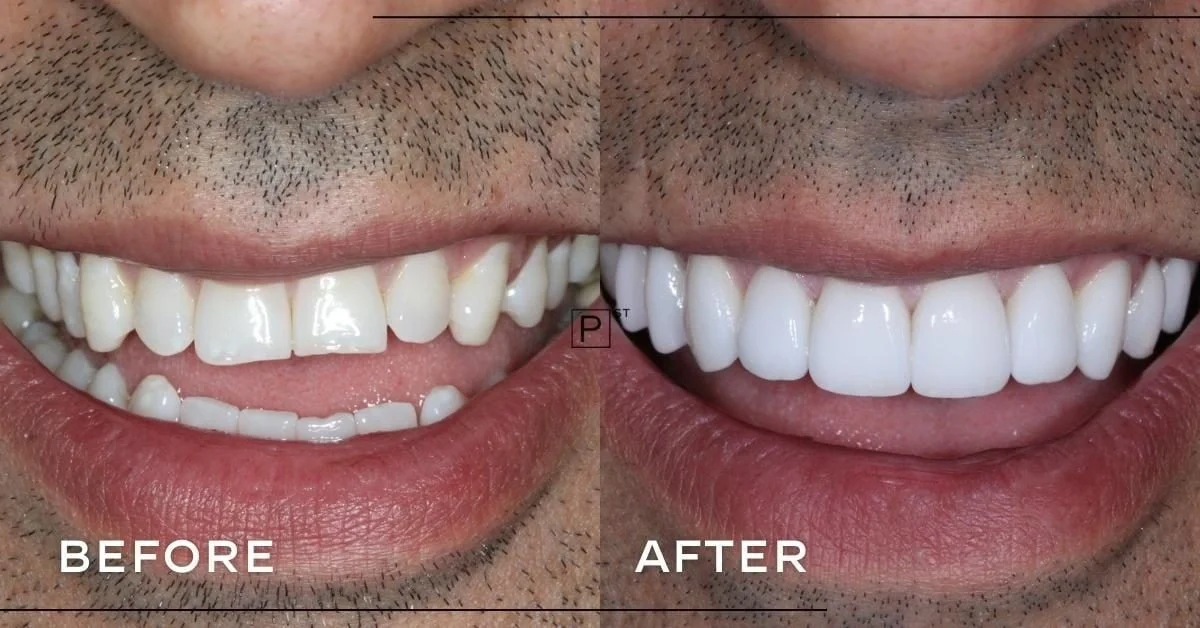
- Dental Crowding and Crooked Teeth: The teeth were misaligned and not sitting in their correct positions, affecting overall bite function
- Underbite: The lower teeth sat in front of the upper teeth, indicating a bite relationship that required correction as part of the overall treatment approach
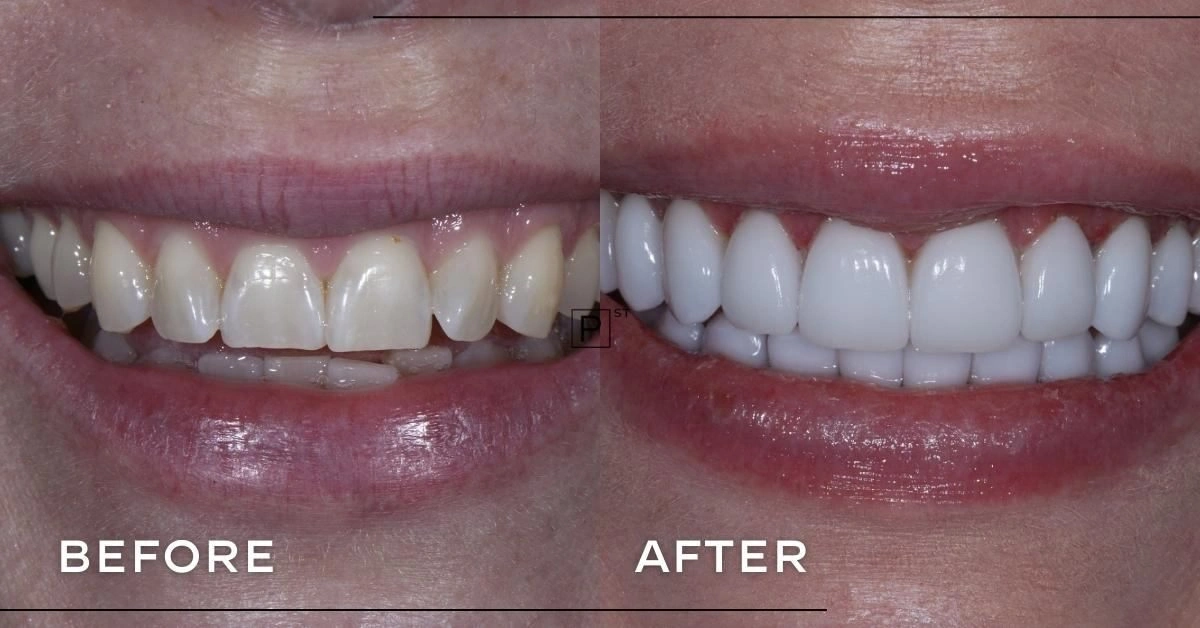
- Tooth Discolouration: The patient was unhappy with the overall colour of their teeth and wanted a brighter result alongside alignment treatment
The primary clinical objective was to improve tooth alignment and bite function through orthodontic treatment, then address tooth colour and shape through restorative treatment.
Treatment Plan and Process
A treatment approach was developed to address the patient’s presenting concerns across the following phases.
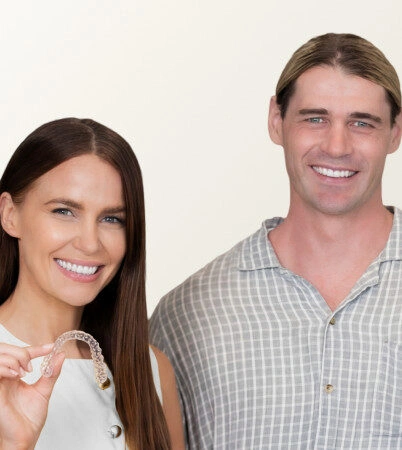
Phase 1 — Orthodontic Treatment: Invisalign clear aligners were used to improve tooth alignment and address the bite concerns. Progress was monitored across regular review appointments throughout the treatment period.
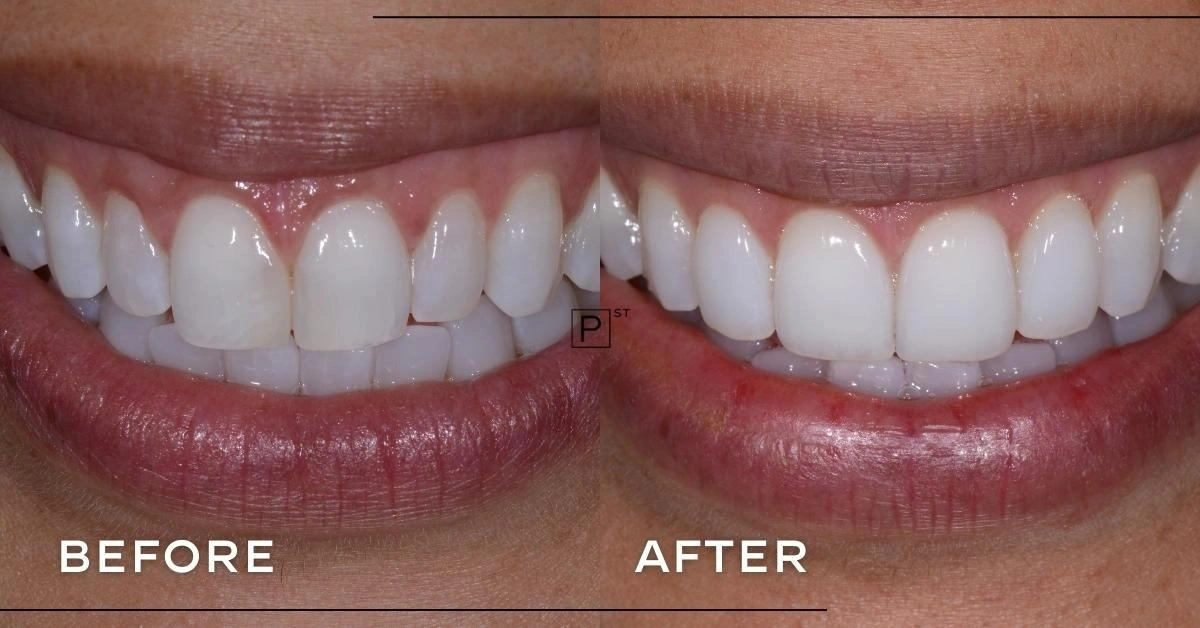
Phase 2 — Restorative Treatment: Following the completion of orthodontic treatment, porcelain veneers were placed across the upper front teeth to improve their colour and shape. The veneers were designed to complement the improved tooth positioning achieved through the aligner treatment.
Phase 3 — Retention: Retainers were provided at the conclusion of orthodontic treatment to help maintain tooth positions over the long term.
Clinical Outcome
Invisalign treatment improved tooth alignment and addressed the presenting bite concerns, whilst porcelain veneers improved the colour and shape of the upper front teeth. Both phases of treatment were completed sequentially as planned.
Individual healing responses vary, and treatment outcomes depend on factors including oral hygiene, compliance with retainer wear, and regular professional maintenance. Results experienced by one patient do not necessarily reflect outcomes others may experience.
his upper front teeth.


Frequently Asked Questions for Sydney Patients
Can Invisalign fix an underbite in adults?
Invisalign can address certain types of bite concerns in adults, though the suitability for underbite correction depends on the severity and underlying cause. Some bite concerns may require a combination of orthodontic and other treatment approaches. A thorough assessment will help clarify what is achievable in your specific situation.
Can I get veneers after Invisalign treatment?
Yes, veneers are commonly planned as a follow-on step after orthodontic treatment. Completing alignment first means the veneers can be designed to fit the final tooth positions, which generally leads to a more consistent result. Your dentist will discuss the best sequencing for your individual treatment plan.
How long does combined Invisalign and veneer treatment take?
The overall timeline depends on how long the orthodontic phase takes and how many teeth are being restored. Treatment involving both aligners and veneers typically unfolds over a number of months. Your dentist will give you a more specific estimate after your initial assessment.