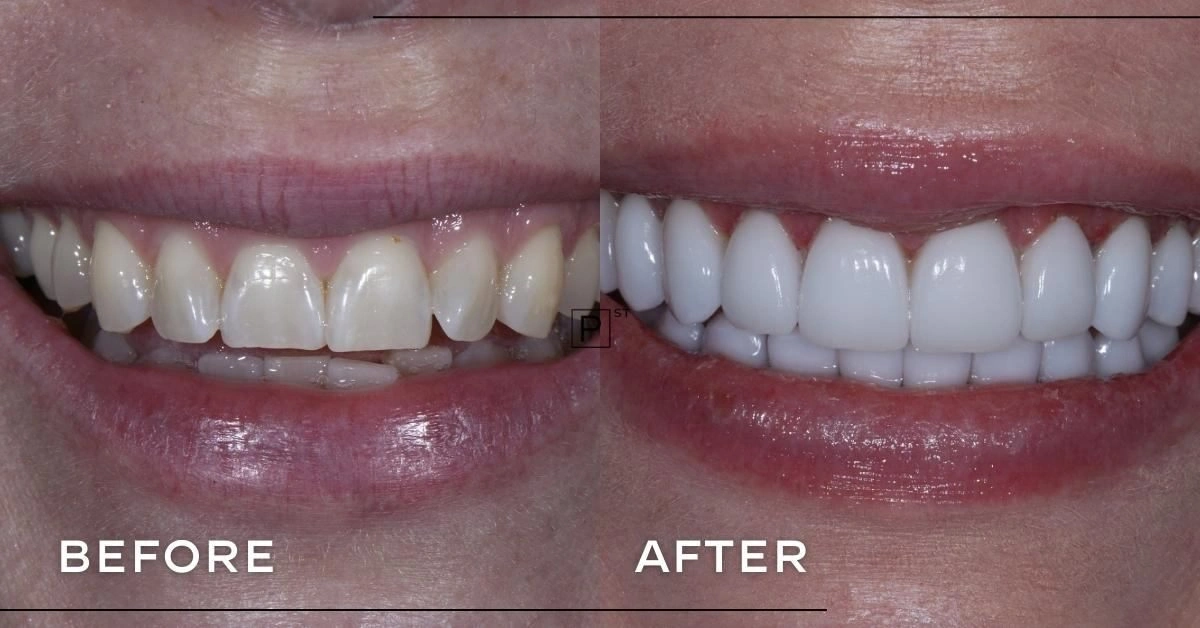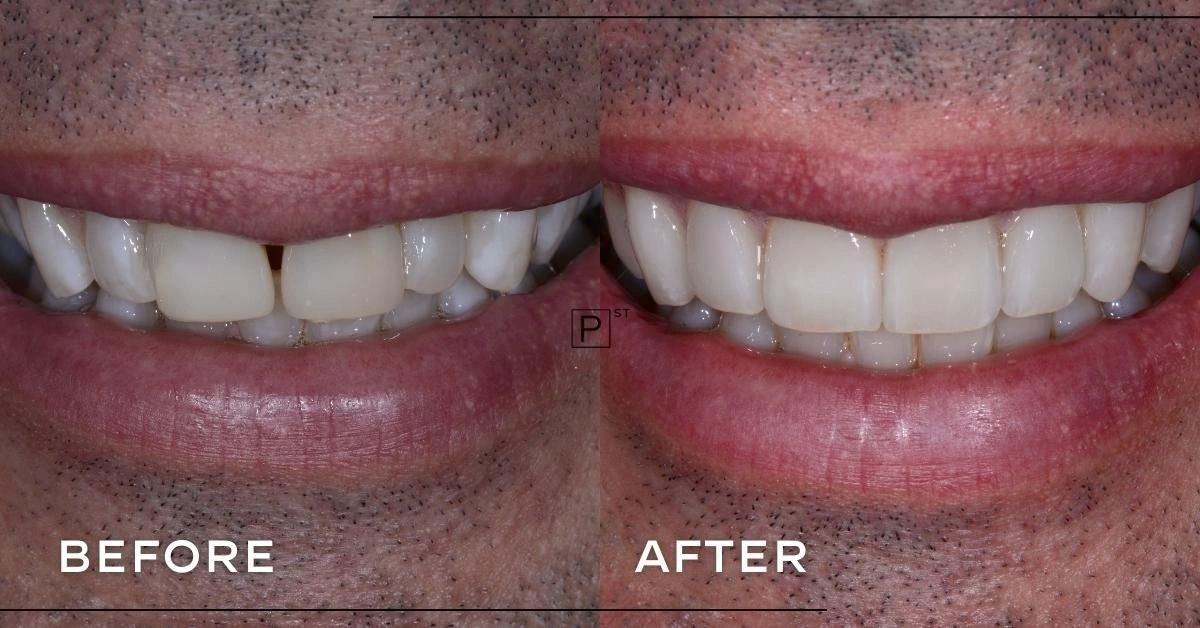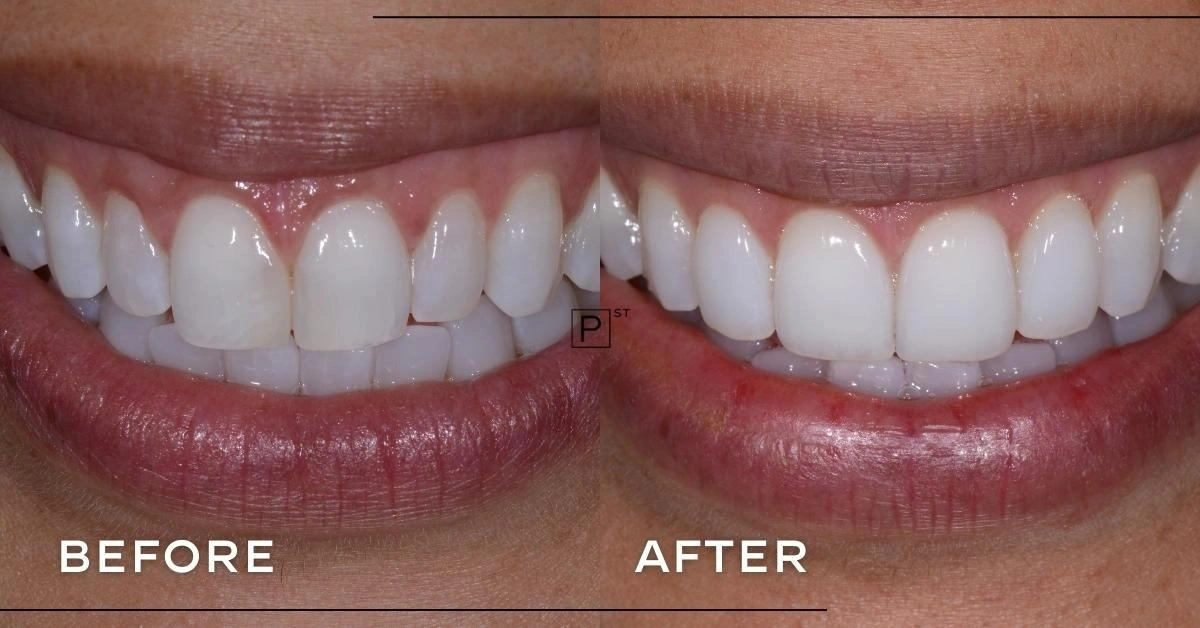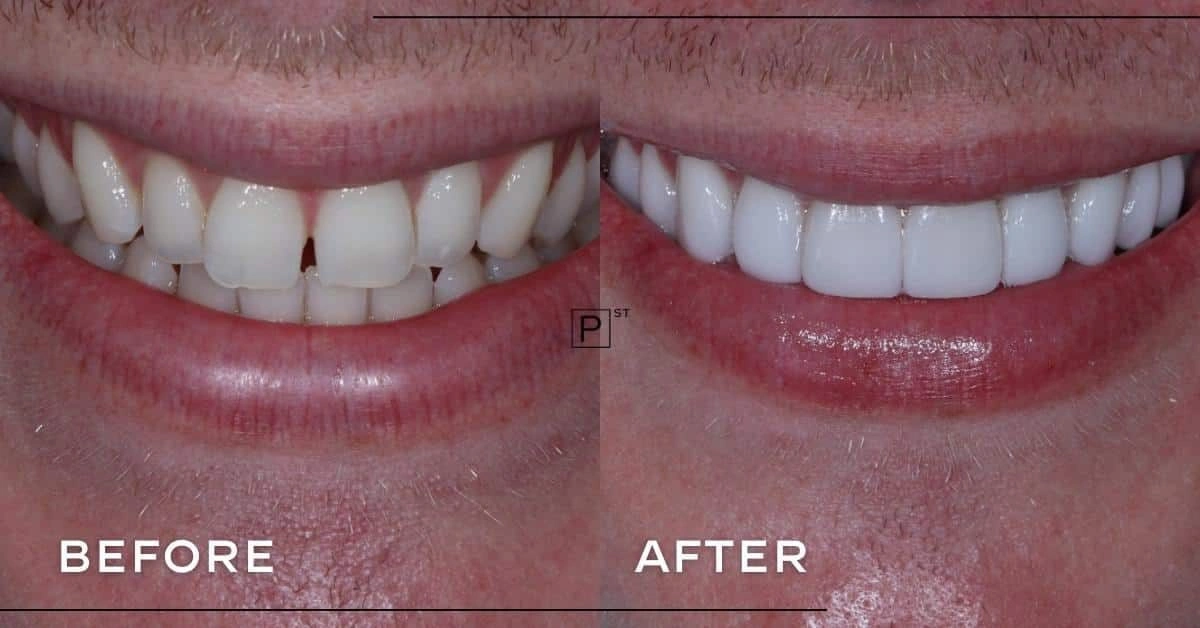
Presenting Concerns
The patient presented with the following dental concerns requiring a structured treatment plan.
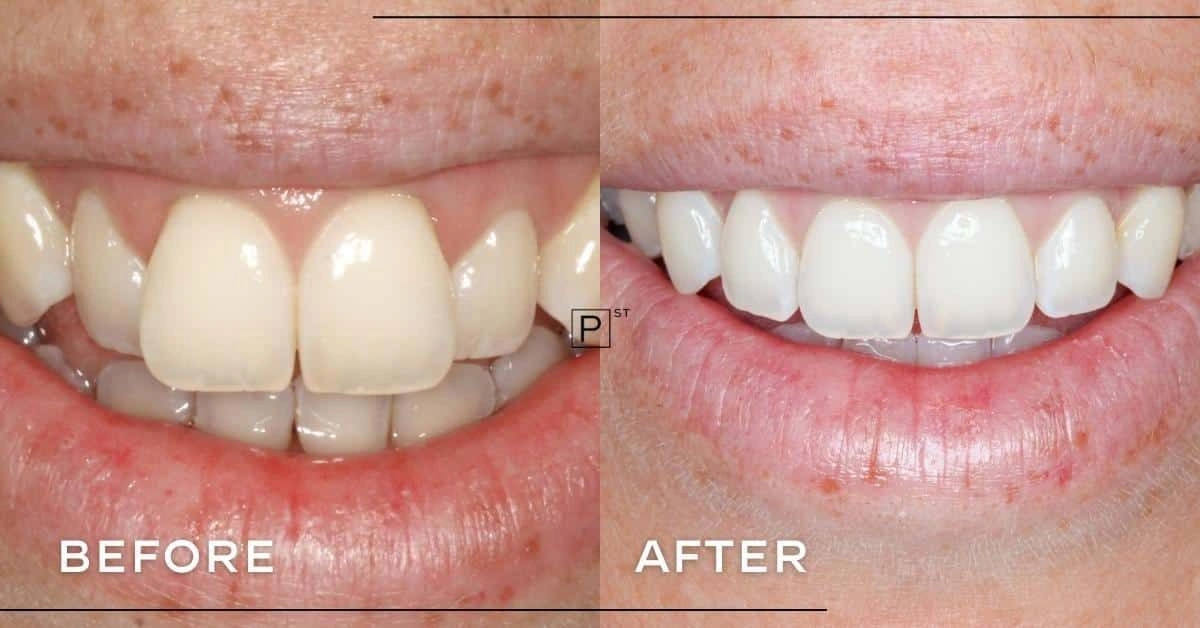
- Protruding Front Teeth: The upper front teeth sat further forward than ideal, affecting the overall balance of the smile and bite
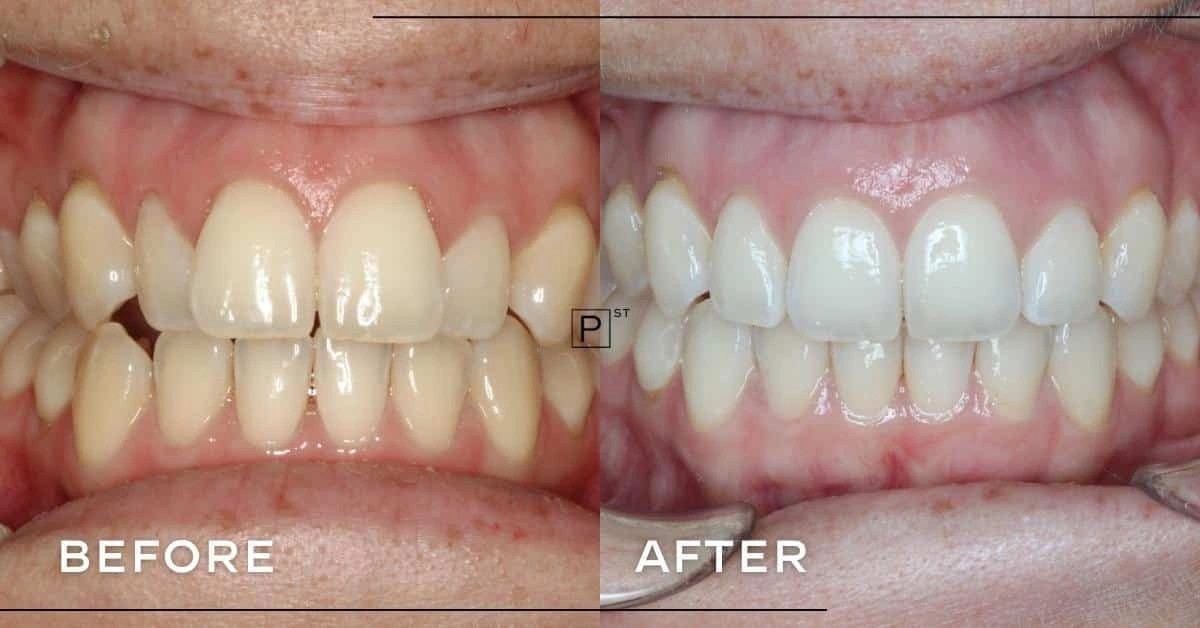
- Tooth Alignment: General alignment concerns meant the teeth were not sitting in their optimal positions
- Tooth Colour: The patient wanted to improve the overall brightness of their teeth alongside the alignment treatment
The primary clinical objective was to improve tooth positioning through orthodontic treatment and enhance tooth colour through professional whitening.
Treatment Plan and Process
A treatment approach was developed to address the patient’s presenting concerns across the following phases.
Phase 1 — Orthodontic Treatment: Digital orthodontic planning and intraoral scanning were used to map out the treatment pathway. Invisalign clear aligners were fitted and worn over a nine-month period, with regular monitoring appointments to track progress and assess aligner fit.
Phase 2 — Whitening Treatment: Professional teeth whitening was completed following the conclusion of orthodontic treatment to improve overall tooth colour. Whitening after alignment treatment allows for a more even result across the full dentition.
Phase 3 — Retention: Retainers were provided following completion of treatment. Consistent retainer wear is important to maintain orthodontic results over the long term.
Clinical Outcome
Invisalign treatment improved tooth positioning and addressed the protrusion concerns, whilst professional whitening improved overall tooth colour. Both treatments were completed sequentially as planned.
Individual healing responses vary, and treatment outcomes depend on factors including oral hygiene, compliance with post-treatment care, and regular professional maintenance. Results experienced by one patient do not necessarily reflect outcomes others may experience.
Frequently Asked Questions for Protruding and crowded teeth in Darlinghurst
Can Invisalign correct protruding teeth in adults?
Invisalign can be effective for a range of alignment concerns in adults, including certain types of tooth protrusion. Suitability depends on the complexity of the case, and a thorough assessment will help determine whether clear aligners are the right fit or whether another approach might be more appropriate.
Is it better to whiten teeth before or after Invisalign treatment?
Whitening after orthodontic treatment is generally recommended, as it allows for a more even result once the teeth are in their final positions. Your dentist will advise on the best timing based on your individual treatment plan.
How long do I need to wear retainers after Invisalign?
Retainer wear requirements vary between individuals, but ongoing use is typically recommended to maintain results over time. Your dentist will give you specific guidance at the end of your treatment and at follow-up appointments.