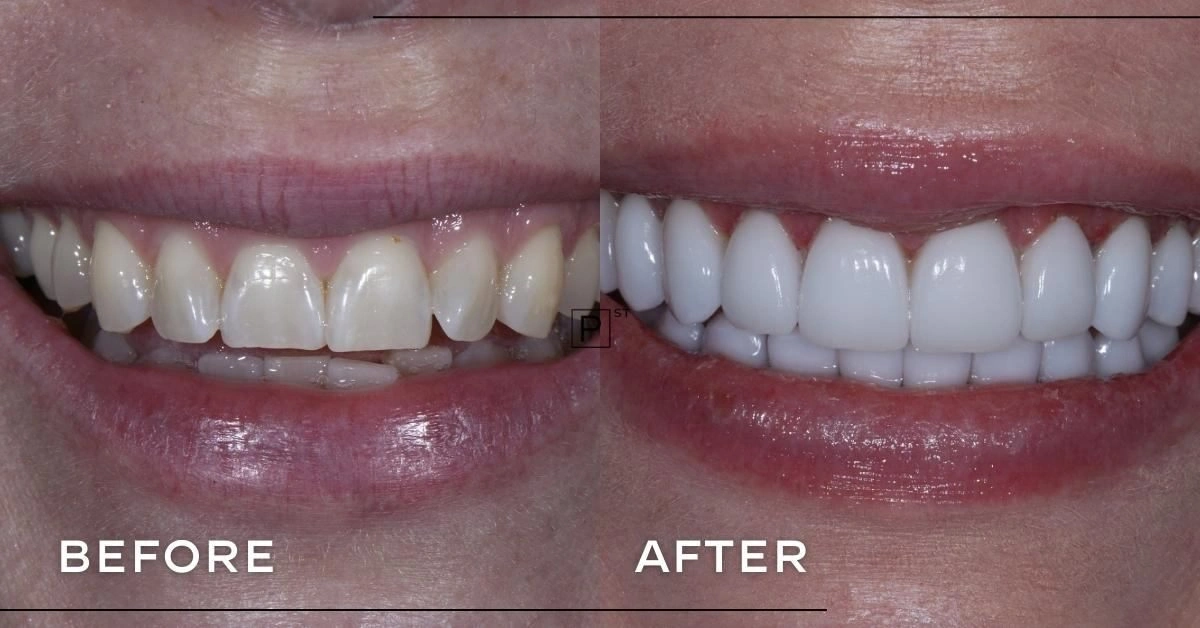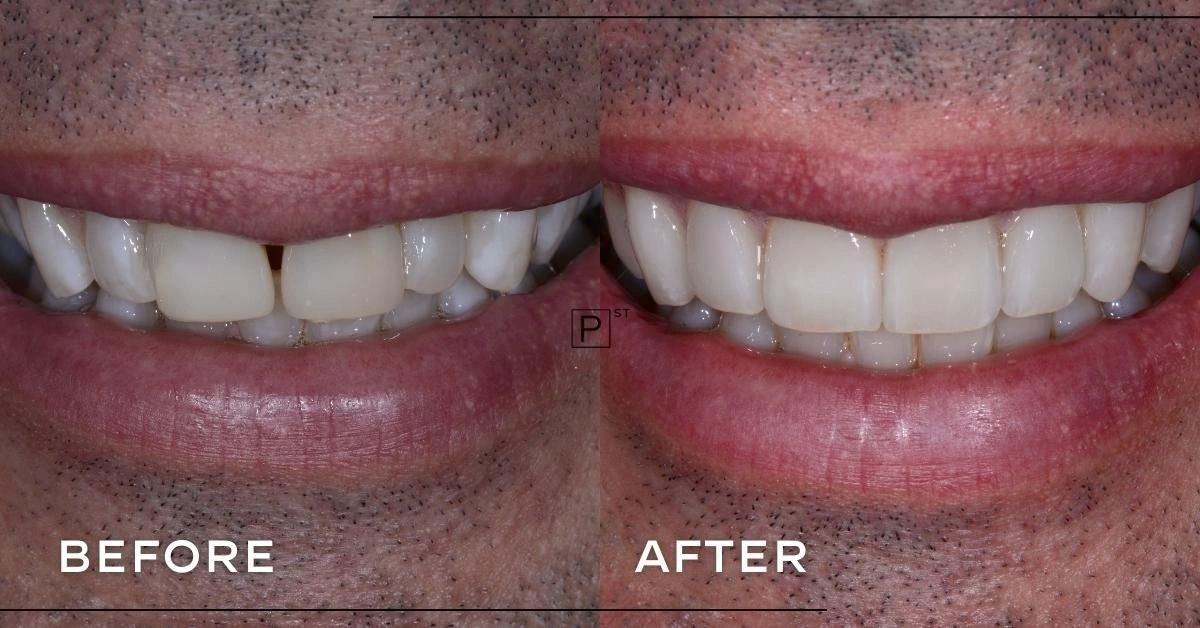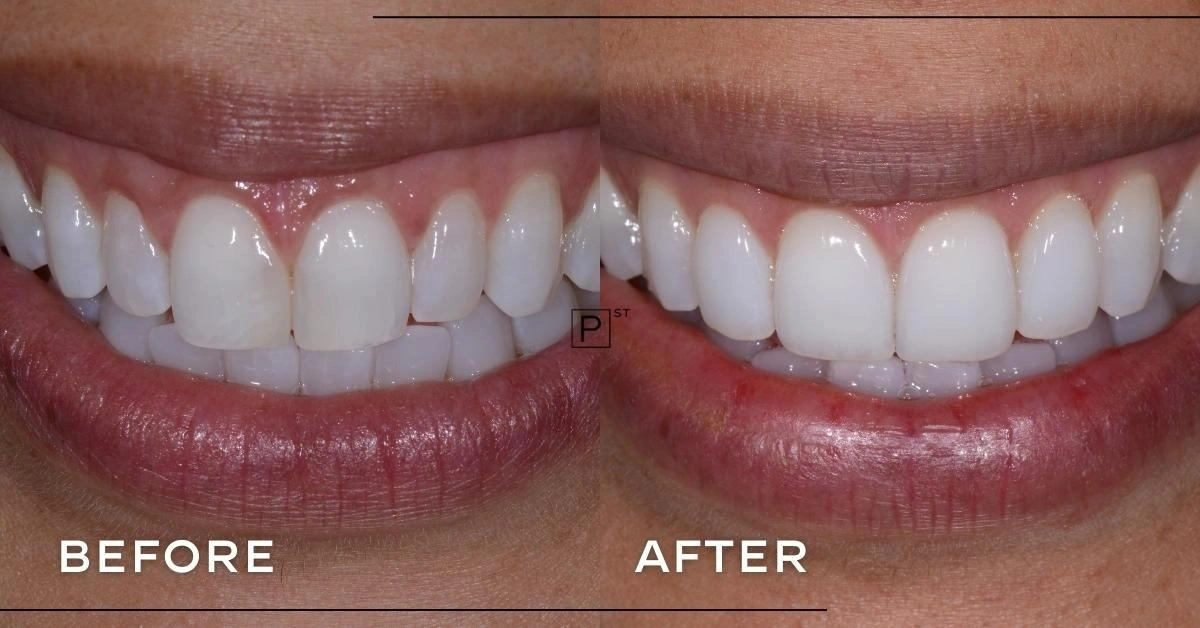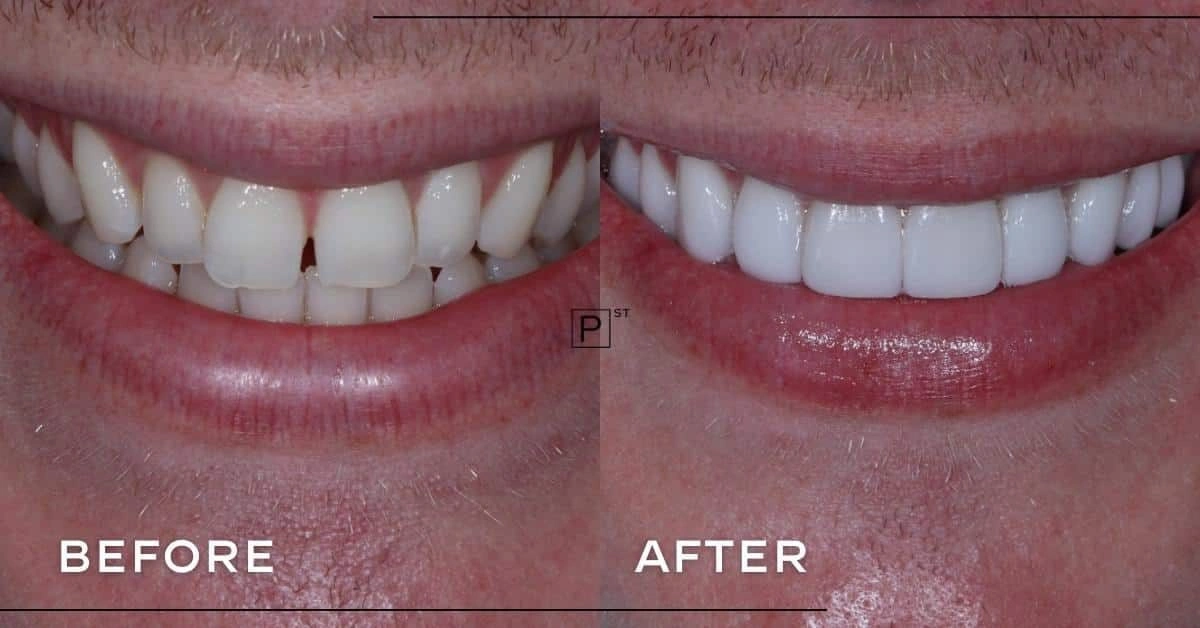
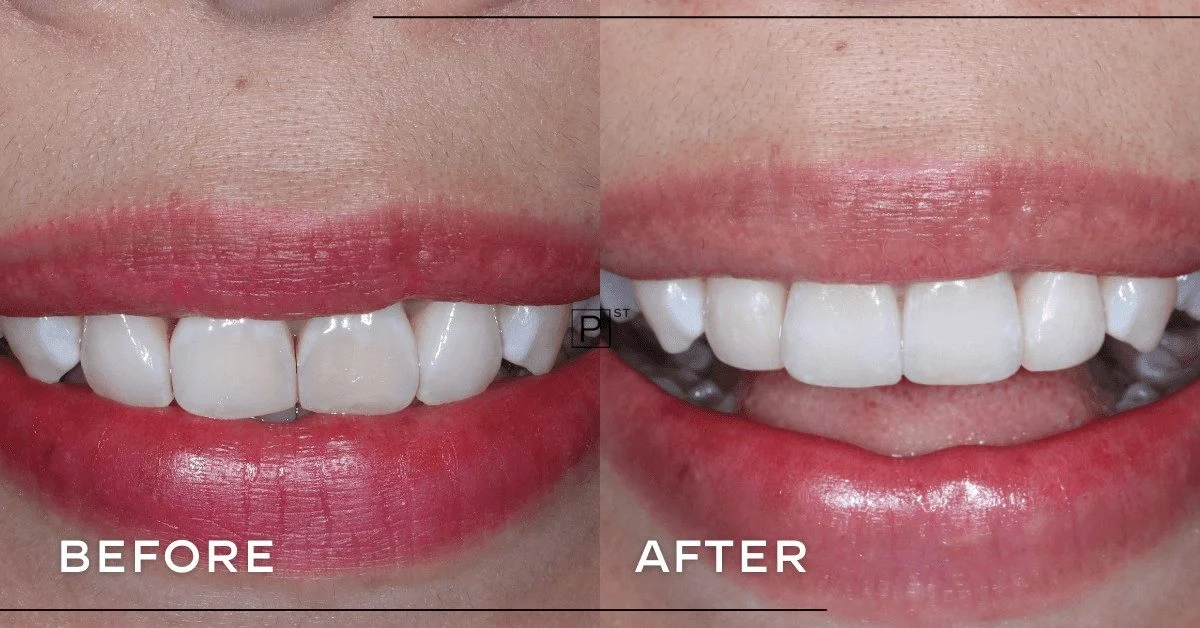
Presenting Concerns
The patient presented with the following dental concerns requiring a structured treatment plan.
- Visible Dark Triangles: Dark triangular spaces visible between the teeth at the gumline were a primary concern for the patient
- Uneven Tooth Shape: The shape of the front teeth was uneven and the patient wanted a more consistent appearance across the smile
The primary clinical objective was to address the dark triangles and improve the shape of the front teeth through a combination of porcelain veneers and composite bonding.
Treatment Plan and Process
A treatment approach was developed to address the patient’s presenting concerns across the following phases.
Phase 1 — Assessment and Planning: Digital Smile Design was used to assess the existing tooth proportions and plan a treatment approach that would address both the dark triangle concerns and the overall tooth shape.
Phase 2 — Veneer and Bonding Treatment: Porcelain veneers were placed on the front teeth to improve their shape and create a more even appearance across the smile. Composite bonding was used to address the dark triangles by filling in the spaces between the teeth at the gumline.
Phase 3 — Post-Treatment Care: Post-treatment guidance was provided covering the care requirements for both the veneers and the composite bonding.
Clinical Outcome
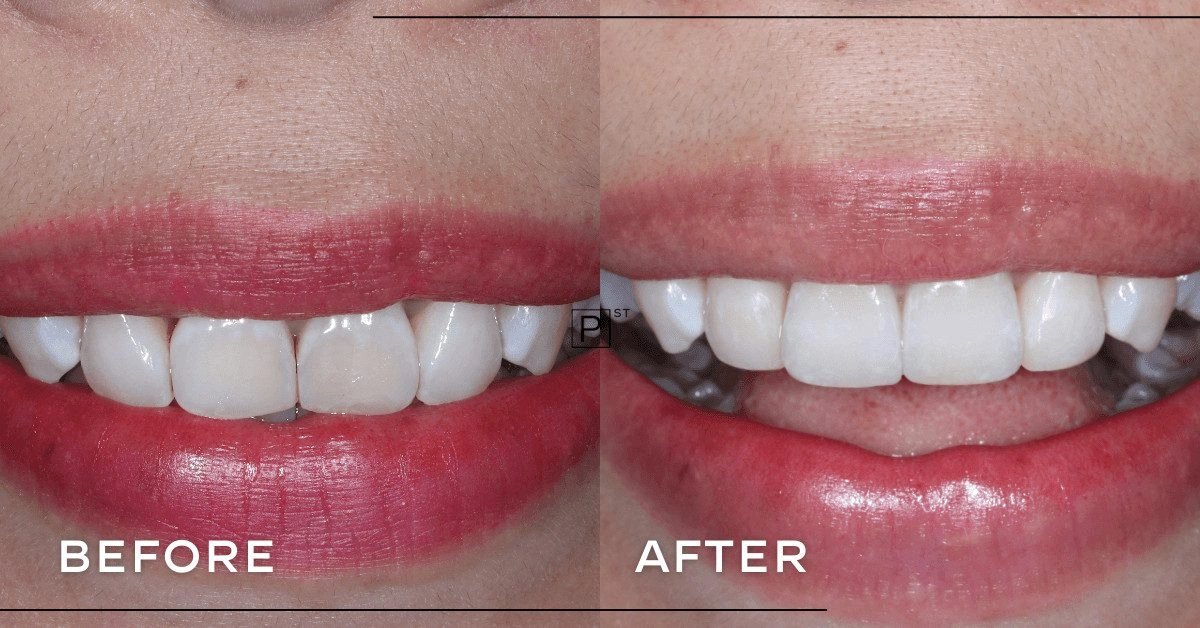
Porcelain veneers improved the shape and consistency of the front teeth, whilst composite bonding addressed the dark triangles between the teeth. The two treatments were used together as part of a coordinated plan.
Individual healing responses vary, and treatment outcomes depend on factors including oral hygiene, compliance with post-treatment care, and regular professional maintenance. Results experienced by one patient do not necessarily reflect outcomes others may experience.
Frequently Asked Questions for Dark Triangles & Uneven Teeth & Tooth shape
What causes dark triangles between teeth and can they be fixed?
Dark triangles, also called black triangles, occur when the gum tissue does not fully fill the space between teeth. They can result from gum recession, bone loss, or the natural shape of the teeth. Treatment options depend on the underlying cause and may include composite bonding, veneers or other approaches. A consultation is the best starting point to understand what is appropriate for your situation.
Is composite bonding or veneers better for fixing dark triangles?
Both can be used to address dark triangles, and in some cases they are used together. Composite bonding is a more conservative option as it does not require tooth preparation, whilst veneers offer greater durability and a wider range of shape adjustments. Your dentist will discuss the most appropriate approach based on your specific concerns.
How long does composite bonding last compared to porcelain veneers?
Composite bonding generally requires maintenance or replacement sooner than porcelain veneers, as the material is less resistant to staining and wear over time. The longevity of both depends on oral habits, hygiene and regular professional care. Your dentist will give you a realistic picture of what to expect based on your individual situation.