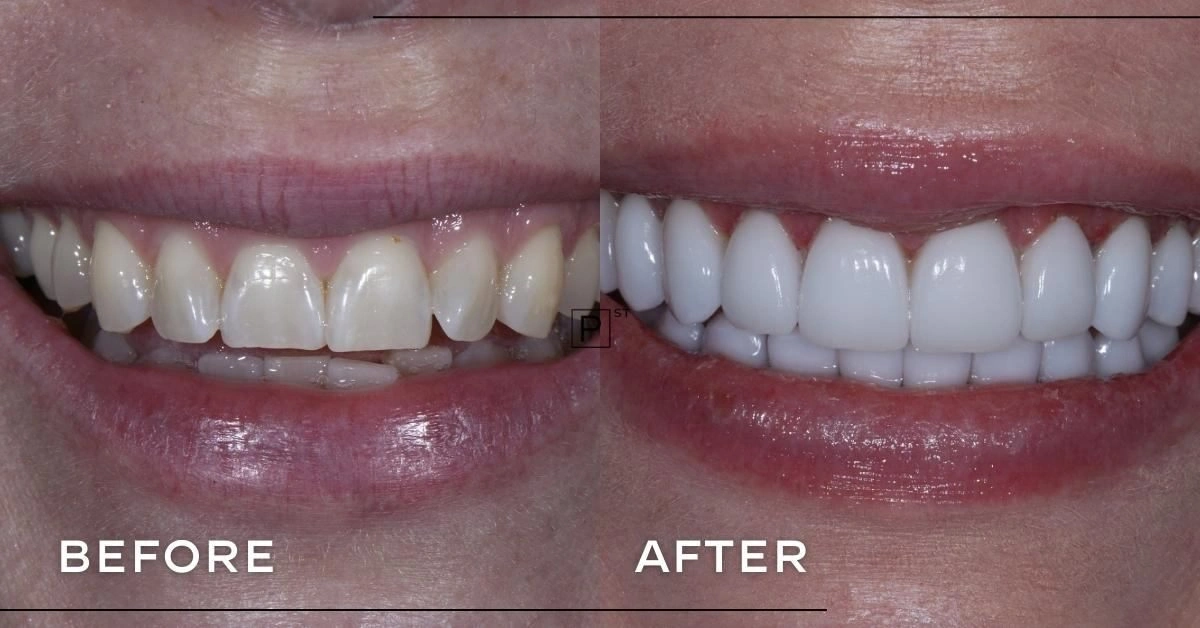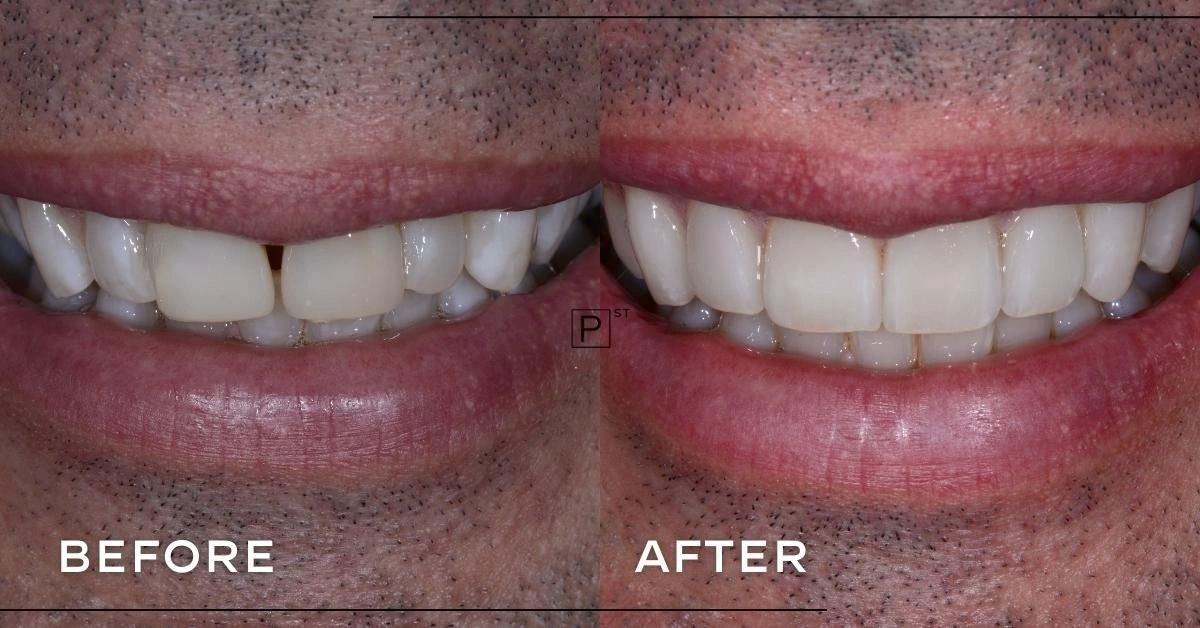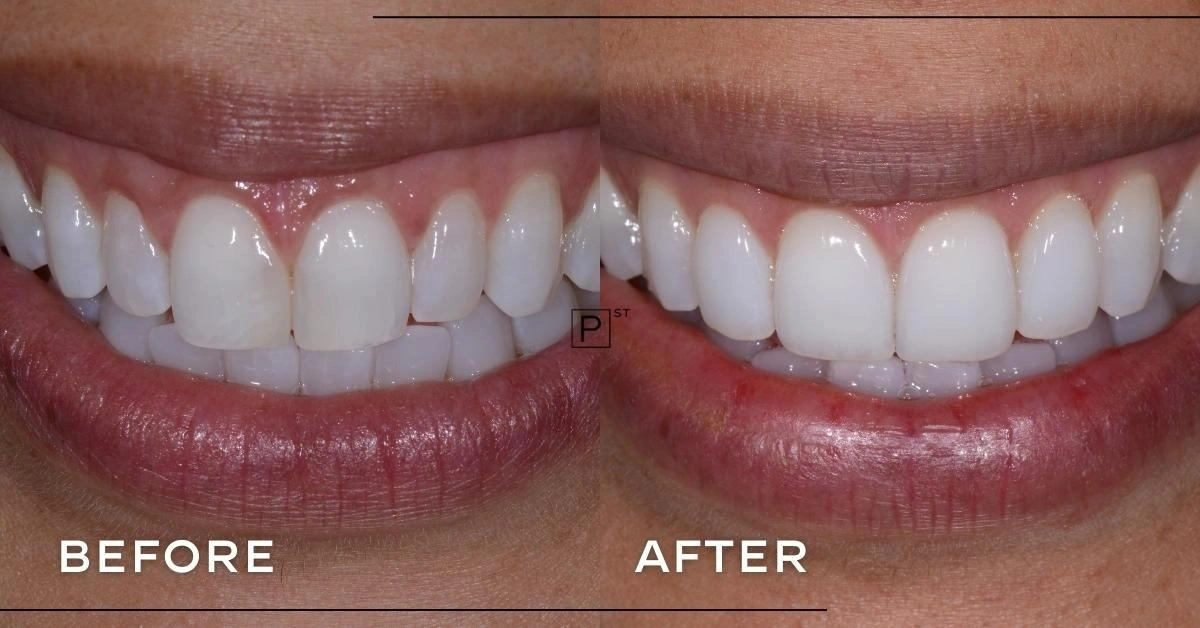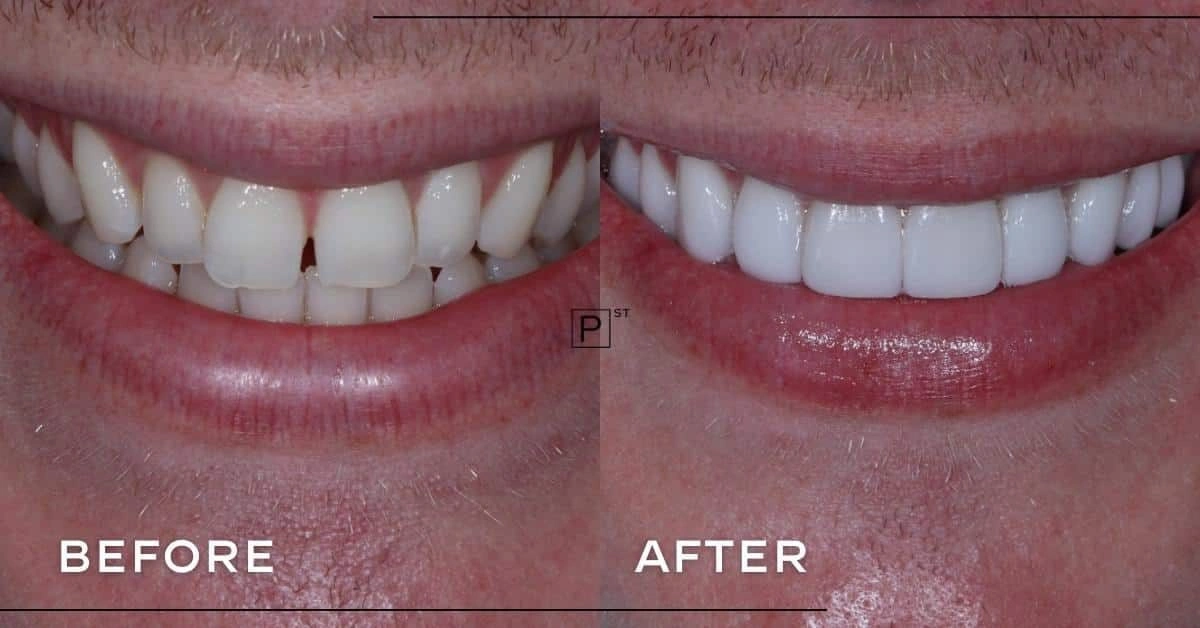
Presenting Concerns
The patient presented with the following dental concerns requiring a structured treatment plan.
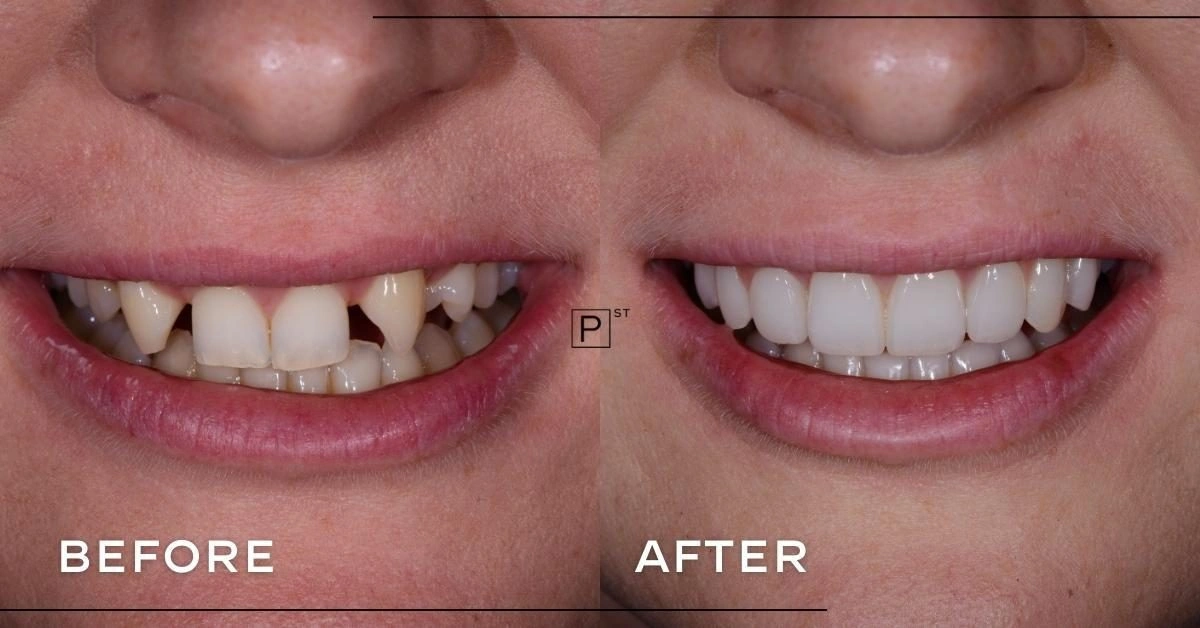
- Congenitally Missing Lateral Incisors: The upper lateral incisors were absent from birth, leaving gaps that affected both the appearance and overall structure of the smile
- Canine Appearance: The upper canines had drifted into the lateral incisor positions over time and their pointed shape created an uneven appearance
The primary clinical objective was to address the missing lateral incisors and improve the overall appearance of the front teeth using a combination of restorative and prosthetic treatment.
Treatment Plan and Process
A treatment approach was developed to address the patient’s presenting concerns across the following phases.
Phase 1 — Assessment and Planning: Diagnostic imaging and Digital Smile Design were used to assess the existing tooth positions and plan a treatment approach that worked with the current dental structure.
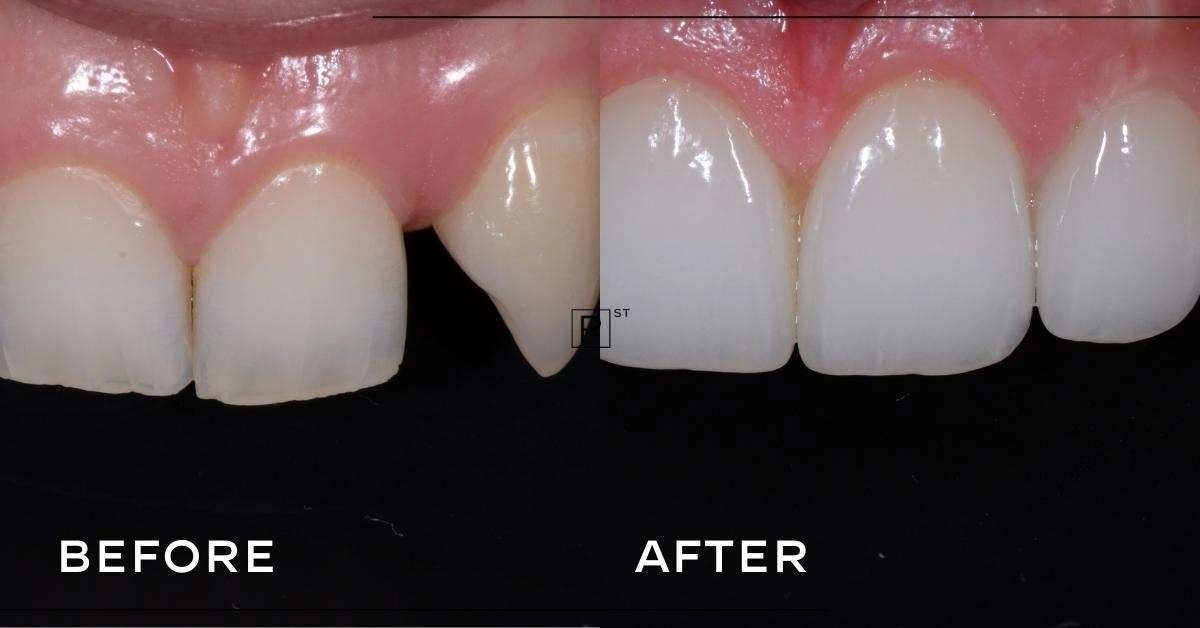
Phase 2 — Veneer Treatment: Porcelain veneers were placed on the canine teeth to reshape them so they more closely resembled lateral incisors in both shape and proportion. This helped to create a more even appearance across the front of the smile.
Phase 3 — Bridge Placement: A dental bridge was used to address the remaining gap and complete the restoration of the smile. The bridge was designed to complement the veneer work completed in the previous phase.
Clinical Outcome
The combination of porcelain veneers and a dental bridge addressed the congenitally missing lateral incisors and improved the overall appearance of the front teeth. Both restorations were designed to work together as part of a cohesive treatment plan.
Individual healing responses vary, and treatment outcomes depend on factors including oral hygiene, compliance with post-treatment care, and regular professional maintenance. Results experienced by one patient do not necessarily reflect outcomes others may experience.

Frequently Asked Questions for Congenitally Missing Teeth Patients
What are the options for replacing teeth that were never there to begin with?
Congenitally missing teeth can be addressed through several approaches depending on the specific situation, including dental implants, bridges or veneers used in combination with other restorations. The right option depends on factors such as the position of surrounding teeth, bone availability and overall oral health. A consultation is the best starting point.
Can veneers change the shape of canine teeth to look like other teeth?
Veneers can be used to reshape teeth and adjust their appearance quite significantly, which can be useful when canines have migrated into the positions of missing lateral incisors. The degree of change achievable depends on the original tooth size and shape, and your dentist will assess this carefully during planning.
What is the difference between a dental bridge and an implant for replacing a missing tooth?
Both bridges and implants are options for replacing missing teeth, but they work differently. A bridge is supported by the teeth on either side of the gap, whilst an implant is placed directly into the jaw bone as a standalone restoration. Each has different suitability criteria, costs and long-term considerations, which your dentist can walk you through.