

CEREC Restorations
A custom porcelain crown, designed, milled, and fitted. All in one visit.
CEREC (Chairside Economical Restoration of Esthetic Ceramics) is a same-day dental restoration system that uses computer-aided design and manufacturing (CAD/CAM) technology to create custom porcelain crowns, inlays, onlays, and veneers in a single appointment. A digital scan replaces traditional impressions, and the restoration is milled from a solid ceramic block right here in our Sydney CBD rooms.
Here at Pitt Street Dental Centre in Sydney CBD, we use CEREC technology to restore damaged, weakened, or decayed teeth without the need for temporary crowns, multiple appointments, or waiting for an external laboratory. Over 35,000 crowns have been placed at Pitt Street Dental Centre.
A CEREC restoration typically takes 60 to 90 minutes from scan to fit.

You have a tooth that needs a crown. Normally, that means two appointments: one to prepare the tooth and fit a temporary, another two to three weeks later to bond the permanent crown. In between, you are living with a temporary that can feel loose, look different, and remind you with every meal that the job is only half done.
We do not think that is a good experience. And with CEREC technology, it is no longer a necessary one.
Here at Pitt Street Dental Centre, we design, mill, and fit your permanent porcelain crown in a single appointment. You walk in with a damaged tooth and walk out with a finished restoration. No temporary, no second visit, no waiting. For busy professionals in Sydney CBD, that matters.
What Is CEREC and How Does It Work?
CEREC is a CAD/CAM system that allows us to create porcelain dental restorations chairside, in a single visit. The process replaces the traditional method of taking physical impressions, sending them to an external laboratory, and waiting weeks for the restoration to be made and returned.
Here is how it works at Pitt Street Dental Centre:
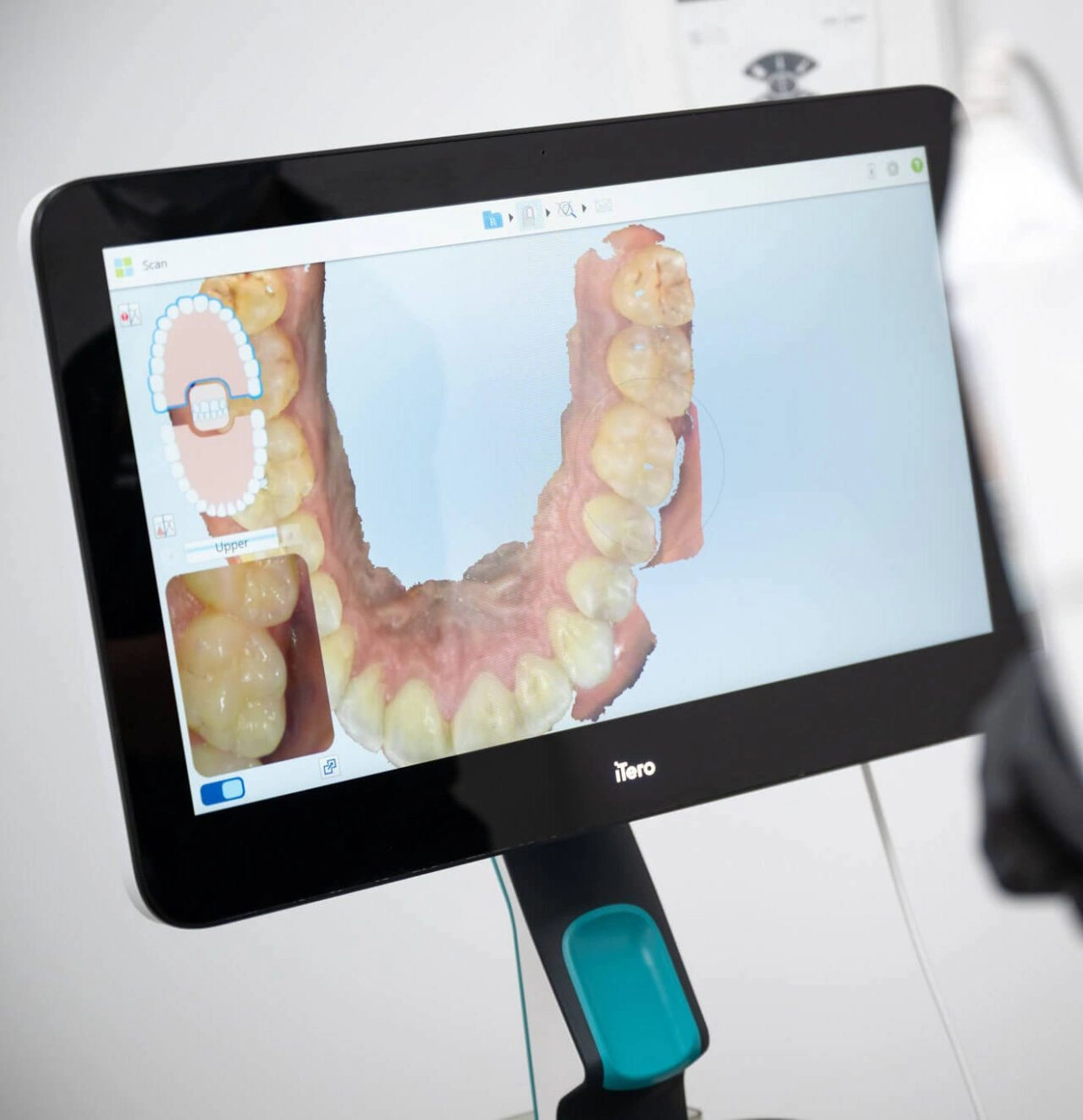
We take a digital 3D scan of your tooth using an intraoral camera. The scan captures the precise dimensions and contours of the prepared tooth and surrounding teeth. Dr Cai then uses the CEREC software to design your restoration on screen, adjusting the shape, size, and contour to ensure a precise fit and natural appearance.
Once the design is finalised, the data is sent to the CEREC milling unit in our practice. The restoration is milled from a solid block of dental-grade ceramic in approximately 10 to 15 minutes. After milling, it is stained and glazed to match the colour of your natural teeth, then bonded permanently to your tooth.
The entire process, from scan to finished restoration, takes 60 to 90 minutes. You leave with a permanent, precisely fitted porcelain crown, inlay, or onlay. No impression trays, no temporary crown, and no second appointment.
The ceramic material used in CEREC restorations is strong, biocompatible, and closely mimics the translucency and wear characteristics of natural tooth enamel.
When Is a CEREC Restoration the Right Choice?
A CEREC restoration may be the ideal solution if:
“I have a cracked, chipped, or broken tooth that needs a crown but I do not want to wait weeks for it”
“I have a large, failing filling that needs to be replaced with something stronger”
“I need a crown but I cannot commit to two separate appointments”
“I have a tooth that has had root canal treatment and now needs a crown to protect it”
“I am visiting Sydney for a limited time and need a restoration completed in one appointment”
“I dislike the feeling of temporary crowns and would prefer to skip that step entirely”
CEREC is suitable for most crown, inlay, and onlay cases. For some complex situations, such as extensive full-mouth rehabilitations or cases requiring specialised laboratory work, a traditionally fabricated crown may be more appropriate. Dr Cai will recommend the best approach for your specific tooth.
What Does the CEREC Process Look Like at Pitt Street Dental Centre?
01
Assessment and Preparation (20 minutes)
Dr Cai examines the tooth and determines whether a CEREC restoration is the best option. If it is, the damaged or decayed portion of the tooth is removed and the remaining structure is shaped to receive the restoration. Local anaesthetic ensures you are comfortable throughout.
02
Digital Scan (5 minutes)
Instead of biting into a tray of impression material, we use an intraoral camera to take a precise 3D digital scan of your tooth. It is quick, comfortable, and produces a more accurate impression than traditional methods.
03
On-Screen Design (10 to 15 minutes)
Dr Cai designs your crown, inlay, or onlay on the CEREC software. You can watch the design take shape on screen in real time. The software calculates the ideal contours and bite contact points based on the digital scan data.
04
Milling (10 to 15 minutes)
The design is sent to the milling unit in our practice. A precision diamond bur carves your restoration from a solid block of dental-grade ceramic. While it mills, you can relax, watch Netflix on our ceiling-mounted screen, or enjoy a complimentary beverage.
05
Staining, Glazing, and Bonding (15 to 20 minutes)
The milled restoration is stained and glazed to match the colour and sheen of your natural teeth. Dr Cai checks the fit, bite, and aesthetics, then bonds the restoration permanently to your tooth. Done.
CEREC Same-Day Crowns vs Traditional Lab Crowns: How Do They Compare?
| CEREC Same-Day Crown | Traditional Lab Crown | |
|---|---|---|
| Appointments | One (60 to 90 minutes) | Two (plus 2 to 3 weeks waiting) |
| Impressions | Digital 3D scan | Physical impression trays |
| Temporary crown needed | No | Yes |
| Material | Dental-grade ceramic (milled from solid block) | Porcelain, zirconia, or metal-ceramic |
| Accuracy | Digital precision | Dependent on impression quality |
| Colour matching | Stained and glazed chairside | Colour-matched by lab technician |
| Strength | Excellent for most restorations | Full range of materials available for complex cases |
| Best for | Single crowns, inlays, onlays, busy patients | Complex cases, full-mouth rehabilitation, specialised aesthetics |
Are There Any Risks with CEREC Restorations? What Should I Expect?
CEREC restorations carry the same clinical considerations as any dental crown or restoration. The procedure itself is straightforward and well-established.
Things to be aware of:
- Temporary sensitivity to hot and cold for a few days after the restoration is bonded, which is normal and typically resolves on its own
- In rare cases, the fit or bite may need minor adjustment at a follow-up appointment
- Ceramic restorations can chip or fracture under extreme force (e.g. biting ice, opening bottles with your teeth)
- If the underlying tooth has extensive nerve involvement, root canal treatment may be required before or after the crown
After your CEREC restoration:
- No recovery time. You can eat and drink normally as soon as the anaesthetic wears off
- The restoration is permanent from the moment it is bonded
- Treat it like a natural tooth: regular brushing, flossing, and six-monthly check-ups
- Avoid using the restored tooth for non-food purposes (opening packaging, biting nails)
- If you grind your teeth, Dr Cai may recommend a night guard to protect both the restoration and your natural teeth

Transparent pricing, no surprises
We publish our CEREC crown pricing on our full price list. Download it to review costs before your appointment.
Frequently Asked Questions About CEREC Restorations
How much does a CEREC crown cost in Sydney CBD?
We publish our full pricing on the downloadable price list. A CEREC crown is comparable in cost to a traditional lab-made crown, with the added benefit of being completed in one appointment. After your assessment, you will receive a clear cost estimate before any work begins.
How long does a CEREC crown last?
With proper care, a CEREC crown is designed to last 10 to 15 years or longer. Studies have shown that CAD/CAM ceramic restorations have comparable longevity to traditionally fabricated crowns. Regular check-ups and good oral hygiene are the biggest factors in longevity.
Is a CEREC crown as strong as a traditional crown?
For most applications, yes. CEREC restorations are milled from a solid block of dental-grade ceramic, which provides excellent strength and durability. For teeth that bear extremely heavy forces, such as molars in patients with bruxism, Dr Cai may recommend a traditionally fabricated zirconia crown for additional strength.
Can I get a CEREC crown if I need a root canal first?
Yes. If your tooth requires root canal treatment, Dr Cai can perform the root canal and then design and fit a CEREC crown in the same or a subsequent appointment. The crown protects the root-treated tooth and restores its function.
Does the digital scan hurt?
Not at all. The intraoral camera simply captures images of your tooth. There is no pressure, no material to bite into, and no discomfort. Most patients find it significantly more pleasant than traditional impressions.
Payment Plans




Why Choose Pitt Street Dental Centre for CEREC Restorations in Sydney?
35,000+ crowns placed
The volume of restorative work Dr Cai and his team have completed speaks to the consistency and reliability of the results. That experience means efficient appointments, precise fits, and natural-looking outcomes.
Genuinely same-day
We do not use the term loosely. Your crown is designed, milled, and permanently bonded in a single appointment of 60 to 90 minutes. No temporary, no second visit, no waiting.
Perfect for busy professionals
Our Sydney CBD location, a short walk from Martin Place, Wynyard, and Town Hall, means you can have a permanent porcelain crown fitted during a lunch break or before work. One appointment, one visit, done.
An environment designed for comfort
Having a crown fitted should not feel like an ordeal. Our practice features dimmed lighting, aromatherapy, Netflix on the ceiling, noise-cancelling headsets, and a complimentary beverage menu. You can relax while your crown is being milled just metres away.
Digital precision
The 3D digital scan and CAD/CAM design process produce restorations with a precision that traditional impression methods cannot consistently match. Better fit, better bite, better long-term result.

Author Attribution:
Medically reviewed by Dr Michael Cai, BDSc (Hons) WA MRACDS (GDP) – July 2026
Medical Disclaimer:
The information on this page is intended for general educational purposes only and should not be considered a substitute for professional dental advice. Treatment outcomes vary between individuals. All surgical procedures carry risks. Please consult Dr Michael Cai or one of our qualified dentists at Pitt Street Dental Centre for personalised advice about your dental health.