There is plenty to enjoy about living in Sydney, but finding time to look after yourself can be difficult.
For anyone working in the CBD, the day might start with an early commute and a coffee, followed by meetings, deadlines and lunch squeezed in at your desk. Evenings bring their own responsibilities, and it can be hard to switch off when there are still emails to answer or things to organise for tomorrow.
Add mortgage repayments, rent, grocery bills and the uncertainty of the current economy, and it is understandable that many people feel stretched. Often, we get so used to being busy that we stop noticing how much tension we are carrying.
Sometimes that tension shows up in your jaw.
You may be clenching without realising it
Clenching and grinding, also called bruxism, can happen during the day or while you sleep. You might find yourself pressing your teeth together while concentrating on a spreadsheet, driving through traffic or reading a stressful email.
Grinding is not always noisy. Some people hold their teeth tightly together without making a sound, only noticing something is wrong when their jaw starts aching or a tooth chips.
The following are all worth mentioning at your next visit:
- A tired jaw in the morning
- Headaches around the temples
- Sensitive teeth
- Worn edges
- Fillings that keep breaking
These symptoms can have different causes, so we need to examine them rather than assume they are simply due to stress.
Stress can contribute to grinding, but caffeine, alcohol, certain medications and sleep problems can also play a part.
Sometimes your sleep deserves a closer look
If you grind your teeth and also snore, wake with a dry mouth or feel tired despite spending enough time in bed, it is worth looking at the bigger picture.
Sleep bruxism can occur alongside obstructive sleep apnoea, often called OSA. This happens when the airway repeatedly narrows or closes during sleep, interrupting breathing. Your sleep may be disturbed many times without you remembering waking up.
Grinding does not automatically mean you have sleep apnoea. However, the following should be assessed:
- Loud snoring
- Breathing pauses noticed by a partner
- Waking up gasping
- Persistent daytime tiredness
It is easy to blame exhaustion on work, children or simply getting older. If you regularly wake feeling unrefreshed, please mention it to us and your GP. A sleep assessment may help explain why.
Where your teeth, bite and airway fit in
A dental review gives us an opportunity to examine your teeth, jaw muscles, joints and bite, and ask about your sleep and breathing.
The position of your jaws and the shape of your mouth can be relevant to an airway assessment, but looking inside your mouth alone cannot diagnose sleep apnoea. If there are concerns, we can help coordinate further assessment with your GP or a sleep physician.
Orthodontic treatment may be worth considering where there are problems with tooth alignment or jaw relationships. For selected patients, specialist orthodontic care can also form part of a broader sleep treatment plan.
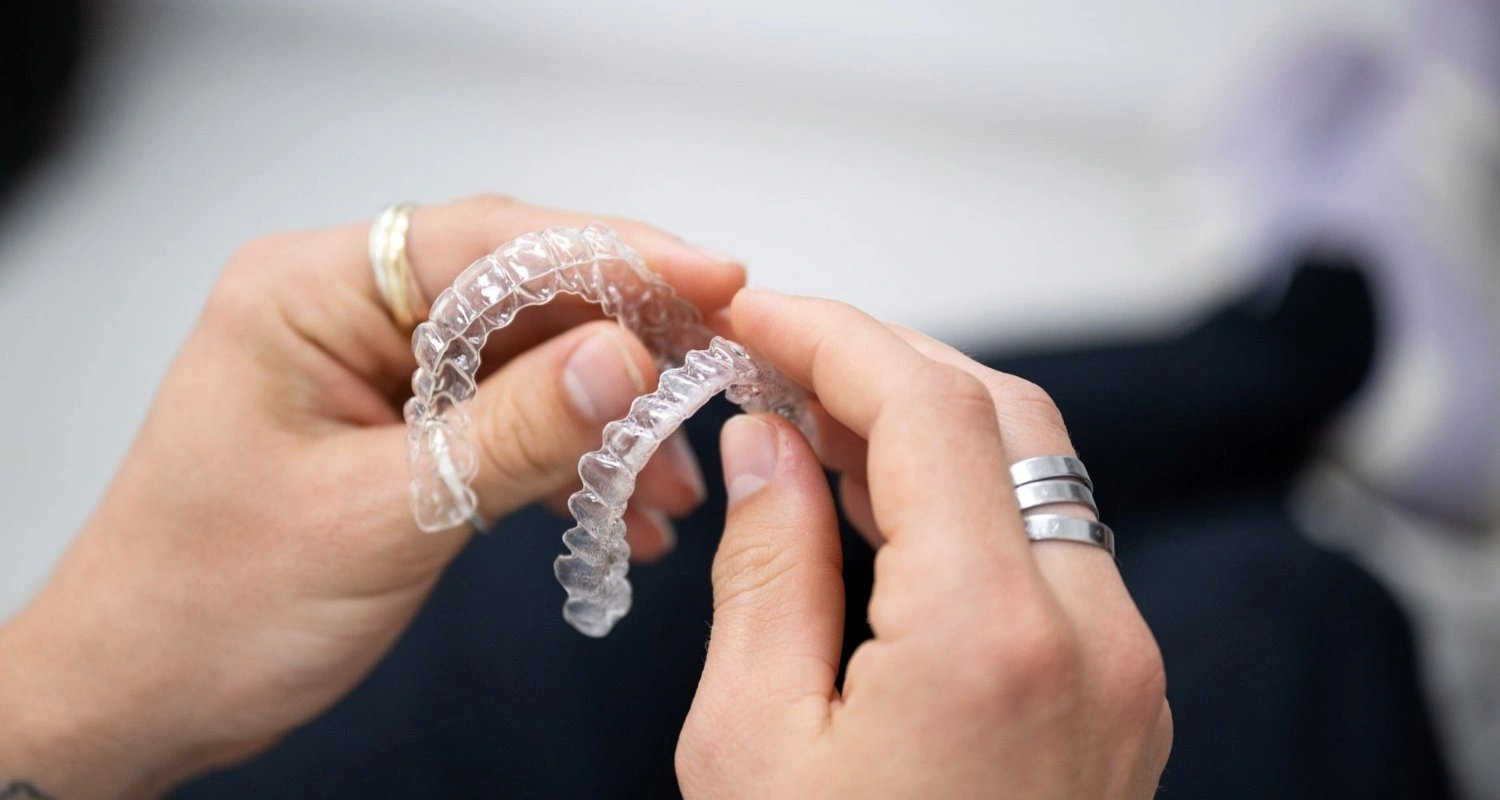
However, braces or clear aligners are not a general cure for grinding or sleep apnoea. We would only recommend treatment after discussing what it is intended to achieve and whether it is appropriate for you.
Does everyone who grinds need a splint?
No. Some people have mild grinding that can be monitored, while others need help with discomfort or protection against further tooth damage.
A custom splint can protect your teeth and restorations, although it may not stop the grinding itself. If sleep apnoea is suspected, that needs to be considered when choosing an appliance.
An appliance used to treat sleep apnoea is different from a standard grinding splint. A mandibular advancement device holds the lower jaw forward during sleep to help keep the airway open. It is suitable for some patients following medical diagnosis and assessment, with regular reviews to check its effectiveness and any changes to the teeth or jaw.
A few small things may help
Try noticing what your jaw is doing during the day. When you are not eating, your teeth should generally rest slightly apart rather than stay pressed together. A reminder beside your computer can help you recognise the habit.
Taking short breaks, keeping a regular sleep routine and reducing caffeine or alcohol, particularly later in the day, may also be useful. If you already have a splint, bring it along to your next visit so we can check that it still fits and is doing its job.
A gentle reminder before the end of the year
We understand that dental appointments can slip down the list when life is busy or money needs to stretch further.
If you have not visited us this year, have noticed changes in your teeth or have treatment you have been meaning to complete, we would be pleased to see you. We can review your dental health, explain any findings and help you plan the next steps around your priorities and budget.
Many health funds reset their annual dental extras limits on 1 January, which means unused benefits may be lost after 31 December. The rules vary between policies, and some allow benefits to roll over, so it is worth checking your remaining cover and reset date with your fund.
Our team can provide treatment item numbers to help you confirm your rebate and likely out of pocket costs before you decide to proceed.
To arrange a visit, please call 02 8000 1832 or contact us online.
Whether you are due for your usual review or it has been a while, you are always welcome. We look forward to seeing you.