There was a time when brushing your teeth twice a day wasn’t even a thing.
Hard to believe, really; particularly when a smile forms such a large part of how others perceive us. Unfairly or not, it’s a status symbol aesthetic that it seems we care more about in appearance than the serious consequences of poorly managed oral health.
One-in-four adults delay or avoid dental appointments because taking care of your teeth is expensive.
Not taking care of your teeth, even more so. Not only financially, but in terms of the significant impact it has on overall health and social wellbeing. Personal loans for up to $AU50,000 for dental work is sadly becoming more common; and it’s not unusual for people in their 50s and 60s to spend thousands on cosmetic dental procedures.
For the most part, much-maligned boomers have enjoyed economic success through a lifetime of full employment and property prices that remained within reach. As retirement beckons, the idea of growing old ‘gracefully’ does not. With boomers generally healthier, wealthier and better educated than their parents, whether or not they’ll eventually experience the physical and cognitive impairments that often come with getting older, many subscribe to a more youthful lifestyle.
Befitting of that image, braving the dentist’s chair to achieve a brighter, more even smile makes the bucket list for most.
Although continuing advances in dental procedures and pain management make dentistry a completely different experience from decade to decade, for the majority of patients the overriding choice point is cost. Can such high level oral health be maintained that extractions, bridges, crowns, veneers or dentures can simply never have to be considered?
Is it possible for all 28-32 adult pearly whites (± wisdoms!) to remain safely anchored and intact right up to entering the pearly gates way, way past admission into the 27 Club?
Apparently, less than 2% chance.
Statistically, at age 70 and older, there’s a 1-in-5 chance of having no natural teeth at all. The dental world calls it ‘endentulism’, which sounds decidedly less emotionally and socially devastating than it is. Mentioning options for replacing lost teeth is fine; and there’s money, appointments, embarrassment, discomfort, healing period wait times, and fear all knotted and bundled into that.
In Australia at least, the probability of living for more than 80 years is an impressive 75%. WHO sets the oral health threshold for functional dentition – that is having an aesthetically acceptable, good distribution of natural teeth that enable proper chewing and speaking – at 20. The Australian Institute of Health and Welfare (AIHW) sets it at fewer than 21. Why the difference?
Other than figuring Aussies like the number once associated with the legal drinking age, it has to do with the biomechanics of mastication. Anything less, makes it unlikely to have enough upper and lower partnered pairs for the efficient biting and grinding motions so important for food variety choices, proper digestion, and ergo good health.
After making that 75% cut for longevity, it’s a 50/50 as to whether or not there are enough natural teeth left to enjoy it.
Which is kinda mean. Comparable to winning a big prize you really can’t do much with.
That the current oldies were born in the ’30s and ’40s when dentistry was a terrifying mix of minimal pain management, maximum extractions, ill-fitting dentures and fluoridation unimagined, certainly impacts the present outcome of their dental health. Oral care as a preventative rather than a response to an emergency or an issue didn’t really start until the 1950s – with fluoride toothpaste a major milestone in strengthening tooth enamel and decreasing incidences of decay.
The inevitability of having rotten teeth at some point in your life was still so prevalent, it took almost until the 1960s for complete extraction and a full set of dentures to not be considered a great 21st birthday or wedding gift.
Given all that, and the effects of pregnancy on women’s dental health, to reach octogenarian status with any remaining teeth at all is really rather impressive.
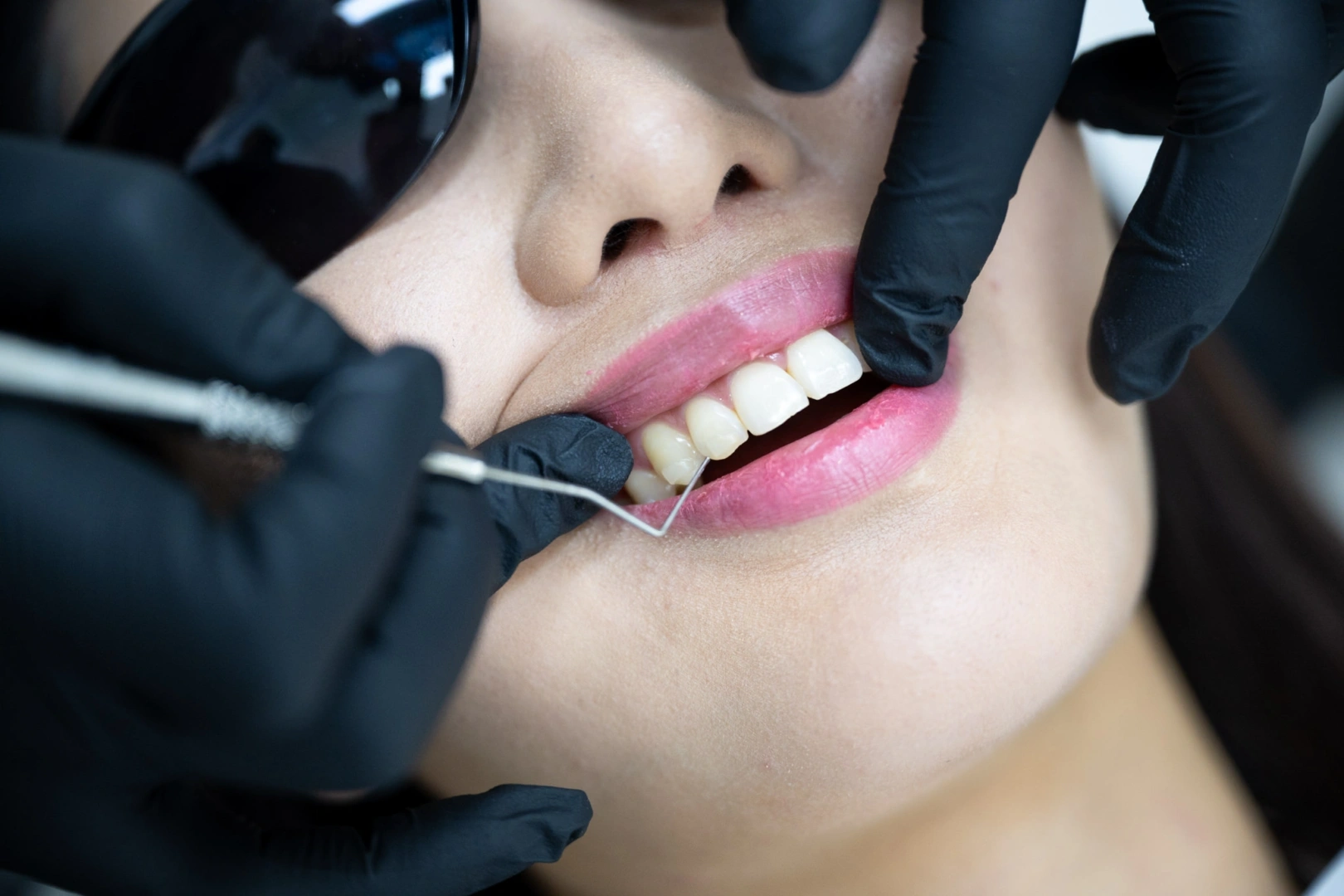
Being eternally grateful for the incredible advances in dentistry over those seventy-odd years when pain relief was a lungful of ether stands to reason. It wasn’t even a given to have a dentist’s chair and a practitioner in rubber gloves and a mask.
With all that’s available in diagnostic software, digital scanners, procedural anaesthetics, anxiety sedation, biocompatible materials, non-intrusive and preventative procedures, there’s no reason at all to not look after our teeth properly; and yet there must be – because essentially, we don’t. Every year in Australia there are around 80,000 hospital visits for dental related emergencies.
While lack of comfort’s not a factor, cost is.
At least we say it is.
Ponying up a few hundred dollars every six months for a dental appointment is smarter and more practical than dealing with the distressing, life-changing result of irreversible damage to either teeth or gum. We know that, and still we don’t do it.
Many of us claim we can’t afford it when we probably can. A couple of grand for a phone every few years is generally categorised as an expected expense. That old, bizarre custom of dental ‘health’ and aesthetics as a present has simply morphed into a self-gifting with international round trips and accommodation with swank wank.
It’s interesting psychology.
Years of money not spent on dental appointments (because of the money) is not years of money saved. All it does is ultimately lead to expensive treatments, replacements or restorative work.
For many, that money that remained unspent isn’t considered a bad investment that’s now matured into a very disappointing lump sum. Somehow, it makes more sense to save money on what could be spent on home soil dentistry by funnelling it into weeks of rent when you’re not there, return flights, holiday clothes and high-end duty free products.
A 5-day wait between the last day of any oral surgery and boarding a return flight is always advised; changes in cabin pressure and the immobility of long flights carry clinical risks that are way beyond simply feeling incredibly sore and uncomfortable.
All this; and it generally has to happen at least twice.
Which is all good when it works out. Often, it doesn’t; and takes a few years to show up.
Dental implants for example, have a failure rate that sits at around 5%. You only have to be the ‘unlucky’ 1-in-20 person for whom – and for a number of reasons – it doesn’t go well. Add the usual bugs and infections that form part of the whole being overseas welcoming committee, variances in hygiene standards, rushed timeline, physical and emotional stress tied in with what feels like a holiday and isn’t – and it may not be the bargain package bargained for.
The truth is, many if not most of us don’t look after our teeth well at all.
Too many ultra-processed foods (particularly late at night). Not drinking enough water. Too many sugary drinks. Not flossing. Completely incorrect brushing techniques (now 4 minutes by the way). The never-ending sporadic-if-at-all dental appointments. Just some of things most of us do; excluding alcohol, tobacco and vape consumption.
It’s like we’re all waiting for regenerative dentistry and technology to hurry up so that all traces of former neglect can be removed with a great, big magic mouth-malady eraser.
Nice work if you can get it.
In the meantime, what’s actually worthwhile is working on what it takes to gain and maintain good oral health. Every old person on the planet wishes the dentistry of today was available in their younger years.
It is to you: don’t disappoint them. Or yourself when you’re old. Drop the excuses. They’ll be hard to explain anyway, when you’ve lost all your teeth.