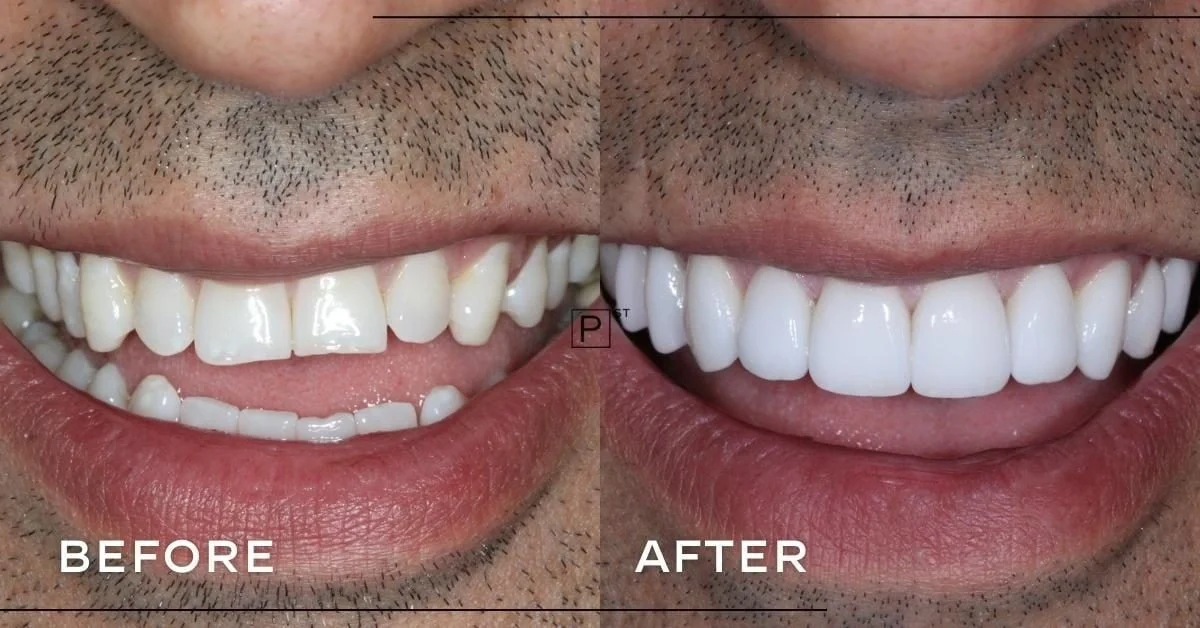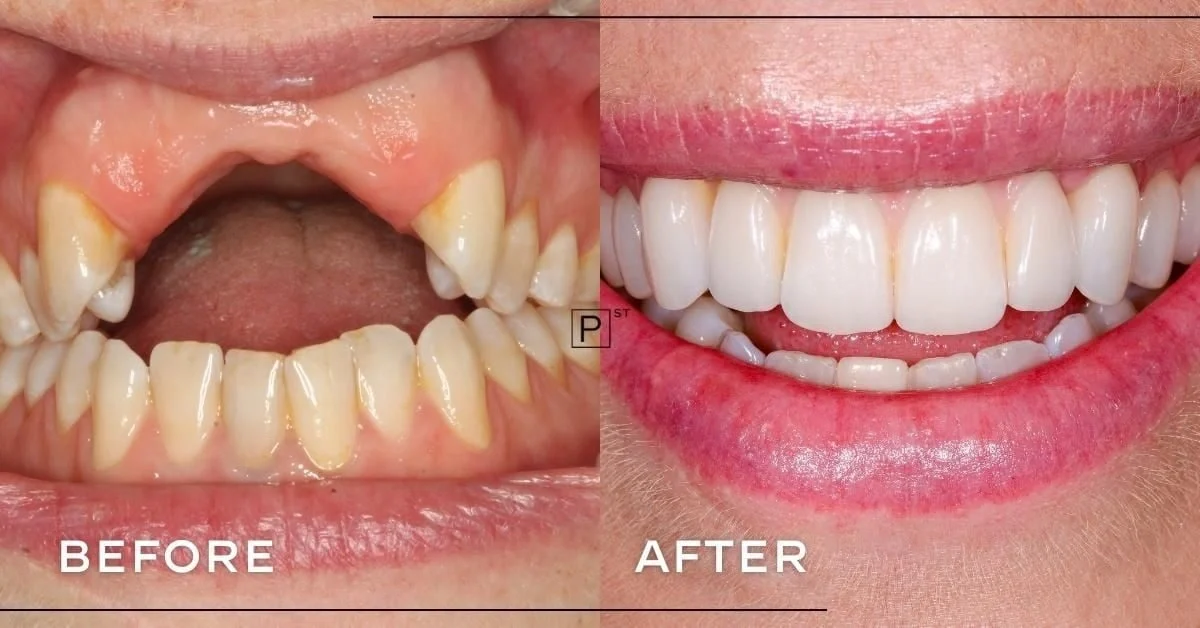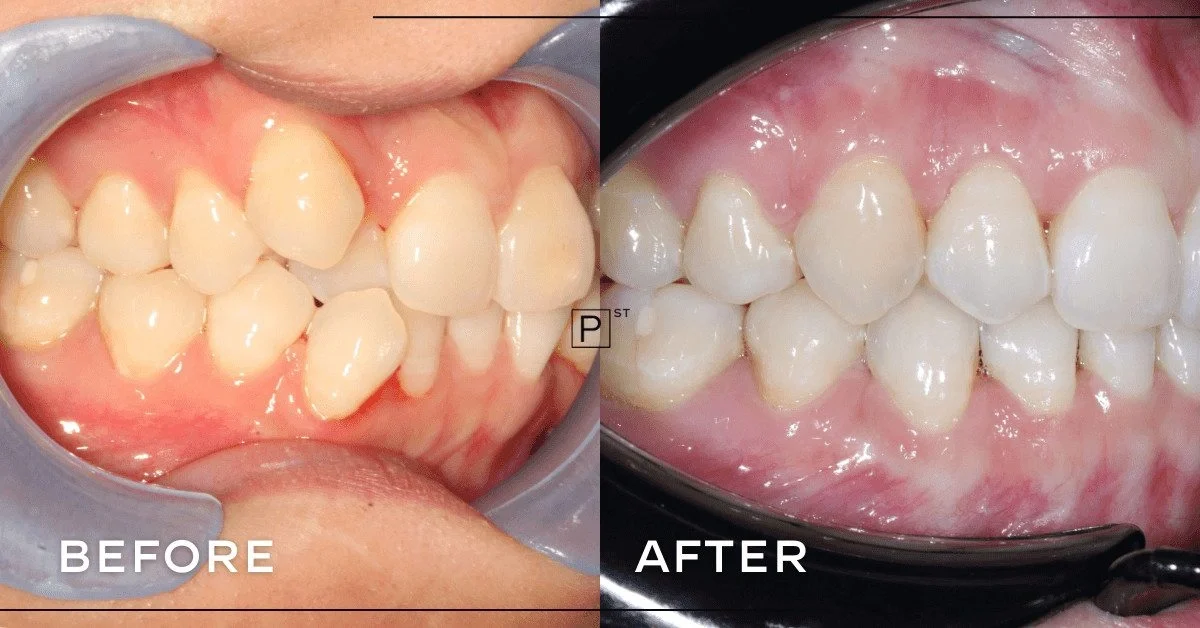
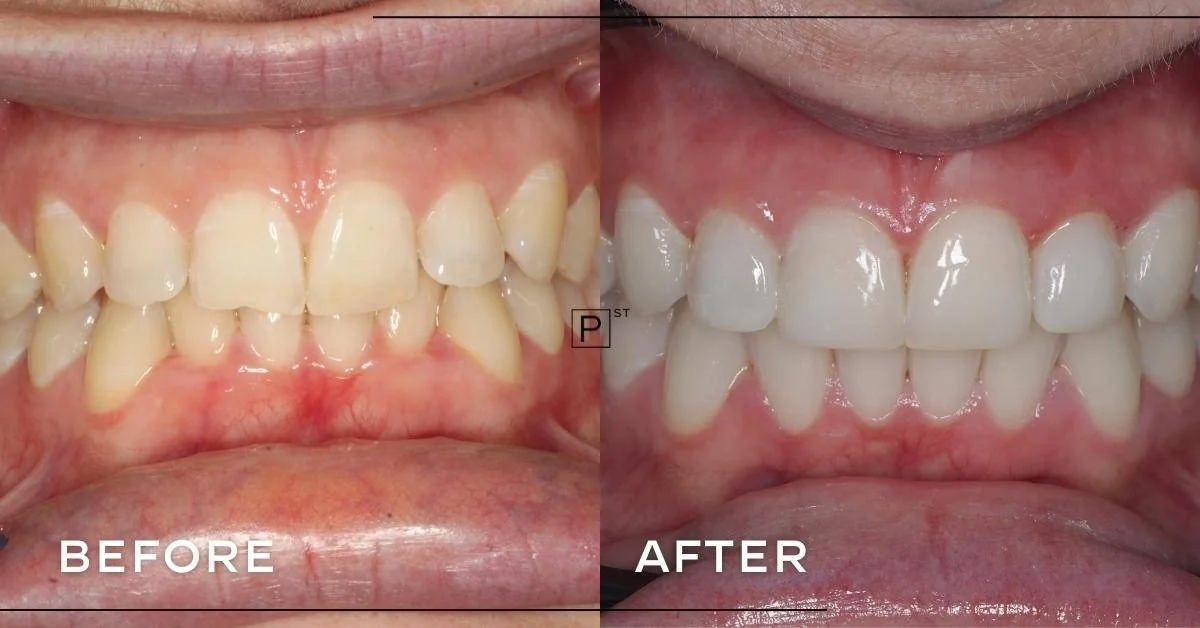
Presenting Concerns
The patient presented with the following dental concerns requiring a structured treatment plan.
- Impacted Wisdom Teeth: Wisdom teeth were impacted and required removal as part of the overall treatment plan
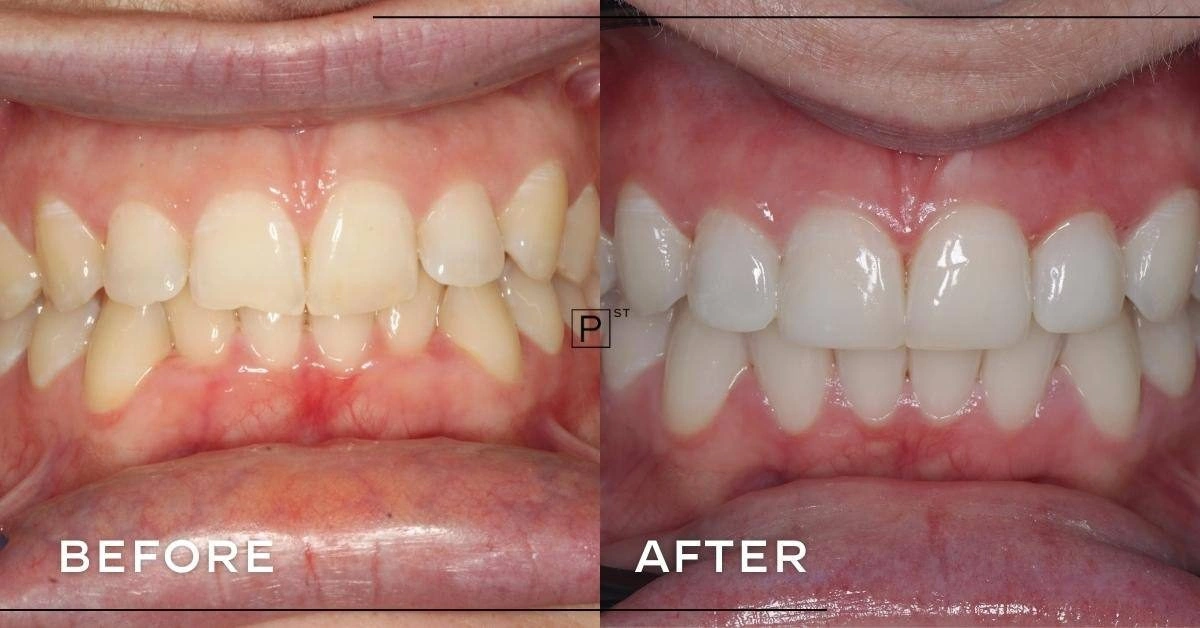
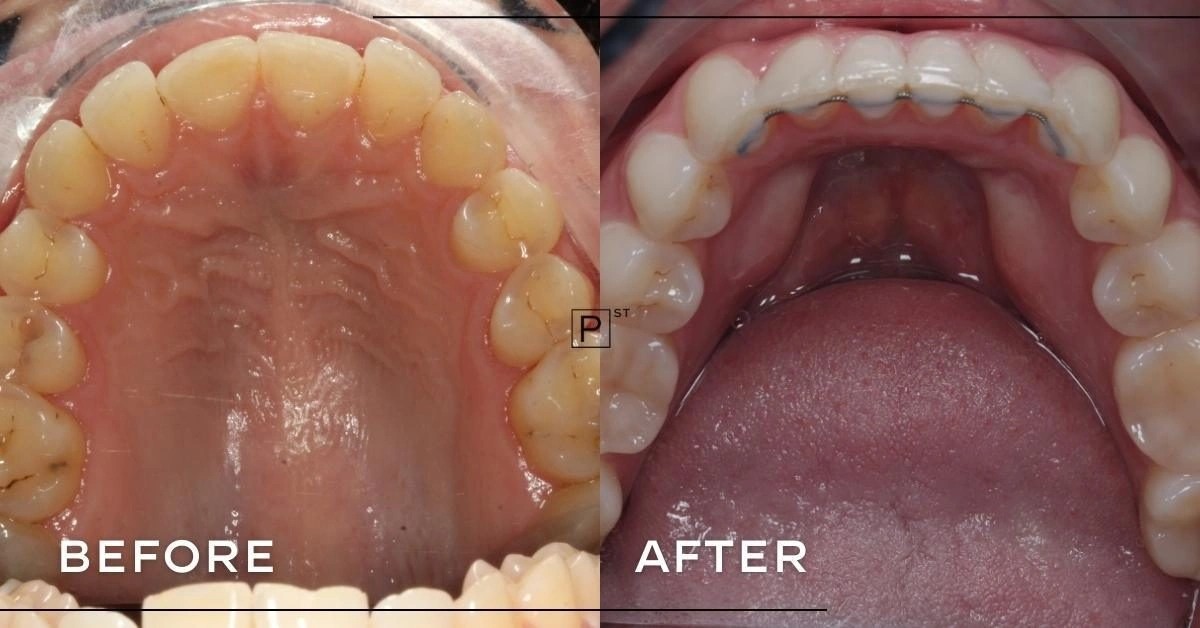
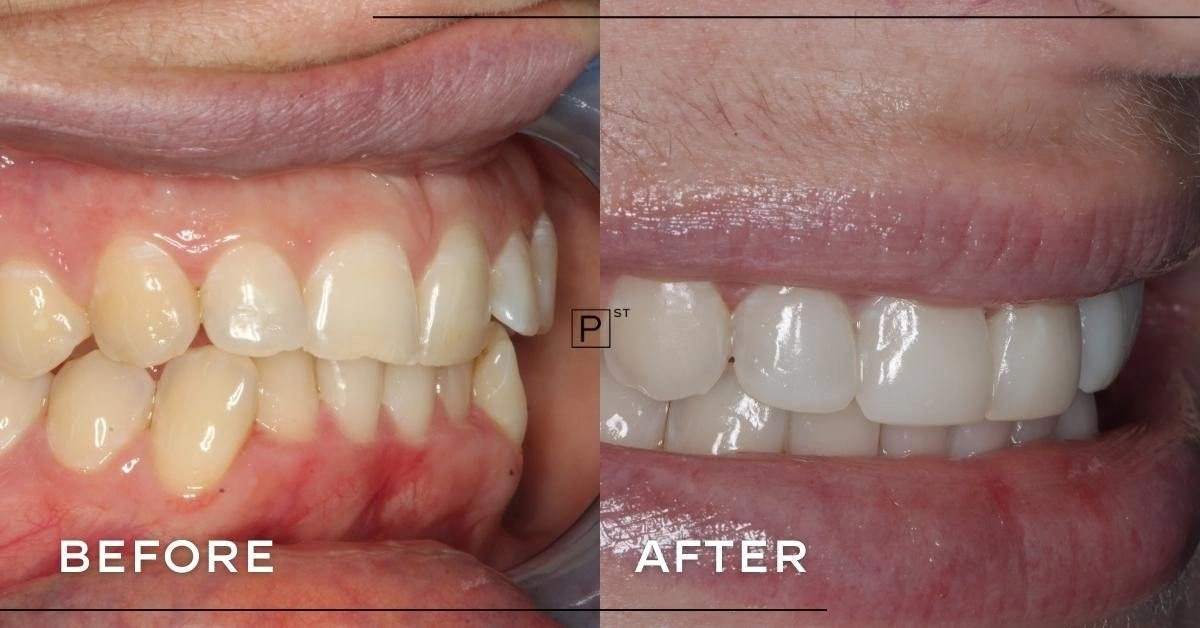
- Post-Orthodontic Crowding: Teeth had shifted and become crowded following a previous course of orthodontic treatment
- Chipped Tooth Edges: Grinding had caused chipped and uneven edges along several teeth
- Dental Cavities: Active decay was identified and required treatment before restorative work could proceed
The primary clinical objective was to address the impacted wisdom teeth, re-establish alignment through orthodontic treatment, and restore the edges of the affected teeth through composite bonding.
Treatment Plan and Process
A treatment approach was developed to address the patient’s presenting concerns across the following phases.
Phase 1 — Extractions: All wisdom teeth were removed under intravenous sedation. This addressed the impacted wisdom teeth and created appropriate space for the subsequent alignment treatment. Active cavities were also addressed during this phase.
Phase 2 — Orthodontic Treatment: Invisalign clear aligners were used to re-establish alignment following the extractions. Progress was monitored across regular review appointments throughout the treatment period.
Phase 3 — Whitening and Finishing: Professional teeth whitening was completed following the conclusion of orthodontic treatment. Composite bonding was then applied to even out the chipped edges of the affected teeth and complete the restorative phase of treatment.
Clinical Outcome
Wisdom tooth removal, Invisalign treatment, professional whitening and composite bonding collectively addressed the presenting concerns across the full treatment period. The combination of orthodontic and restorative treatment produced a consistent result across the dentition.
Individual healing responses vary, and treatment outcomes depend on factors including oral hygiene, compliance with retainer wear, and regular professional maintenance. Results experienced by one patient do not necessarily reflect outcomes others may experience.
Frequently Asked Questions for Sydney Patients
Can wisdom teeth removal be done under sedation in Sydney?
Yes, wisdom tooth removal can be performed under intravenous sedation for patients who prefer a more comfortable experience. Sedation options vary between practices, so it is worth discussing your preferences at your initial consultation so the team can advise on what is available and appropriate for your situation.
My teeth shifted after braces. Can Invisalign fix them again?
Post-orthodontic relapse is common and can often be addressed with a further course of clear aligner treatment. The suitability and expected duration of a second course will depend on how much movement has occurred. A consultation and records review is the best starting point.
What is composite bonding and how long does it last?
Composite bonding involves applying a tooth-coloured resin directly to the tooth surface to improve its shape or repair chipped edges. It is a relatively conservative treatment, though the material is less durable than porcelain over the long term. Longevity varies depending on bite forces, oral habits and how well the restorations are maintained.