May offer a fixed dental option for patients with severe upper jaw bone loss
Pterygoid Implants Sydney
A Graftless Path

A Graftless Path
If you are facing significant bone loss in your upper jaw and traditional dental implants may not be suitable, pterygoid implants may provide a pathway to fixed teeth in certain cases, depending on individual assessment. These implants are designed to provide a stable foundation for teeth, and in some cases may reduce the need for extensive bone grafting procedures.
At Pitt Street Dental Centre in Sydney CBD, we offer pterygoid implants as part of our range of treatment options for patients with complex upper jaw bone loss.
Understanding Pterygoid Implant Technology
Pterygoid implants are a type of dental implant anchored in the pterygoid plate, a dense bone structure located at the back of the upper jaw. Unlike conventional implants that are placed vertically, pterygoid implants are inserted at an angle, typically around 45 degrees. This placement is designed to engage with existing dense bone, bypassing areas of severe bone deficiency in the posterior maxilla.
In suitable cases, this approach may reduce the need for procedures such as sinus lifts or bone grafts, though this is assessed individually. Like other dental implants, pterygoid implants are designed to integrate with bone through osseointegration, with the aim of providing stable long-term support. Individual outcomes vary and your dentist will discuss realistic expectations with you.
Potential Benefits of Pterygoid Implants
Pterygoid implants may offer an alternative for patients with significant upper jaw bone loss where conventional implants are not suitable. They are designed to address chewing function and the appearance of missing teeth, though outcomes depend on individual circumstances.
Potential benefits may include:
As with all implant procedures, suitability and outcomes vary between patients. A thorough assessment is required before treatment can be recommended.
Who May Be Suitable for Pterygoid Implants?
Pterygoid implants are typically considered for patients who have experienced substantial bone loss in the posterior upper jaw, making conventional implants unsuitable. Suitability is assessed on an individual basis and the following factors are considered:
- Significant bone loss: If you have severe bone loss in the upper jaw, particularly toward the back, pterygoid implants may be worth discussing as an alternative to conventional implants.
- Reducing the need for grafting: For patients who are not suitable candidates for extensive bone grafting or sinus lift surgery, or who wish to explore alternatives, pterygoid implants may be an option worth considering.
- Gum and oral health: Healthy gums and consistent oral hygiene practices are important for implant treatment. Your overall oral health will be assessed during your consultation.
- Overall health: A thorough medical history review will be carried out to assess whether the procedure may be appropriate for your situation.
The Process Of Getting Pterygoid Implants
The journey to restoring your smile with pterygoid implants typically involves two key phases.

Placing the Implant
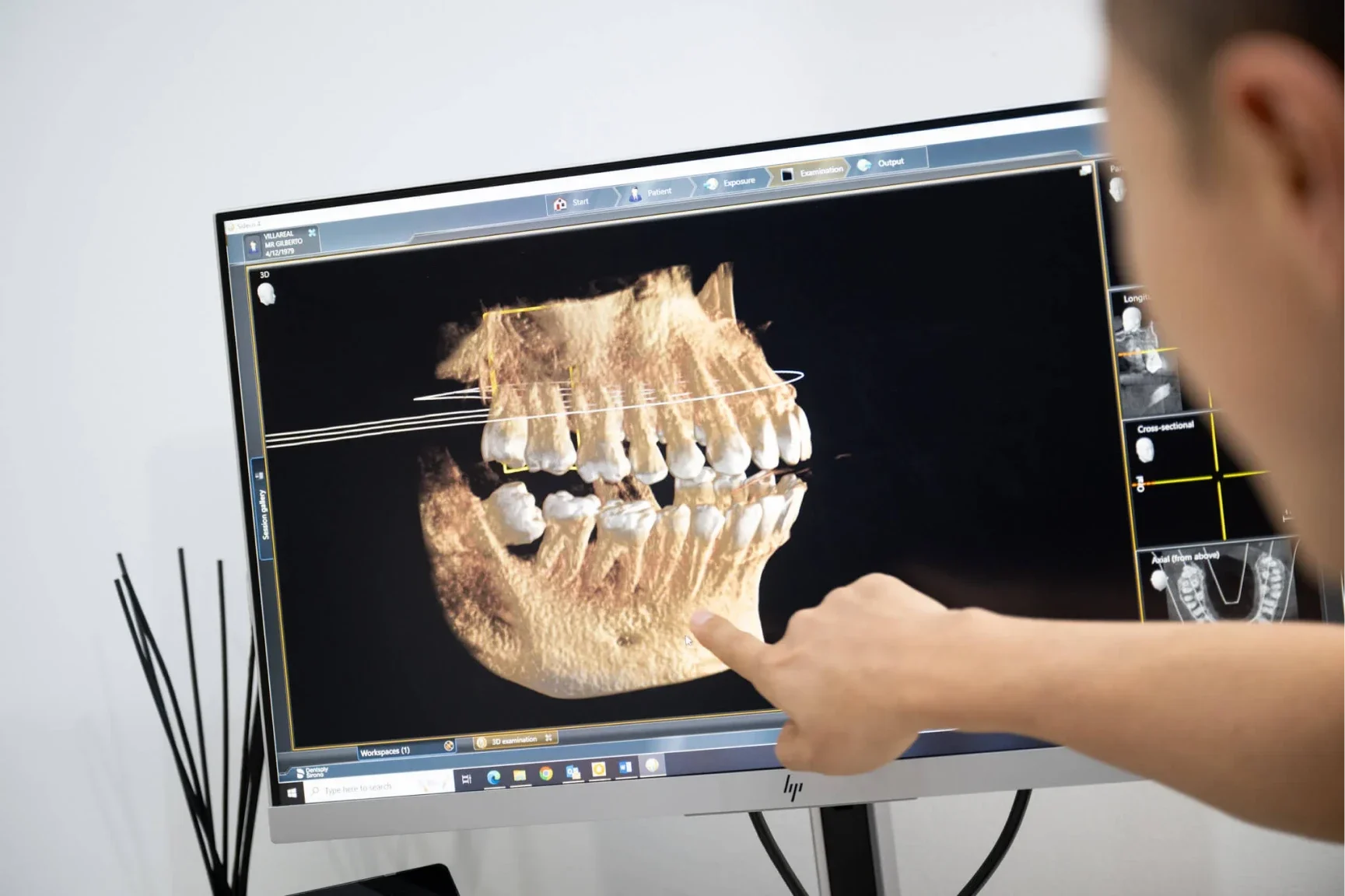
Treatment begins with a comprehensive consultation, including detailed 3D imaging to assess your bone structure and suitability. During the surgical phase, the pterygoid implant posts are placed into the pterygoid plate at the back of the upper jaw. In some cases, a provisional restoration may be placed at an earlier stage of treatment.
Over the following weeks, the implants are intended to integrate with your bone through osseointegration. You will receive specific instructions to support this healing period. As with any surgical procedure, there are risks involved and individual healing experiences vary. Your dentist will discuss these with you prior to treatment.

Attaching the Prosthetic
Once sufficient healing and integration have occurred, you will return for the attachment of the final prosthetic. This may be a fixed bridge or a full arch restoration, designed to suit your individual bite and dental structure. The aim is to address both the function and appearance of missing teeth, though individual outcomes vary.
Download Our Price List

Download Our Price List
We take great pride in providing a tailored treatment experience. Everyone’s dental needs are different, which is why we discuss options that are relevant to your specific situation and goals.
Frequently Asked Questions
What are pterygoid implants and who are they for?
Pterygoid implants are anchored in the pterygoid plate, a dense region of bone behind the upper jaw, rather than in the upper jaw itself. They are used where there is insufficient bone in the posterior upper jaw for standard implants. They are often placed alongside zygomatic implants to support a complete fixed arch in complex cases.
Do pterygoid implants require bone grafting?
Pterygoid implants do not require bone grafting or sinus lifts. By anchoring in the pterygoid plate, the procedure bypasses the need for augmentation in the posterior upper jaw. In suitable cases, fixed teeth can be attached on the same day as surgery.
Who performs the surgery?
Pterygoid implant placement is performed by a specialist oral and maxillofacial surgeon in a private hospital theatre. Dr Cai plans the case, designs the prosthesis before surgery, and manages all prosthetic and follow-up care. Surgery takes place at Westmead Private Hospital or Strathfield Private Hospital under general anaesthesia.
What does recovery involve?
Swelling, bruising, and tenderness in the days following surgery are normal and typically improve over the first one to two weeks. Most patients return to light activities within a few days, though physical exertion should be avoided during the initial recovery period. Dr Cai will monitor your progress at scheduled follow-up appointments throughout the healing phase.
How long do pterygoid implants last?
Published data supports high long-term survival rates for pterygoid implants in appropriately selected cases placed by experienced surgical teams. Longevity is influenced by oral hygiene, lifestyle factors, and regular professional maintenance. Individual results vary and your dentist will discuss realistic expectations at consultation.
Can I have fixed teeth on the same day as surgery?
In suitable cases, yes. The pterygoid plate typically provides strong primary stability, which often allows a fixed temporary prosthesis to be attached on surgery day. Whether same-day loading is appropriate for your case is assessed during treatment planning and confirmed on the day of surgery.
Are pterygoid implants used alongside other implants?
Pterygoid implants are often used in combination with zygomatic implants or standard implants to support a complete fixed arch reconstruction. The combination used depends on the distribution of available bone and the overall treatment plan developed by Dr Cai and the surgical team. Your full plan is discussed and confirmed before any commitment is made.
What are the risks of pterygoid implant surgery?
As with all surgical procedures, risks include infection, swelling, implant failure, and complications related to the adjacent anatomy. Surgery is performed in a private hospital theatre by a specialist maxillofacial surgeon to minimise these risks. Specific risks relevant to your case are discussed in detail at consultation prior to any commitment to treatment.
After-Care For Your Pterygoid Implants
Following your pterygoid implant procedure, some discomfort, swelling or tenderness is expected as your body begins to heal. You will receive specific instructions tailored to your situation. The following general guidelines may apply:
Healing times vary between patients. If you have any concerns during your recovery, contact our team for guidance.
Ready to Explore Your Options?
Contact us to arrange a consultation. We will assess whether pterygoid implants may be suitable for your situation, or discuss alternative options that may help address missing teeth and support oral function over time.
DISCLAIMER: The material posted is for informational purposes only and is not intended to substitute for professional medical advice, diagnosis or treatment. Results vary with each patient. Any dental procedure carries risks and benefits. If you have any specific questions about any dental and/or medical matter, you should consult your dentist, physician or other professional healthcare providers.

Medically Reviewed by Dr Michael Cai, BDS (Syd), Implant Specialist
Last Reviewed: July 2, 2026
CELEBRATED SMILES
A gallery of memorable moments with beautiful patients who trust us with their smiles.