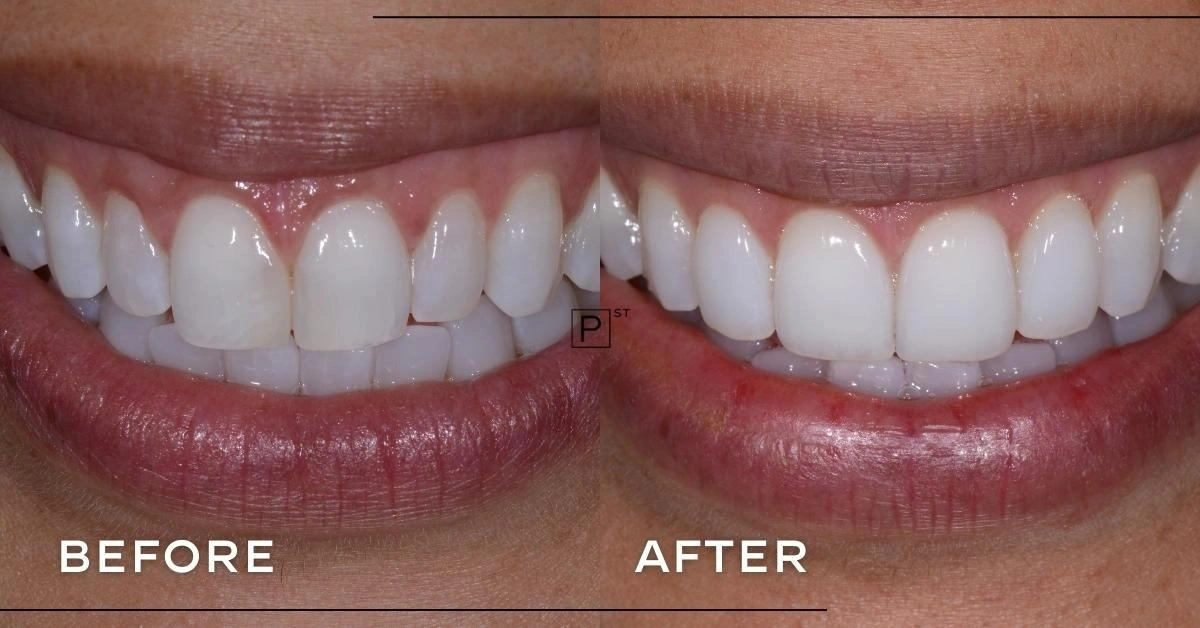
Presenting Concerns
The patient presented with the following dental concerns requiring a structured treatment plan.
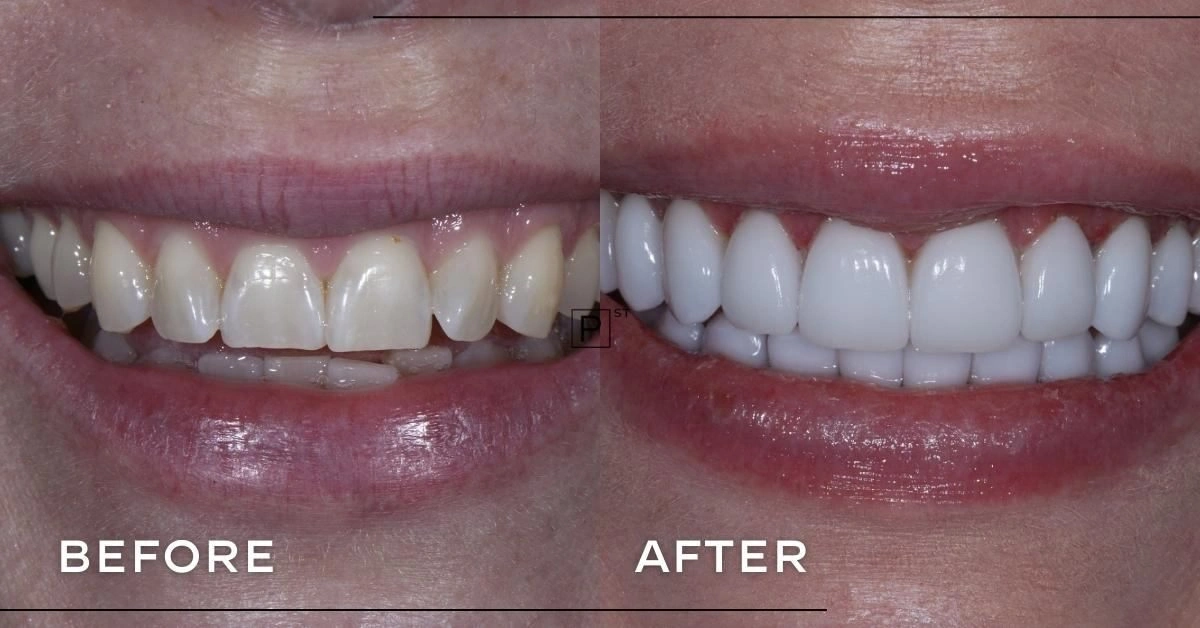
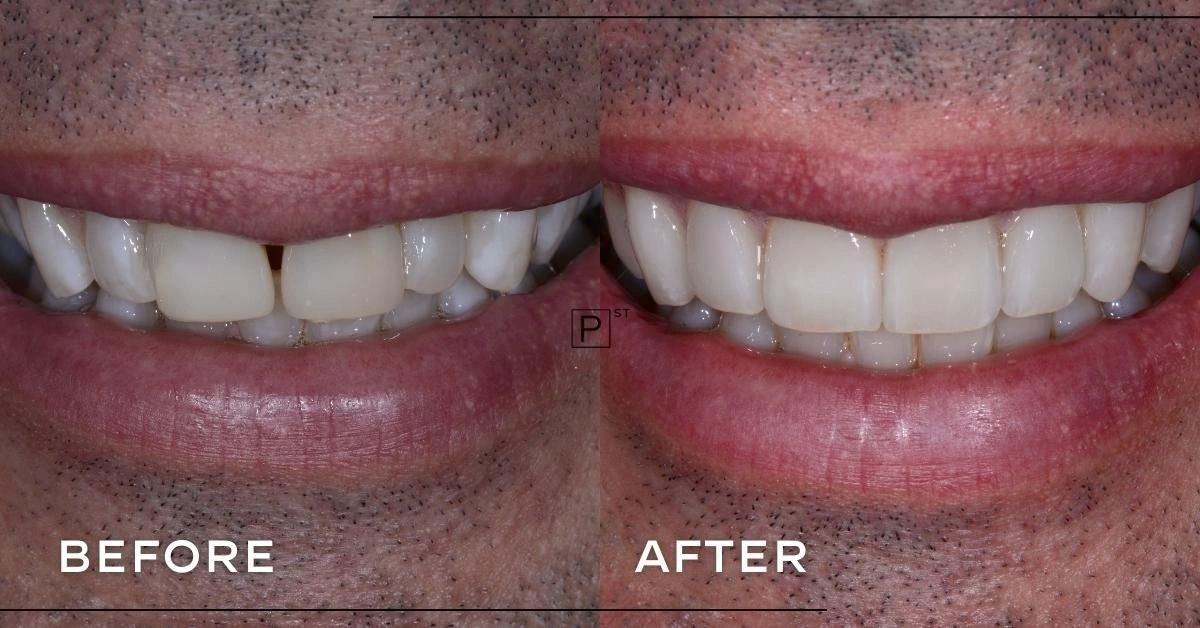
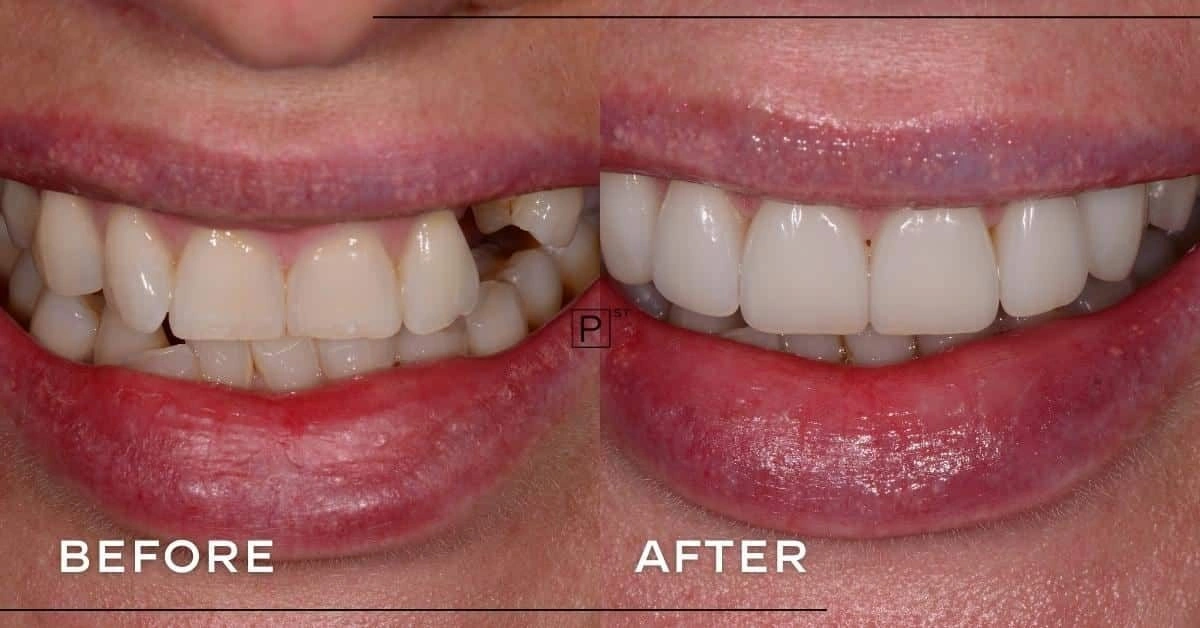
- Unsatisfactory Existing Bonding: Previous composite bonding on the front teeth had not achieved the desired appearance and the patient wanted to explore a more durable alternative
- Tooth Size: The front four teeth appeared smaller than proportionally ideal, affecting the overall balance of the smile
The primary clinical objective was to replace the existing composite restorations and improve the size and proportion of the front teeth through porcelain veneers.
Treatment Plan and Process
A treatment approach was developed to address the patient’s presenting concerns across the following phases.
Phase 1 — Assessment and Planning: A full assessment was completed to evaluate the condition of the existing composite bonding and the underlying tooth structure. Digital Smile Design was used to plan veneer sizing that would improve proportions whilst suiting the patient’s facial features.
Phase 2 — Removal of Existing Restorations: The existing composite bonding was removed and the tooth surfaces were assessed and prepared for veneer placement.
Phase 3 — Veneer Placement: Porcelain veneers were placed across the front four teeth to improve their size, shape and overall appearance. The veneers were designed to provide a more consistent and lasting result than the previous composite restorations.
Clinical Outcome
Porcelain veneers replaced the existing composite bonding and improved the size and proportion of the front four teeth. The restorations were designed to sit naturally within the smile.
Individual healing responses vary, and treatment outcomes depend on factors including oral hygiene, compliance with post-treatment care, and regular professional maintenance. Results experienced by one patient do not necessarily reflect outcomes others may experience.
Frequently Asked Questions for Sydney Patients
Can porcelain veneers be used to replace composite bonding in Sydney?
Yes, porcelain veneers are one option for patients who are not happy with existing composite bonding. They tend to be more durable and colour-stable over time, though suitability still depends on the condition of the underlying teeth. A consultation will help determine the best path forward for your situation.
What is the difference between composite bonding and porcelain veneers?
Composite bonding uses a tooth-coloured resin applied directly to the tooth, whilst porcelain veneers are custom-made restorations fabricated in a lab and bonded to the tooth surface. Porcelain generally offers greater durability and resistance to staining over time, though each option has its own considerations. Your dentist can walk you through the differences in the context of your specific situation.
Will my teeth look noticeably different after porcelain veneers?
The extent of any change depends on the starting point and the treatment goals you discuss with your dentist. Veneer design takes proportion and natural appearance into account, and digital planning tools can help you understand what to expect before committing to treatment.