Dental anxiety is real, common, and nothing to be embarrassed about. Whether your nervousness stems from a previous bad experience, fear of pain, feeling vulnerable in the chair, or simply the sounds and smells of a dental practice, you’re not alone.
At Pitt Street Dental Centre, we’ve designed everything around patient comfort. Not because it’s a marketing angle, but because we understand that even people who handle high-pressure jobs can feel genuinely anxious in a dental setting.
The spa experience isn’t just marketing
When we say “five-star dental spa,” we mean it:
- The waiting room: Aromatherapy, candles, complimentary drinks. No fluorescent lights, no clinical smell, no anxiety-inducing atmosphere.
- During treatment: Noise-cancelling headphones if you’d rather not hear the sounds. Warm blankets because comfort matters. Television screens so you can distract yourself if you prefer.
- Pace of treatment: We go at your pace. Need to pause? Raise your hand. Need to stop completely? That’s okay too.
These measures help many patients manage mild to moderate anxiety without any medication at all.
Happy gas (nitrous oxide)
For patients who need more than atmosphere alone, nitrous oxide (commonly called happy gas or laughing gas) offers:
- How it works: You breathe a mixture of nitrous oxide and oxygen through a small mask. Within minutes, you feel relaxed, slightly floaty, and less aware of time passing.
- What you’ll experience: Most people describe feeling calm and detached without being unconscious. You’re still aware and can respond to instructions, but the anxiety fades.
- Recovery: The effects wear off within minutes once you’re back on normal oxygen. You can drive yourself home and return to normal activities immediately.
- Suitability: Happy gas works well for mild to moderate anxiety. It’s safe for most adults and doesn’t require fasting beforehand.
Twilight sedation
For patients with severe anxiety, or those who simply prefer to remember as little as possible, we offer twilight sedation:
- How it works: A sedationist administers sedative medications intravenously. You’re not fully unconscious (as with general anaesthesia), but you’re deeply relaxed and unlikely to remember the procedure.
- What you’ll experience: Most patients describe feeling like they blinked and the treatment was over. Time passes without awareness, and anxiety is essentially eliminated during the procedure.
- Recovery: You’ll need someone to accompany you home and won’t be able to drive for 24 hours. The sedation effects wear off gradually.
- Preparation: Twilight sedation requires fasting beforehand and a pre-sedation consultation.
- Availability: We work with visiting dental sedationists who specialise in this type of care.
Being honest about what you’re feeling
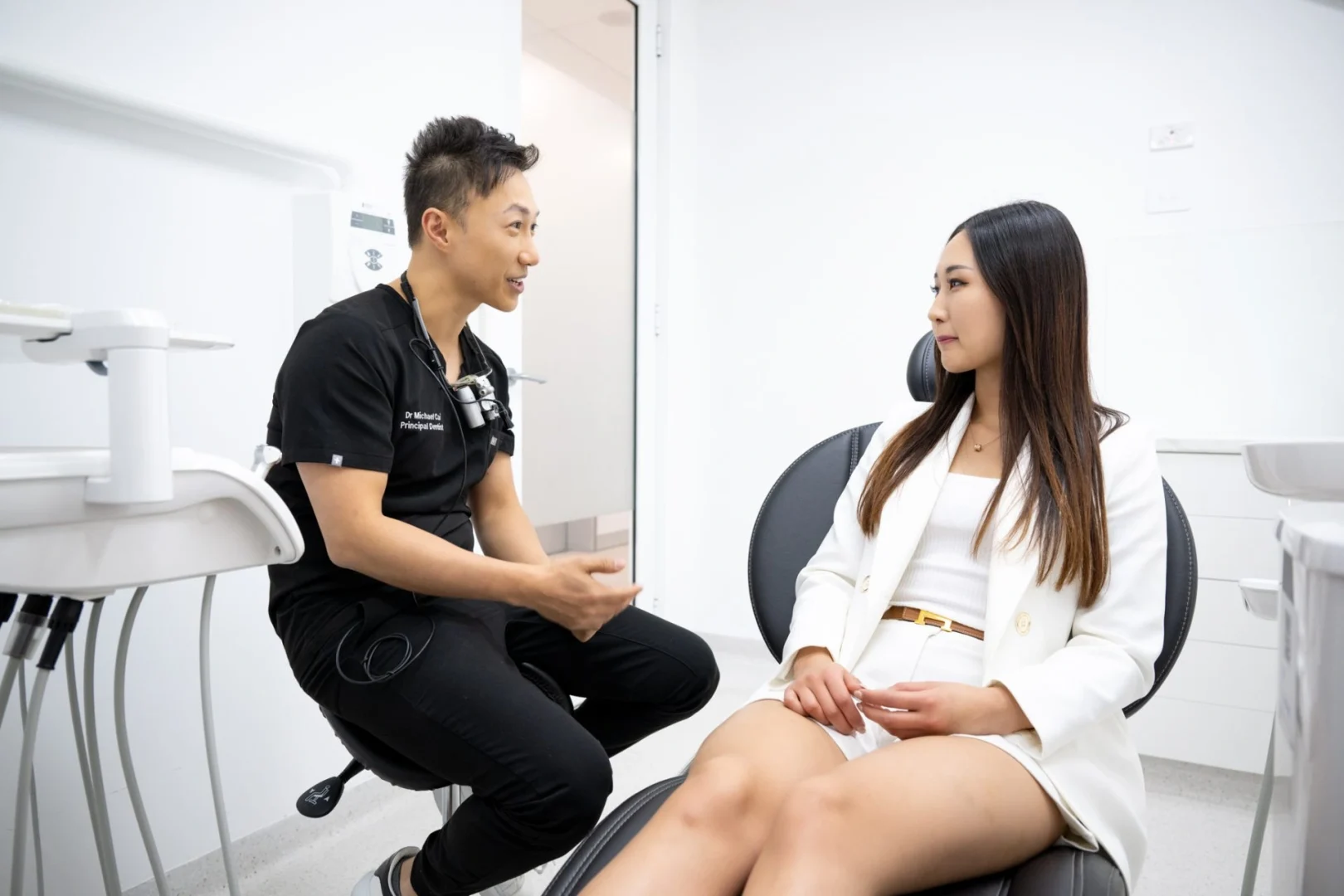
The most important thing you can do is tell us about your anxiety. We can’t help if we don’t know.
During your consultation, let us know:
- What specifically makes you anxious (pain, sounds, feeling trapped, needles, etc.)
- Previous experiences that contributed to your anxiety
- What’s worked or not worked in the past
- What you think might help
This conversation shapes how we approach your treatment. There’s no judgment, only problem-solving.
The reality check
Here’s something worth knowing: cosmetic dentistry is generally less invasive than many people expect. Procedures like teeth whitening and bonding involve no injections at all. Veneer preparation is done under local anaesthesia, so you’ll be completely numb.
The anticipation is often worse than the reality. But your anxiety is valid regardless, and we’ll work with you to make the experience manageable.
Ready to take the first step?
The consultation itself is low-stakes. We’re talking, assessing, and planning. No treatment happens at this appointment. It’s an opportunity to see the environment, meet the team, and discuss your options without commitment.
Call +61 2 8000 1832 or book online. We’re at Level 2/70 Pitt Street, Sydney CBD, 3 minutes from Martin Place station.
Results vary. Individual assessment required. Sedation suitability assessed during consultation.