Ever wondered how dentists can confidently promise that four tiny implants will support an entire arch of teeth for decades? It seems almost too good to be true, doesn’t it? Like claiming you can build a skyscraper on just four foundation posts.
Here’s the thing: they’re not just winging it and hoping for the best. Behind every successful All-Teeth-On-4 treatment lies a sophisticated investigative process that would make Sherlock Holmes proud. Welcome to the world of All-on-4 diagnostics, where cutting-edge technology meets detective-level scrutiny to solve the mystery of your jaw’s hidden potential.
The difference between All-on-4 success and failure often comes down to what happens before the first implant is ever placed. It’s not just about having enough bone; it’s about understanding exactly where that bone is, what condition it’s in, and how it will respond to the precise angles and forces that make this treatment possible.
The Foundation Investigation: Why Standard X-Rays Aren’t Enough
If you’ve ever had dental implants explained to you with a simple 2D X-ray and a confident “you’ll be fine,” you’ve witnessed the dental equivalent of trying to navigate Sydney Harbour with a hand-drawn map from 1850. It might work, but wouldn’t you prefer GPS?
All-on-4 diagnostics begin with understanding that your jawbone isn’t a uniform block of material. It’s a complex, three-dimensional structure with varying densities, hidden anatomical features, and unique characteristics that can make or break the treatment outcome.
CBCT Imaging: The Game Changer
Cone Beam Computed Tomography represents the gold standard in All-on-4 diagnostics. Unlike traditional X-rays that show only shadows and outlines, CBCT creates a detailed 3D map of your entire facial structure. According to the Australian Dental Association, practices using CBCT for implant planning report 94% higher success rates compared to those relying on conventional imaging.
This technology reveals crucial information that’s invisible on standard X-rays: bone quality variations, the exact location of nerves and sinuses, and areas of previous bone loss that might affect implant stability. It’s the difference between operating with a torch and operating with stadium lighting.
Digital Impressions: Precision Planning
Modern All-on-4 diagnostics also incorporate digital impressions that capture your mouth’s exact dimensions down to microscopic detail. These aren’t the gag-inducing impression trays of the past, but sophisticated scanners that create perfect digital models of your existing teeth and gums.
Bone Quality Assessment: The Hidden Foundation
Not all bone is created equal, and All-on-4 diagnostics must determine not just how much bone you have, but what quality that bone possesses. Think of it as the difference between building on granite versus sandstone.
Density Mapping Technology
Advanced diagnostic software can analyse CBCT scans to create detailed bone density maps. These reveal areas of dense, healthy bone ideal for implant placement, as well as regions of softer bone that might require different treatment approaches.
This information is crucial because All-on-4 treatment relies on specific implant angles and positioning to maximise contact with the densest available bone. The posterior implants are typically angled at 45 degrees specifically to engage the strongest bone areas while avoiding anatomical structures like sinuses and nerve canals.
Sinus and Nerve Proximity Analysis
One of the most critical aspects of All-on-4 diagnostics involves mapping the precise location of sinuses in the upper jaw and the inferior alveolar nerve in the lower jaw. The angled implant placement technique is designed to work around these structures, but success depends on knowing exactly where they are.
Sophisticated measurement tools allow dentists to plan implant placement with millimetre precision, ensuring adequate clearance from vital structures while maximising bone engagement. This level of precision simply isn’t possible without comprehensive diagnostic imaging.
Advanced Planning Software: Where Science Meets Art
Modern All-on-4 diagnostics rely heavily on computer-assisted planning software that transforms raw scan data into detailed surgical guides. This isn’t just about plotting where implants will go; it’s about orchestrating an entire treatment sequence with surgical precision.
Virtual Implant Placement
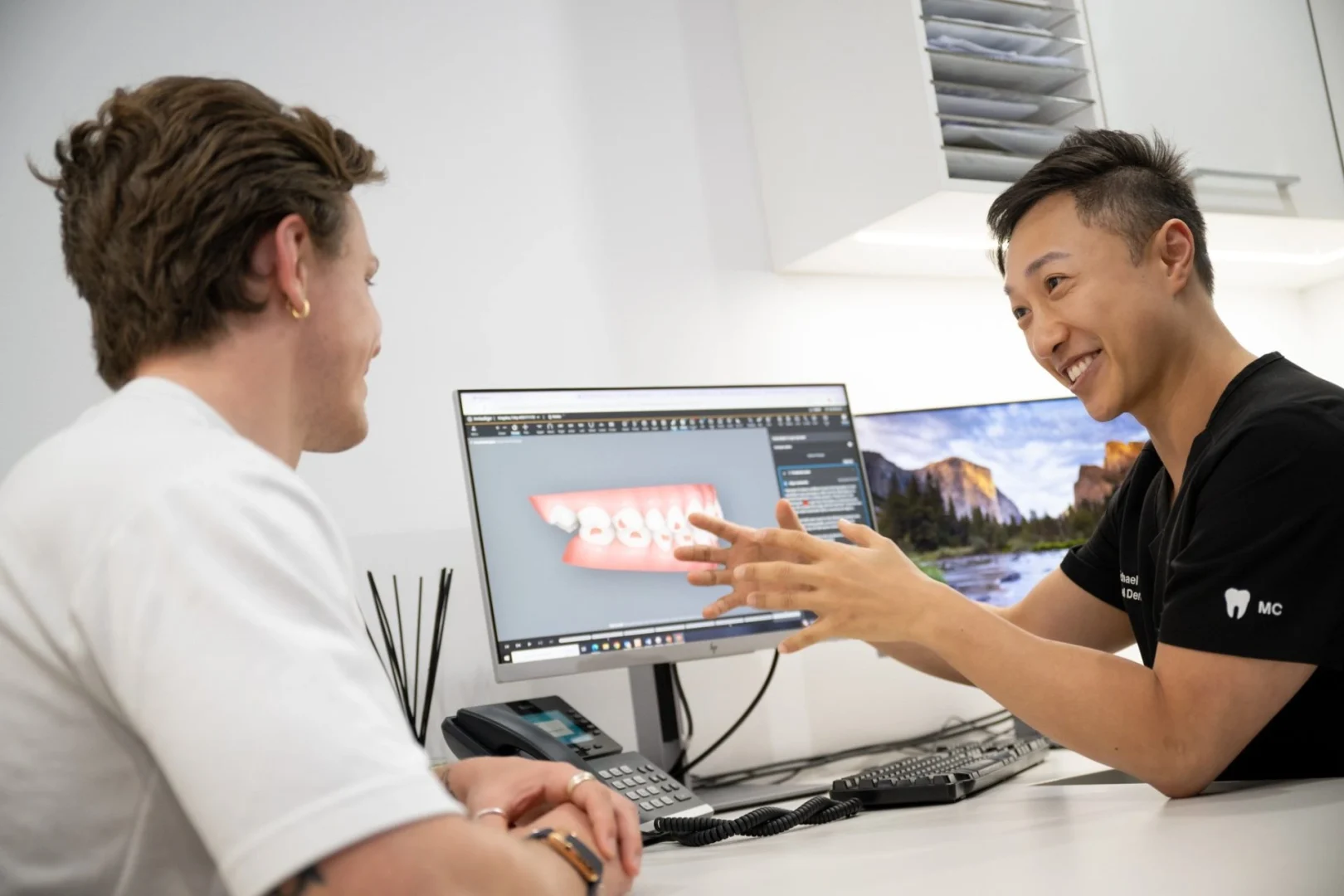
Advanced planning software allows dentists to virtually place implants in your jaw before the actual surgery. Different implant sizes, angles, and positions can be tested digitally to determine the optimal configuration for your specific anatomy.
This virtual planning process considers factors like bone quality, anatomical limitations, and the final tooth arrangement to create a treatment plan that’s tailored specifically to your mouth. The software can even predict how your new teeth will look and function before treatment begins.
Surgical Guide Creation
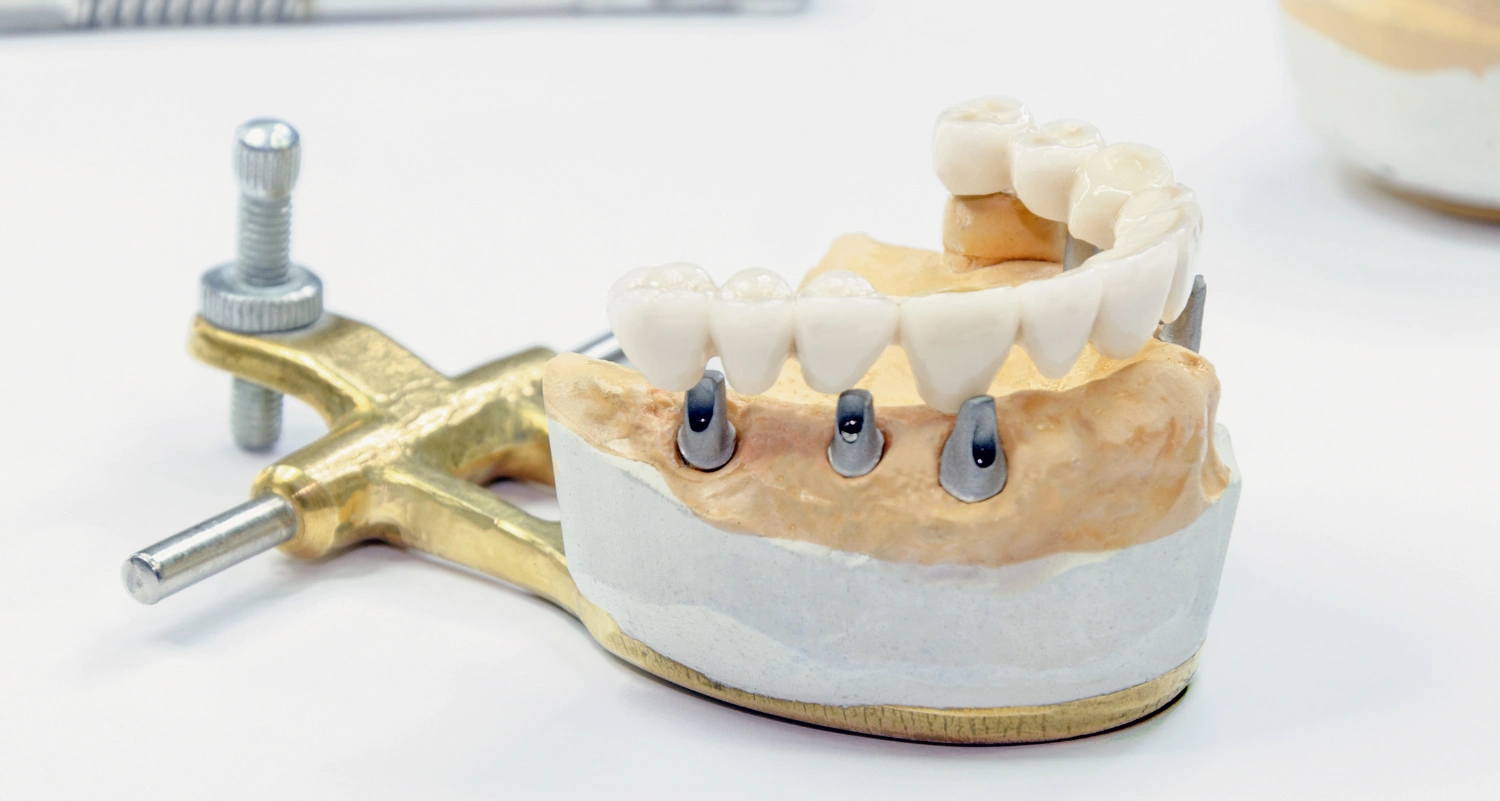
Perhaps most importantly, All-on-4 diagnostics enable the creation of surgical guides that ensure the virtual plan translates perfectly to the actual procedure. These guides fit precisely over your existing teeth or gums and contain holes that direct implants to exactly the right position and angle.
According to research from Australian implant specialists, guided surgery improves implant placement accuracy by over 90% compared to freehand techniques. This precision is particularly crucial for All-on-4 treatment, where implant angles must be exact to support the final prosthetic properly.
Soft Tissue Analysis: The Often-Overlooked Component
While much attention focuses on bone assessment, comprehensive All-on-4 diagnostics also evaluate soft tissue characteristics that significantly impact treatment success and aesthetic outcomes.
Gum Thickness and Biotype: Different patients have different gum types, from thick and resilient to thin and delicate. This affects how tissues respond to implant placement and influences the final aesthetic outcome. Diagnostic assessment helps predict how gums will heal and whether additional procedures might be needed to optimise results.
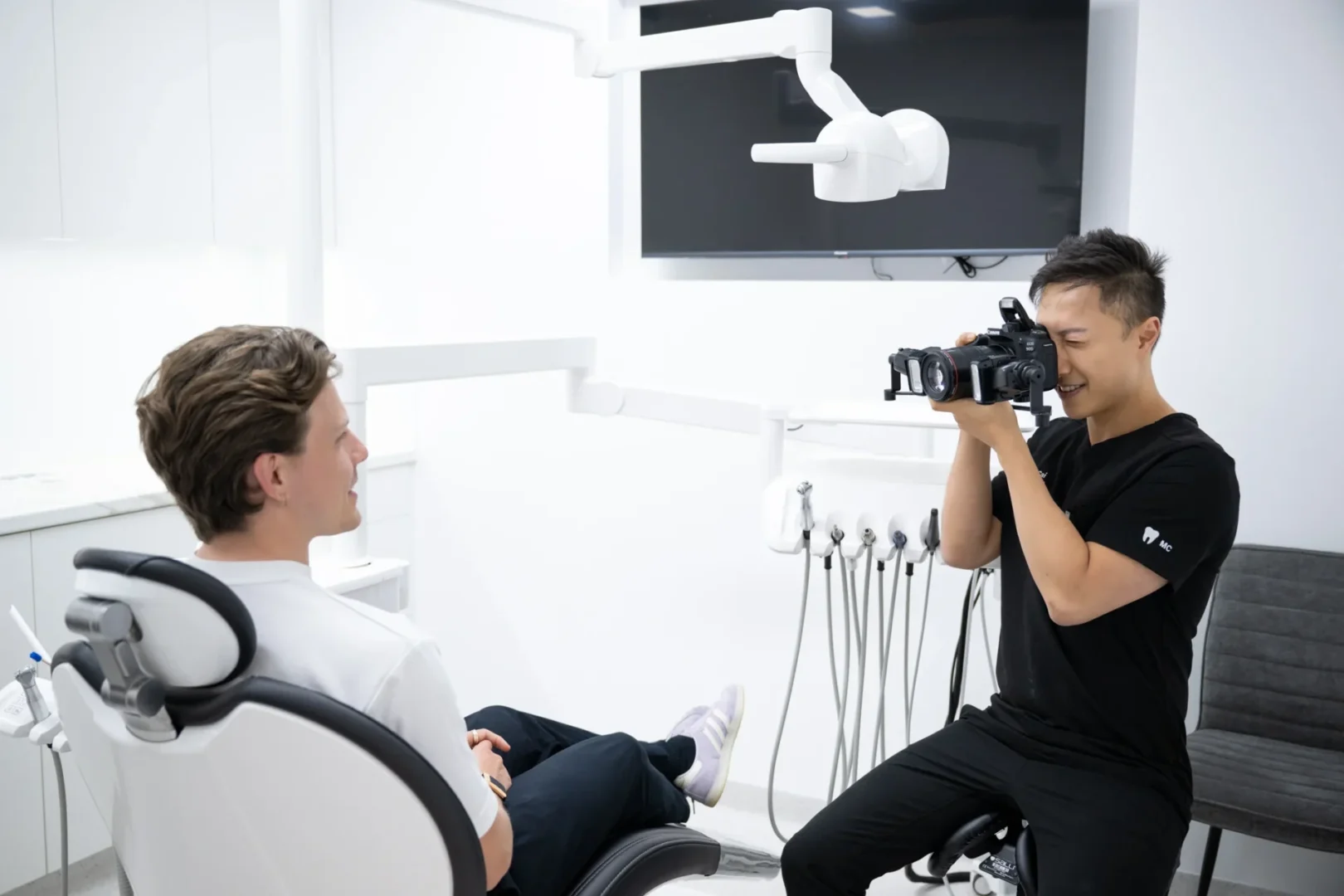
Smile Line Analysis: Advanced diagnostics include assessment of your smile line and facial proportions to ensure the final prosthetic will be positioned correctly for optimal aesthetics. This involves analysing photos and sometimes video to understand how your smile moves and what will be visible when you talk and laugh.
Treatment Simulation: Seeing the Future
One of the most remarkable aspects of modern All-on-4 diagnostics is the ability to show patients exactly how their new smile will look before treatment begins. Digital smile design technology combines all diagnostic information to create realistic simulations of the final result.
This simulation process serves multiple purposes: it ensures patient expectations align with achievable outcomes, allows for adjustments to the treatment plan based on aesthetic preferences, and provides a clear roadmap for the laboratory creating the final prosthetic.
The technology can even simulate how the new teeth will function during eating and speaking, helping to predict and prevent potential issues before they occur.
Conclusion: The Investment in Certainty
All-on-4 diagnostics represent a significant investment in treatment planning that pays dividends in predictable, successful outcomes. While this comprehensive assessment process might seem extensive, it’s the foundation that makes the remarkable promise of All-on-4 treatment possible.
The sophisticated diagnostic tools used today transform what was once a somewhat unpredictable procedure into a highly precise, engineered solution. When you understand the level of investigation that goes into planning your treatment, the confidence dentists have in All-on-4 outcomes makes perfect sense.
Remember, the goal isn’t just to place implants; it’s to create a solution that will function perfectly for decades. That level of long-term success is only possible when every detail is understood and planned for before treatment begins.
Experience Advanced All-on-4 Planning
Ready to discover how advanced All-Teeth-On-4 diagnostics could transform your smile? The team at Pitt Street Dental Centre utilises the latest diagnostic technology to ensure predictable, successful outcomes for every patient. Our comprehensive assessment process takes the guesswork out of implant treatment.
Call us today to schedule your advanced diagnostic consultation. Complete our enquiry form or phone our practice to begin your journey towards permanent tooth replacement with confidence.