Picture this: you’ve just had a tooth extracted, you’re nursing a slightly tender mouth with ice cream (doctor’s orders, obviously), and you think the drama is over. Plot twist, it’s only just beginning. Your jawbone, like a temperamental celebrity who’s just been dropped from the latest blockbuster, is about to stage the most spectacular disappearing act you never knew was happening.
Here’s the thing nobody mentions at tooth extraction time: your jawbone is essentially a high-maintenance friend who needs constant validation. Take away that tooth root (its main source of daily stimulation) and it goes into full sulk mode. We’re talking months of gradually shrinking away until one day you catch yourself in the mirror wondering why your face looks… different.
But here’s where dental implants swoop in like the hero in a rom-com, ready to give your jawbone exactly what it’s been desperately craving: attention, purpose, and a reason to stick around.
The Great Jawbone Sulk: What Actually Happens When You Lose A Tooth
Your jawbone operates on a pretty simple principle: use it or lose it. Think of it like that gym membership you swore you’d use. Stop showing up, and eventually, your muscles get the message and decide to take an extended holiday. Except with your jawbone, there’s no getting back into shape with a January fitness resolution.
When you lose a tooth, the bone that once supported its root suddenly finds itself unemployed. No more daily chewing forces, no more reason to maintain its fabulous bone density. So it does what any self-respecting unemployed bone would do, it starts to waste away.
The numbers are rather sobering. According to the Australian Dental Association, you can kiss goodbye to up to 25% of your jawbone width within the first year after tooth extraction. By year five, you’re looking at a 4mm height loss. That might sound insignificant until you realise that in dental terms, 4mm is basically a chasm.
Your remaining teeth start shifting like passengers on a half-empty bus. Your bite changes, your face loses support, and before you know it, you’re dealing with problems that make the original tooth extraction look like a walk in the park.
Enter The Hero: How Jawbone Preservation Implants Work
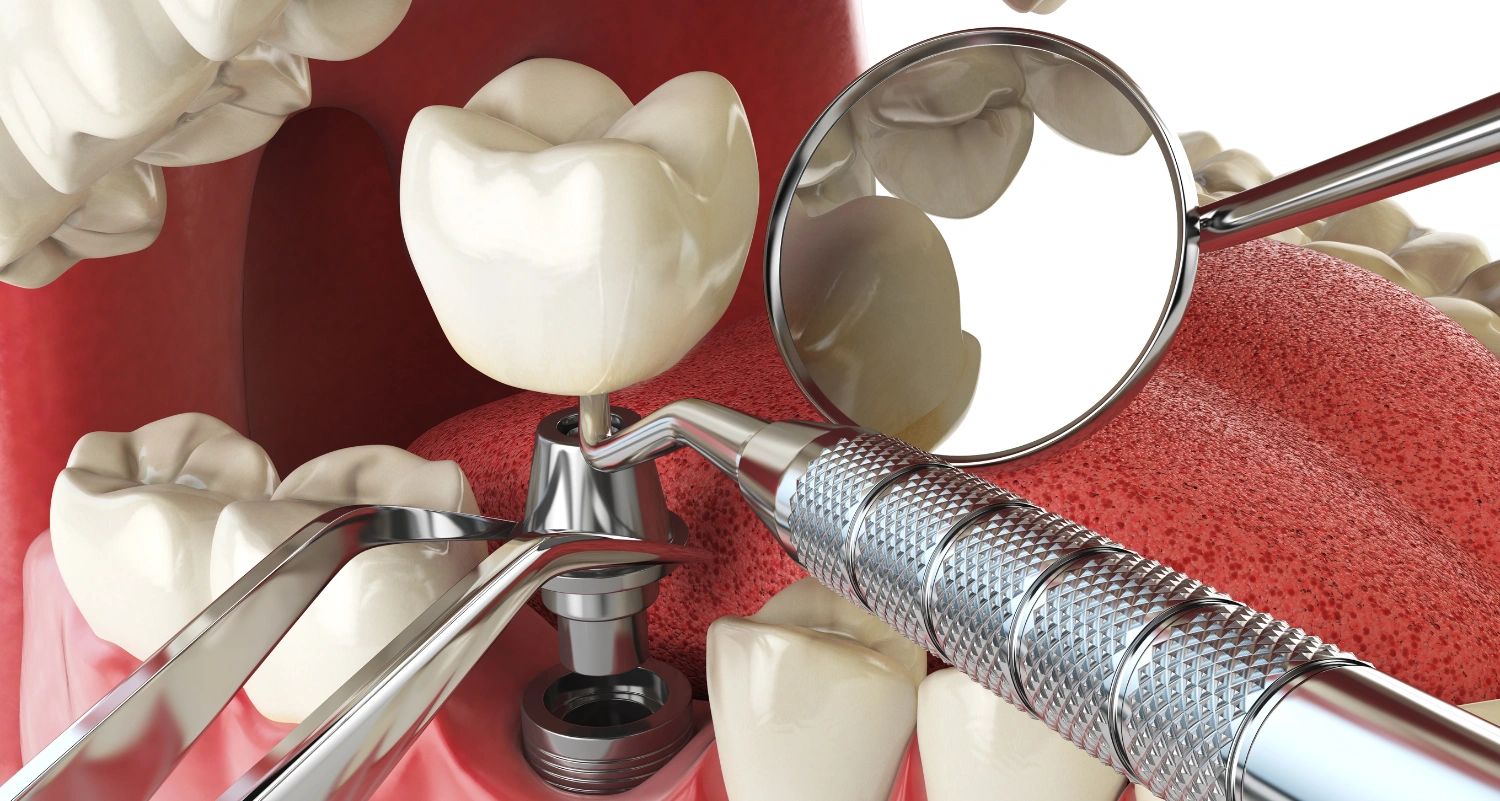
Dental implants are basically the jawbone equivalent of a life coach, personal trainer, and best friend all rolled into one titanium package. They don’t just replace your missing tooth; they give your jawbone a new job, complete with daily tasks and long-term career prospects.
When a dental implant is placed into your jawbone, your body doesn’t just tolerate it, it embraces it like a long-lost relative. Through osseointegration, your bone literally grows around and fuses with the implant. It’s like your jawbone finally has something to do again.
The implant acts as an artificial root, transferring all those lovely chewing forces directly to the bone tissue. This mechanical stimulation is exactly what your bone needs to maintain its density and structure. It’s no longer unemployed; it’s got a full-time job with excellent benefits.
The results speak for themselves. Patients with jawbone preservation implants maintain approximately 95% of their original bone volume in the implant area. Compare that to the 40-60% bone loss in extraction sites left to their own devices, and you start to understand why implants are considered the gold standard.
The Science Bit (Don’t Worry, We’ll Keep It Interesting)
Your jawbone follows Wolff’s Law, which essentially states that bone adapts to the mechanical demands placed upon it. It’s like bone’s version of “what doesn’t kill you makes you stronger,” except we’re talking about actual biological processes.
When you chew with an implant-supported crown, those forces travel down through the implant and into the surrounding bone tissue. Your body interprets this as a sign that the bone is needed and important, so it maintains its density accordingly. Remove that stimulation, and your body assumes the bone is surplus to requirements.
Research consistently shows that jawbone preservation implants can halt bone loss entirely when placed correctly. The timing matters too. Immediate implants, placed at the time of extraction, can be particularly effective at preventing bone loss before it starts. Think of it as intervention rather than rehabilitation – much easier for everyone involved.
Beyond Bone: The Unexpected Perks Nobody Tells You About
Whilst saving your jawbone from its dramatic disappearing act is reason enough to consider implants, there are some rather lovely bonus features. You can eat absolutely anything again – crunchy apples, chewy caramels, that perfectly cooked steak. It’s all back on the menu.
Your speech remains completely natural too. No more worrying about dentures slipping mid-conversation or developing that telltale whistle. With implants, your replacement tooth behaves exactly like the original, only sometimes better.
Perhaps most importantly, by preserving your jawbone structure, implants maintain the support system for your facial muscles. This prevents that sunken, aged appearance that develops when bone loss progresses unchecked. Your face keeps its natural proportions, and your smile maintains its youthful architecture.
Making The Smart Choice For Your Jawbone
Not everyone is automatically suited for jawbone preservation implants, and that’s perfectly fine. At Pitt Street Dental Centre, we use advanced 3D imaging to assess your bone density and overall oral health before recommending any treatment. Sometimes bone grafting might be suggested first to create the optimal foundation.
The investment is substantial, but when you consider the long-term benefits and the escalating costs of not addressing bone loss, it becomes rather sensible. Traditional bridges require grinding down healthy adjacent teeth, whilst dentures need constant adjustments as your changing jawbone makes them increasingly ill-fitting.
Modern implant procedures are surprisingly comfortable too. Many patients report less discomfort than they experienced with their original tooth extraction. The healing process is generally straightforward, and most people are back to normal activities within a few days.
The key is not to delay unnecessarily. The longer you wait after tooth extraction, the more bone loss occurs, potentially making treatment more complex down the line. It’s a bit like catching a small problem before it becomes a big one – infinitely preferable for everyone involved.
Ready to give your jawbone the attention it deserves? Contact Pitt Street Dental Centre today on +61 2 8000 1832 to schedule your comprehensive implant consultation. Our team will assess your specific situation and discuss the best options for keeping your jawbone happy, healthy, and exactly where it belongs. Complete our enquiry form online, and let’s start planning your jawbone’s comeback story.